Browsed by
Category: News

Sri Lanka Integrates Artificial Intelligence into School

Sri Lanka Integrates Artificial Intelligence into School

Sri Lanka’s Ministry of Education and Microsoft are teaming up to revolutionize education. They’re bringing Artificial Intelligence (AI) and Machine Learning (ML) into the national school curriculum development process. This partnership aims to make AI education accessible to all students and teachers.

The program will start from grade eight. The government has set aside Rs 1 billion for AI projects, including a national AI center. AI Clubs will be set up in 100 schools, reaching about 300,000 students.

Microsoft will train 100 teachers and support online learning activities. Students can access resources through the AIClub Navigator platform. The Schools Fiberization project has already connected 1,000 schools, paving the way for advanced educational technology.

AI skills are becoming crucial for future jobs. A Microsoft and LinkedIn study shows that many leaders won’t hire people without AI skills. By embracing AI in education, Sri Lanka is preparing its youth for tomorrow’s workforce.

Ministry of Education and Microsoft Sign MoU to Introduce AI in Schools

Sri Lanka’s Ministry of Education has partnered with Microsoft to bring AI into schools. This collaboration will introduce AI and Machine Learning into the curriculum. The initiative starts with a pilot project in select schools nationwide.

Pilot Project to Roll Out in 20 Selected Schools Across 20 Districts

The pilot will launch in 20 schools, covering all nine provinces. Students in Grade 8 and above will explore AI in their IT classes. The program aims for full implementation by 2025.

The signing ceremony on March 19 included key figures. Among them were Dr. Susil Premajayantha, Minister of Education, and Julie J. Chung, US Ambassador to Sri Lanka.

  • Dr. Susil Premajayantha, Minister of Education
  • Kanaka Herath, State Minister of Technology
  • Julie J. Chung, United States Ambassador to Sri Lanka
  • Puneet Chandok, President of Microsoft India and South Asia
  • Representatives from various educational institutions, such as D.S. Senanayake College, Colombo

Dedicated Microsoft Team to Support Online Educational Activities

Microsoft will provide its 365 platform for secure communication and collaboration. This tool will enhance online learning for students in the chosen schools.

The partnership aims to empower learners and teachers for the AI era. It uses a ‘train the trainer’ model to spread knowledge effectively.

By integrating AI into education, Sri Lanka prepares its youth for the future. This forward-thinking approach equips students with skills for a rapidly changing world.

Transforming Education System with AI and Machine Learning

Sri Lanka’s education system is embracing AI and machine learning. This marks a big step in the country’s digital growth. Global Microsoft Education teams and the National Institute of Education (NIE) have created a comprehensive curriculum. It aims to help students and teachers thrive in the AI era.

The curriculum covers key topics like machine learning and robotics. These skills will prepare students for an AI-driven world. The project will start in 20 schools across all nine provinces.

A ‘train the trainer’ model will ensure teachers can share AI knowledge. Microsoft 365 will provide a safe space for online learning. This platform will help both students and teachers work together.

AI can transform Sri Lanka’s education system in many ways. It can solve problems like limited resources and unequal access. AI can tailor learning to fit different styles and needs.

This technology can also bring education to remote areas. It promotes inclusive learning and helps develop rural regions. The teamwork between the Ministry of Education and Microsoft is a big step forward.

FAQ

What is the collaboration between the Ministry of Education in Sri Lanka and Microsoft?

Sri Lanka’s Ministry of Education and Microsoft have signed an MoU. They aim to integrate AI and Machine Learning into the national school curriculum. This effort seeks to transform the country’s education system.

When will the pilot testing phase of the AI integration begin?

The pilot testing will start from grade eight and above. It will involve 20 selected schools across 20 districts in Sri Lanka.

What platform will be provided as part of the MoU signing?

The MoU includes the provision of the Microsoft 365 platform. It will serve as a secure hub for students and teachers to communicate and collaborate.

How will the pilot project be implemented in the selected schools?

The project will roll out in 20 chosen schools. These schools will receive conducive classrooms and necessary technical equipment. A Microsoft team will support online educational activities.

Who developed the comprehensive curriculum for the AI integration?

Global Microsoft Education teams and Sri Lanka’s National Institute of Education (NIE) developed the curriculum. They worked together to create a comprehensive learning plan.

How will the pilot program empower learners and educators?

The pilot program will follow the ‘train the trainer’ model. It will prepare both learners and educators to navigate the AI era confidently.

What is the goal of integrating AI and ML into the national school curriculum?

The goal is to make AI accessible to everyone. It aims to empower learners and educators in the AI era. Ultimately, it seeks to transform Sri Lanka’s education system.

Sri Lanka Central Bank Raises Interest Rates 2023

Sri Lanka Central Bank Raises Interest Rates 2023

The Central Bank of Sri Lanka has raised key policy interest rates to fight inflation. This move aims to support economic recovery and align with IMF negotiations. The CBSL increased the SDFR and SLFR by 100 basis points each.

This rate hike addresses Sri Lanka’s high inflation, which peaked in September 2022. The economy shrank by 9.2% last year, with inflation hitting 50% in February. The central bank had already raised rates by 950 basis points in 2022.

Central Bank Raises Interest Rates to Combat Soaring Inflation

The CBSL’s decision aligns with IMF staff recommendations. It’s a key step towards securing the $2.9 billion IMF bailout package. Sri Lanka is restructuring its debt before IMF funds can be released.

The country seeks approval under a special Lending Into Official Arrears policy. India and the Paris Club of creditors have offered their support in this process.

These changes aim to reduce the gap between policy and market interest rates. The CBSL expects single-digit inflation by late 2023. They also anticipate a continued decrease in market interest rates.

Stable monetary policies are crucial for Sri Lanka’s economic recovery. They support long-term growth and reinforce the importance of price stability. These measures are essential for sustained economic development in the country.

Central Bank Raises Interest Rates to Combat Soaring Inflation

Sri Lanka’s Central Bank has raised policy interest rates to tackle rising inflation. This action aligns with IMF negotiations and the Extended Fund Facility arrangement. The goal is to reduce the gap between policy and market interest rates.

This move aims to ease pressure on consumer spending and the overall economy. It’s a crucial step towards economic stability and growth.

Interest rates and cost of borrowing

Monetary Board Decision to Raise Policy Interest Rates

The Central Bank’s Monetary Board agreed with IMF staff to increase policy interest rates. The raise was smaller than initially planned during negotiations. This decision helps fulfill ‘prior actions’ needed for the IMF Extended Fund Facility arrangement.

Standing Deposit Facility Rate (SDFR) and Standing Lending Facility Rate (SLFR) Increased

The Monetary Board increased the Standing Deposit Facility Rate to 15.50%. They also raised the Standing Lending Facility Rate to 16.50%. These changes took effect from March 3, 2023.

This decision shows the Central Bank’s commitment to fighting inflation and stabilizing the economy. It’s a significant step towards financial stability.

Policy Rate Previous Rate New Rate (Effective 03 March 2023)
Standing Deposit Facility Rate (SDFR) 14.50% 15.50%
Standing Lending Facility Rate (SLFR) 15.50% 16.50%

Impact on Lending Rates and Cost of Borrowing

The policy interest rate increase will affect lending rates and borrowing costs in Sri Lanka. Higher rates may reduce consumer spending and investment as borrowing becomes pricier.

However, this measure is crucial to control inflation and prevent future economic instability. It’s a necessary step towards long-term financial health.

Reasons Behind the Interest Rate Hike

Sri Lanka raised interest rates to support its IMF-EFF arrangement. This move aims to boost economic stability and attract foreign exchange. It’s part of ongoing talks with the IMF to tackle economic challenges.

The Monetary Board expects this hike to close the gap between policy and market rates. As Sri Lanka restructures its debt, this gap should shrink further. This will create a more stable financial environment for growth.

Negotiations with the International Monetary Fund (IMF)

Sri Lanka is working closely with the IMF for economic recovery. The IMF’s support is crucial for addressing current challenges. Their involvement will guide economic reforms and debt restructuring for long-term stability.

Commitment to the IMF Extended Fund Facility (EFF) Arrangement

The interest rate hike shows Sri Lanka’s dedication to the IMF-EFF plan. This plan outlines steps for economic recovery. Following this arrangement aims to restore confidence and attract foreign investment.

Aim to Lower the Spread Between Policy Interest Rates and High Market Interest Rates

Raising interest rates should help align policy and market rates. This alignment is key for financial stability. As debt restructuring progresses, the rate spread should narrow further.

Conclusion

The Central Bank of Sri Lanka’s interest rate hike aims to ensure price and economic stability. This decision aligns with the IMF Extended Fund Facility (EFF) arrangement. It’s a crucial step towards normalizing the interest rate structure and combating inflation.

The rate increase is expected to quickly slow down inflation. Similar actions by central banks worldwide have shown positive results. The US Federal Reserve and European Central Bank have also raised rates to address rising prices.

Rising rates may challenge emerging economies’ financial stability and capital inflows. However, Sri Lanka remains committed to overcoming these obstacles. The country’s focus on stability aims to create a growth-friendly environment.

The recent surge in Sri Lanka’s agricultural exports shows the nation’s resilience. This growth potential supports the country’s economic recovery efforts.

Sri Lanka’s proactive approach to economic challenges is clear. The Central Bank’s actions and commitment to the IMF arrangement demonstrate this. These efforts position the country well for sustainable growth and a prosperous future.

Buddhist Monks Lead Sri Lanka Protests: Key Questions Emerge

Buddhist Monks Lead Sri Lanka Protests: Key Questions Emerge

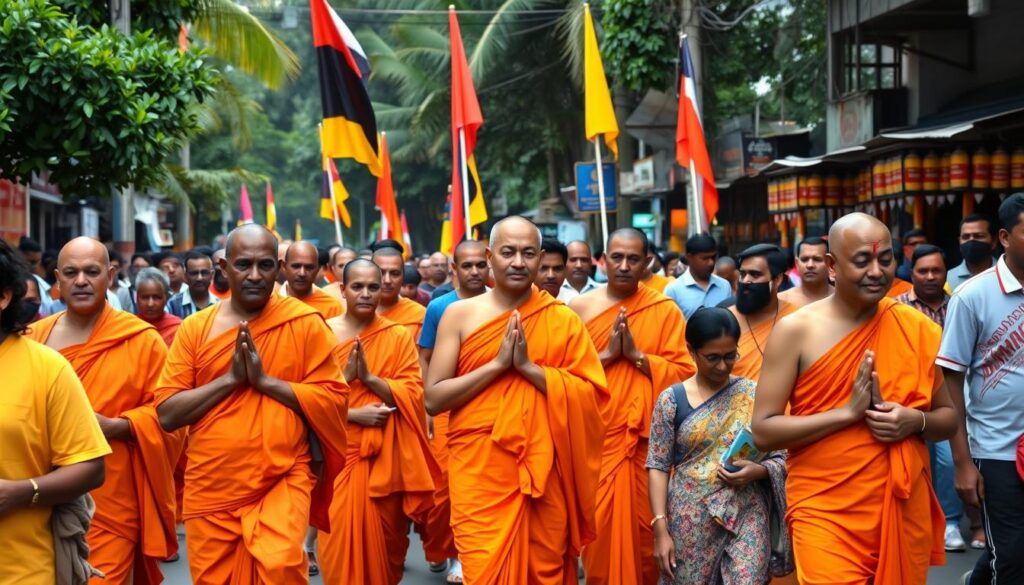
The noise from civil disobedience in Sri Lanka grew louder with Buddhist monks joining in. They showed the socio-political influence of Buddhism in the country. When people protested, leading to President Gotabaya Rajapaksa stepping down, monks were there. They stood with Tamils, Muslims, Christians, and Sinhala Buddhists to speak out against poor government decisions. This shows monks taking a stand is shaking up their traditional role in society.

Venerable Mahayaye Vineetha from Kandy has sparked talks on monks getting into politics. This change from religious roles to activist ones has people talking. As religion and politics mix, monks have backed political leaders and joined nationalist movements. This has sometimes led to tough talk.

Some question if monks should be in protests, given their roles. The naming of a controversial monk to a government group, and support for violence by some, highlights this debate. Still, many in Sri Lanka, especially young people, see the monks’ role in protests positively. They hope, though, that monks won’t dive too deep into politics.

Monks’ role in Sri Lanka protests raises familiar questions

Key Takeaways

  • Monks are key in Sri Lanka’s fight against bad economic decisions.
  • The influence of Buddhism shapes the country’s politics and people’s thoughts.
  • Monks joining protests have caused some disagreement among supporters.
  • Religious leaders often become political allies, impacting Sri Lankan nationalism.
  • There’s debate on how closely monks should link with politics.

To understand more about Sri Lanka’s economy, check out market trends and the strengthening of the Sri Lankan Rupee against the US dollar.

Monks’ Identity Transforms from Spiritual Leaders to Activists

In Sri Lanka, Buddhist monks have shifted from being spiritual leaders to key activists. This change shows monks taking a more active political role, moving away from their previously neutral position. This recasts how people see their involvement in societal issues.

Historical Role of Buddhist Monks in Sri Lankan Politics

Buddhism has long been linked with Sri Lankan politics. Monks worked as advisors to kings before colonial times and have been part of politics ever since. They played a big role in the movement for independence and the establishment of Sinhalese-majority policies after 1948.

Controversial Monk Appointments and Political Alliances

Buddhist monks have taken on more controversial political roles lately. Monks like Galagoda Atte Gnanasara, with their divisive views, held significant government positions. This shows the complicated relationship between monk leadership, public unrest, and politics. Their stance on economic and social issues puts them in a spot beyond just spiritual leadership.

Society’s Changing Perception of Monastic Engagement in Protests

The view of monks as activists has greatly changed. They were once seen as moral guides. Now, their involvement in protests has reshaped their image.

Monks previously in alliance with political powers have been pushed out of protests. This reflects growing doubts about their influence on politics. Yet, people still respect their spiritual advice, showing mixed feelings about their activism.

In conclusion, Buddhist clergy activism in Sri Lanka shows how spiritual leaders are getting more involved in politics. Their evolving role marks a significant change in both religious and national arenas.

###

Buddhism’s Influence on Sri Lankan Socio-Political Landscape

Buddhism has deeply influenced Sri Lanka, intertwining religion and politics. Monks have grown into significant figures beyond spiritual roles. OMP Sri Lanka’s study shows monks are more active in politics now than before. Some support strict policies linked to the Rajapaksas, while others push for progressive change and communal wellness.

In incidents like the one in Batarramulla, the tension between Buddhism and government came to light. A monk, once allied with Rajapaksa, was criticized during protests. Feelings about religion’s role in politics are mixed. This split goes back to Anagarika Dharmapala and is worsened by events like the 2019 Easter bombings, the civil war, and controversial policies such as forced cremations during Covid-19.

Yet, Buddhism’s presence in daily life is strong. Temples serve as schools and help poor families. Young protesters and citizens welcome monks’ greater civic role. But, worries about monks gaining too much power are there, especially with the Rajapaksas regaining control. This tension between religion and state power continues to influence Sri Lanka’s governance and society.

US & Israel Issue Travel Warning for Sri Lanka’s Arugam Bay

US & Israel Issue Travel Warning for Sri Lanka’s Arugam Bay

The US embassy in Colombo has urgently warned travelers about Arugam Bay. They’ve flagged safety concerns due to a potential terrorist attack threat. This warning comes from reliable intelligence. It suggests evacuating without delay. Following this, the Israel’s National Security Council has given similar advice. They urge Israelis to leave Arugam Bay and nearby areas to ensure tourist safety during this emergency situation.

While highlighting the importance of Sri Lanka’s tourism, the alert also stresses the severe threat level. This year, up to September, about 20,000 Israelis chose Arugam Bay as their travel destination. These travel warnings could seriously affect the local economy. With growing safety worries, Sri Lanka has boosted its security. A large number of police and Special Task Force officers are now working to keep the area safe.

Sri Lanka's Arugam Bay: Why are US and Israel asking tourists to leave?

Key Takeaways

  • Credible information indicates potential terrorist attacks in Arugam Bay, prompting US and Israeli travel advisories.
  • The US Embassy has placed immediate travel restrictions for embassy personnel to Arugam Bay.
  • Israeli and US citizens in affected areas are urged to evacuate or relocate to safer locales with increased security.
  • Sri Lankan authorities enact preventive measures by deploying additional security to maintain the tourist haven’s safety.
  • These developments highlight the delicate balance between promoting Sri Lanka as a top travel destination while ensuring tourist safety.
  • The current threat level emphasizes the need for constant vigilance for international travelers within Sri Lanka.

Sri Lanka’s Arugam Bay: Why are US and Israel asking tourists to leave?

Recently, the US and Israel warned their citizens about visiting Arugam Bay in Sri Lanka. They did this due to threats of terrorism in popular tourist spots. Local officials are now taking extra security steps to protect everyone.

These travel advisories mean Sri Lanka’s safety is a big talk. After the threat level went up, Sri Lanka’s police and special forces increased their security. They are paying extra attention to places where tourists from Israel hang out.

Assessing the Credible Threat in Arugam Bay

The threat has not been spelled out, but it’s caused more safety actions. Officials are working hard to stop any danger. They’re focusing on Arugam Bay, a beautiful spot that draws tourists from all over the world.

Actions Recommended By the US Embassy for Travelers

The US Embassy asked Americans to be very alert. They suggest signing up for the Smart Traveler Enrollment Program (STEP). This program helps travelers get updates and help from the Consulate. The Embassy advises avoiding busy places and reporting strange things to the police.

Impact of Travel Warnings on Sri Lankan Tourism and Economy

Travel warnings could hit Sri Lanka’s economy hard, especially in Arugam Bay. This area relies a lot on tourists. The warning comes at a bad time, just after the popular surfing season. Israeli tourists, who make up a good portion of visitors, could greatly affect the area’s earnings.

The economic troubles plus the impact of travel advisories highlight the need for strong safety rules and economic plans. For Arugam Bay to thrive, businesses must follow rules and keep things fair. This is vital for Sri Lanka to overcome its economic problems and grow.

Safety Concerns and Emergency Preparedness in Sri Lanka

Recent alerts from the United States and Israel have raised safety worries in Sri Lanka, especially in Arugam Bay. About 1,000 Israelis visit Arugam Bay in peak seasons. This is significant since over 1.5 million tourists have visited Sri Lanka in just nine months. The Sri Lankan authorities have increased their efforts in emergency preparedness.

There has been a notable boost in security measures across Sri Lanka. More police and law enforcement are now on the ground. The aim is to strengthen safety for everyone, following the 2019 Easter attacks. These attacks hurt Sri Lanka’s tourist economy deeply, killing 270 people, including 45 foreigners.

Now, about 500 police, military, and special forces personnel keep a close watch to protect tourists and locals. Another issue is unregulated foreign-run businesses. The Sri Lanka Tourism Development Authority is working to include these businesses in the formal economy. This helps manage competition and maintains order.

Arugam Bay is calm after the tourist season despite past events. The government recently evacuated Israeli nationals due to specific threats. This shows their commitment to safety. Residents like Miller Maoz appreciate the strong sense of community in Arugam Bay. Yet, strict business regulations remain important to ensure Arugam Bay stays peaceful and secure.

Bus Accident in Badulla: Two University Students Dead, 39 Injured

Bus Accident in Badulla: Two University Students Dead, 39 Injured

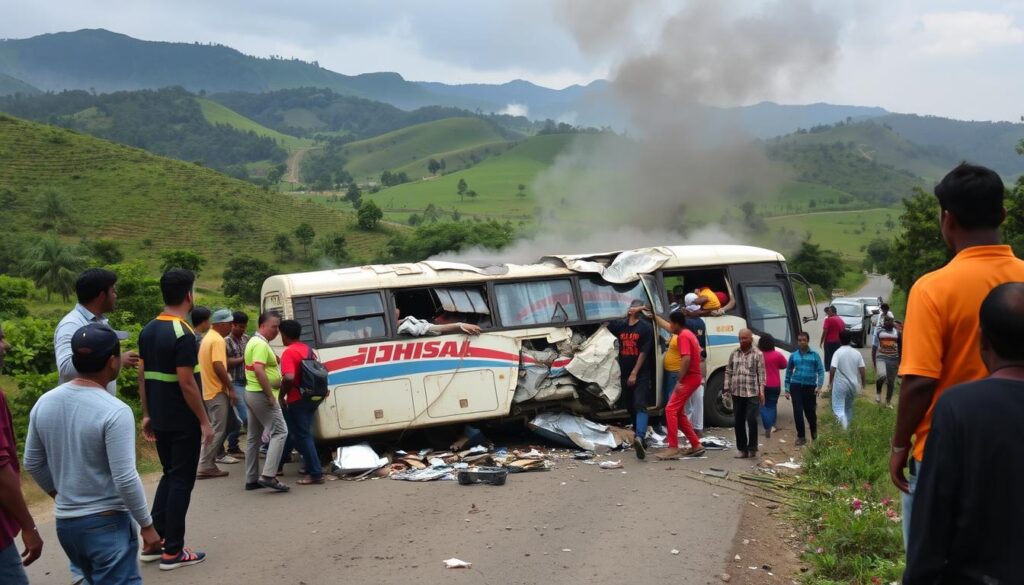
In a tragic incident on the Mist-laden roads of Badulla, a road accident highlighted Sri Lanka’s road safety issues. Early morning, on the Badulla-Mahiyangana highway, a bus filled with young dreams had a terrible accident.

General Sir John Kotalawala Defence University (KDU) is grieving the loss of two students. This accident is a sharp reminder of how uncertain road travel can be. The bus accident in Badulla shocked the nation, with 39 injured fighting for their lives in Badulla Hospital.

The accident happened around 7:45 a.m. between the third and fourth-kilometer posts. The bus, carrying KDU members, went off the road. This raises concerns about vehicle safety and road conditions. On board were university students dead, teachers, and military personnel who faced a horrific incident as the bus crashed.

Bus Accident in Badulla: Two University Students Dead, 39 Injured

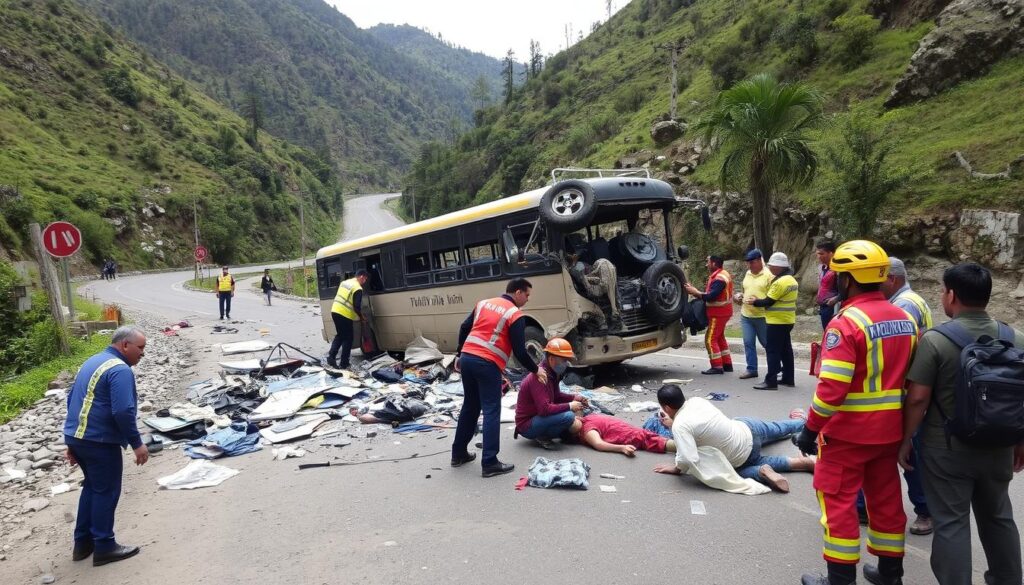
Local people and emergency teams worked hard to help the injured. Ambulances rushed the victims to Badulla Teaching Hospital for urgent care. Six seriously hurt people are in the ICU. Others are getting ready for surgery.

Early findings suggest a technical problem caused this tragic event. Sri Lanka news is keeping everyone updated. OMP Sri Lanka is working hard to uncover the truth behind this sad story.

The Response to the Bus Crash: Rescue Efforts and Medical Treatment

Right after the tragic bus crash in Badulla, rescue efforts began quickly. The Badulla Municipal Fire Brigade and local emergency services joined forces. Their prompt action helped reduce harm and get the injured help fast.

Emergency Services’ Swift Action

The emergency teams responding to the bus crash were from different units. This included the local police and the army. They worked with the fire brigade to secure the site and help victims. Their quick and efficient efforts meant survivors got the help they needed without delay.

Hospitalization and Treatment of the Injured

A total of 39 victims received transport to the Badulla hospital. They had injuries ranging from minor to critical. Dr. Palitha Rajapakse led the medical team into action. Eight patients needed intensive care, which shows the crash’s severity.

Investigations into the Cause of the Accident

Early investigations point to brake failure as the cause of the crash. Authorities are still looking into it. They want to find out exactly what happened. This will help prevent similar accidents in the future.

In other news, financial stability measures are helping the country’s economy. This includes the Sri Lankan Rupee growing stronger against the US Dollar. Such growth can help improve public safety with more funding and better emergency services.

Badulla Bus Crash

Event Details
Bus Crash Victims hospitalized 39
Immediate Fatalities 2 university students
Critical Condition 5 admitted to ICU
Investigation Cause Brake failure suspected

Following this disaster, Sri Lanka is showing commitment to safety in different sectors. This includes collaborative projects like the one between the FAO and Norway to enhance fisheries. It demonstrates a national effort to improve readiness for emergencies.

Impact on the University Community: Sir John Kotalawala Defence University Mourns

The tragic bus accident in Badulla has greatly affected the Sir John Kotalawala Defence University. Two members of our university have died, and 39 students are injured. The university is now a place of deep sorrow and mourning.

The sadness reaches across students from all over the country. They are united in their grief and support for each other during this tough time. It’s a moment for remembrance and collective healing.

The university is closely looking after the injured students. We are ready to help them heal, both body and mind. The tragic accident has made us think about how to keep students safe on future trips and activities.

We’re dedicating ourselves to enhancing student safety measures. It’s crucial not just to mourn but to learn and improve protection for our students.

Despite the tragedy, Sri Lanka continues to push forward. The partnership between FAO and USAID marks progress in agriculture for the country. This reflects the nation’s commitment to thriving and overcoming challenges.

As the Sir John Kotalawala Defence University grieves, it remains part of the national effort. Together, we strive for resilience and growth amidst adversity.