Browsed by
Category: News

Sri Lanka Parliament Cuts Presidential Powers in Reform

Sri Lanka Parliament Cuts Presidential Powers in Reform

In a big change for Sri Lanka, the Parliament approved the 21st amendment. This move cuts presidential powers. It marks a move towards more democracy in this South Asian country. This major change got support from all sides, showing the country wants change during a tough financial time. The goal is to change how the government works, fight corruption, and help the economy recover.

People had protested against the former President Gotabaya Rajapaksa. This led to his stepping down. It showed people want a government that is open and careful with money. These new changes promise to limit the president’s control. They also aim to make the parliament stronger. These are important steps for political steadiness and fixing the economic problems.

Key Takeaways

  • 179 lawmakers voted for the 21st Amendment, putting limits on the Sri Lankan president’s power.
  • The amendment starts a new way of governing. A constitutional council will now guide presidential choices.
  • With these changes, President Ranil Wickremesinghe’s role comes after Gotabaya Rajapaksa was removed.
  • The 21st Amendment aims for a government that is open, skilled, and responsible. It focuses on getting the economy back on track.
  • Putting a limit on cabinet ministries will make the government run smoother and more effectively.
  • A stronger role for the parliament shows a shift towards a democracy with more control over the executive branch.
  • Important constitutional bodies and councils will enhance expertise, openness, and responsibility in how Sri Lanka is governed.

Sri Lanka’s Parliament Approves 21st Amendment to Curb Presidential Powers

The Sri Lankan Parliament has recently made a big move. They ratified the 21st Amendment to change how their country is governed. This is big news in Sri Lanka, because it aims to take away some of the president’s power. The goal is to make the country’s leadership more democratic.

Rationale Behind the Constitutional Change

Sri Lanka is facing tough economic problems. This situation led to the push for the 21st Amendment. The last amendment gave the president too much power. Now, with this change, they want to make things fairer. They aim to boost the role of Parliament and other independent groups.

The Opposition and Civil Society’s Stance

Not everyone is happy with the new amendment. Some people and groups think it doesn’t do enough to reduce the president’s power. They say it’s a good start. But, the president still has too much control over important areas. This might slow down true democratic reform and the fight against corruption, they believe.

Impact on Governance and Anti-Corruption Safeguards

This amendment is seen as a key step for fighting corruption and improving leadership in Sri Lanka. It aims to make governance more transparent and responsible. It’s also vital for Sri Lanka to get international help, like the support from the IMF. This is needed for the country to recover economically.

Also, according to news on Sri Lankan politics, this change could really shake things up. It pushes the country towards being more democratic. Everyone is watching to see how these reforms turn out, both in Sri Lanka and around the world.

Understanding the Implications of Parliament Amendment Sri Lanka

The recent constitutional amendment in Sri Lanka, known as the 21st Amendment, has made big news. It changes the political landscape a lot. Aimed at reducing the Executive President’s powers and boosting parliamentary authority, it got a large majority in Parliament. This moment is key for Sri Lanka’s politics. The amendment is about balancing government powers and answering calls for better governance.

The 21st Amendment saw great agreement in Parliament, going beyond party lines. To pass, it needed a two-thirds vote from the 225-member house. It got 179 votes in favor. This shows a rare unity in the legislature during a time when people strongly wanted change. It’s a major step in Sri Lanka’s constitutional change.

Event Votes in Favor Votes Against Abstentions Outcome
Initial Vote 179 1 (Sarath Weerasekara) 45 Passed with a two-thirds majority
Second Reading Vote 179 1 0 Amendment Approved
Third Reading Vote 174 0 1 Amendment Enacted

The 21st Amendment has an important feature. It stops people with dual citizenship from running in elections. This is to ensure leaders are fully loyal to the nation. From 1994 to 2015, every presidential candidate promised to end the Executive Presidency. This shows a strong wish for reform. The 21st Amendment follows these efforts, starting with the 19th Amendment in 2015, which also aimed to reduce presidential powers.

Looking at Sri Lanka’s current affairs, there’s a consistent effort to change the constitution. The 21st Amendment’s drafting suggested many reforms. These aimed to spread out executive powers which often got misused. The amendments are part of a push for democratic reform. They aim to strengthen legislative structures and encourage fair governance.

In conclusion, passing the 21st Amendment is a milestone in Sri Lanka’s constitutional changes. It shows major progress towards fair and democratic governance. This legislative change marks a pivotal moment in Sri Lanka’s politics. It might lead to more reforms, moving towards more democratic transparency and accountability.

Sri Lanka Governance Amendment: A Step Toward Democracy?

The Sri Lanka Governance Amendment, also known as the 21st Amendment, marks a key moment for the country. It aims to change the political scene by repealing the 20th Amendment. This gave a lot of power to President Gotabaya Rajapaksa. Now, the focus is on reducing the president’s power and strengthening democracy.

This comes as the country faces economic and political challenges. People are calling for clearer governance and better checks and balances. By bringing back parts of the 19th Amendment, Prime Minister Ranil Wickremesinghe seeks to lessen executive power. However, some worry this doesn’t go far enough in shifting power to promote Democracy Sri Lanka.

The 21st Amendment has been approved by the cabinet to give more power to Parliament and adjust presidential powers. Critics say it doesn’t do enough to limit the President’s power. They argue it lacks strong checks and balances, unlike earlier amendments aimed at reducing government control. Still, this update in Sri Lanka Politics might spark further changes toward a democratic system.
Sri Lanka’s Economic Recovery: A Peaceful Political Transition

Sri Lanka’s Economic Recovery: A Peaceful Political Transition

Sri Lanka has shown great strength, working towards stability and growth after a tough financial period. Anura Kumara Dissanayake and the Janatha Vimukthi Peramuna (JVP) won 42% of the votes in the presidential election. This was a huge jump from 3% in 2019. This shift shows the country’s desire for change, leading to a smooth political shift, a first in its history.

Economic growth in Sri Lanka is feeling the impact of this change. Inflation has dropped to 2%, and the Sri Lankan Rupee is stable. The GDP growth rate for 2024 is predicted to hit 4%, surpassing the IMF’s 2% estimate. This builds confidence among investors.

The JVP’s rise to power was notable for its calm approach, avoiding hateful speech. This helped Sri Lanka hold elections without violence. It’s a sign of the country’s growing peace and democratic strength. What was once a difficult political scene is now filled with hope, setting a strong base for future growth.

Sri Lanka's Economic Recovery: A Peaceful Political Transition

As Sri Lanka advances on the world stage, it draws international attention. Good market performance and increasing foreign investment reflect its progress. Despite some restrictions from the IMF, economic reforms are making a difference. This moves Sri Lanka towards lasting stability and wealth.

The Path to Sri Lanka’s Political Stability

In 2022, Sri Lanka faced a massive economic challenge. It saw its GDP plummet by 7.8%, marking one of the worst economic downturns globally. This situation pushed the country onto a path aiming for political stability and a better economy. A significant political shift happened peacefully, suggesting a silver lining amidst tough times.

Year GDP Growth Rate Inflation Rate Government Approval Rating
2022 -7.8% 60% 10%
2023 Projected Positive Growth 21%

There was a huge outcry from the public, leading to a major political change. President Gotabaya Rajapaksa resigned due to people demanding a new direction. This reflects a broader desire for transparent and steady governance focused on healing both the economy and the political landscape.

The government has made moves to stabilize the economy with various reforms. Help from neighboring countries, especially India, has been pivotal. India’s emergency aid was essential in keeping Sri Lanka’s economy from further decline. It included postponing trade payments and crucial credits for importing necessities like fuel and medicine.

Political Stability and Economic Recovery in Sri Lanka

The World Bank’s forecast brings hope to Sri Lanka, predicting 4.4% growth by 2024. The industrial and tourism sectors are expected to drive this recovery. But, the journey is cautious, with ongoing reforms and a debt crisis solution being crucial.

Sri Lanka’s journey towards political stability and economic recovery is closely linked. With this political shift, the world is keenly watching. Everyone hopes for a revival in governance and economic performance, making Sri Lanka stand out in South Asia.

Sri Lanka’s Peace Process and Economic Reforms

Sri Lanka is on a journey towards economic stability and recovery. This journey is closely linked with its peace process. The nation is reshaping through political changes and IMF-backed economic reforms.

The Impact of the IMF Programme and Austerity Measures

The IMF program introduced austerity measures in Sri Lanka. These measures are crucial for stabilizing its economy. They include freezing public sector wages, increasing taxes, and cutting government spending.

Though these steps are vital for recovery, they have also lowered living standards temporarily. To help, the Central Bank of Sri Lanka lowered policy rates. This action aims to boost economic activity.

Reshaping Economic Policies for Sustainable Development

Sri Lanka is changing its economic policies for sustainable growth. The country is finding a balance between fiscal duties and social welfare. These strategies are key for not just recovery but also long-term stability.

Political Reconstruction: The Role of Peacebuilding Efforts

Peacebuilding is shaping Sri Lanka’s political reconstruction. It’s crucial for healing and uniting a divided nation. Efforts include reconciliation and promoting transparency and political inclusion.

Maintaining these political reconstruction efforts is key. It’s essential for Sri Lanka’s peace process and democratic stability.

Aspect Pre-2015 Post-2015
Constitutional Framework 20th Amendment – Hyper-presidentialism 19th Amendment – Diminished executive powers
Political Dominance Rajapaksa family control Shift towards more democratic governance
Reconciliation Initiatives Limited government-led efforts Increased focus on integrated reconciliation processes

The mixture of economic policies, IMF support, and peace efforts is key for Sri Lanka. Staying committed to these reforms will help build a stable and prosperous future.

Conclusion

Sri Lanka is on the rise, thanks to a big economic boost. This success story comes from a tough time. The tourism sector’s growth plays a big part in this. It’s about more than just the numbers; it shows a vital comeback. The country’s economy is growing, driven by tourism, smart debt handling, and new education goals. 1.5 million tourists have visited, showing this isn’t just a temporary win.

The country’s economy is changing dramatically. It faces big hurdles, like a 7.8 percent drop in GDP and high poverty. But there’s hope. A $3 billion boost from the IMF and help from India are making a difference. The peaceful move to President Wickremesinghe’s leadership has made the country more stable. This stability is crucial for the economy to get better.

Things are looking up for Sri Lanka as it keeps moving forward. This progress is supported by global partnerships and stronger regional trade. The education system is also getting an, focusing on thinking skills and digital know-how. These changes are part of a big plan for ongoing progress. Through smart policies and education changes, Sri Lanka is healing from its struggles and aiming for a bright future.

Sri Lanka President Demands Fast Digital ID Rollout

Sri Lanka President Demands Fast Digital ID Rollout

President Anura Kumara Dissanayake of Sri Lanka wants a quick setup of the national digital identification system. He has given a tight 18-month deadline to complete this project. It is a key part of the digital governance strategy. This strategy aims to change how the nation delivers services and to strengthen the economy.

At the Sri Lanka Banks’ Association meeting, the President talked about the importance of digital projects by the government. These projects fight inefficiency and corruption. They also move the country towards a more clear and efficient economy. The effort to digitize shows President Dissanayake’s commitment, similar to Ranil Wickremesinghe‘s push for reform and innovation in state operations.

Industry experts underline the importance of digital identity in driving growth, cutting down fraud, and making things more efficient. This idea is supported by Dissanayake’s administration. Introducing the digital ID system is expected to push Sri Lanka towards better digital governance. It’s a change that will impact not just technology but also the country’s economic and social systems.

Sri Lanka President Demands Fast Digital ID Rollout

Sri Lanka’s Presidential Push for Swift Digital ID Adoption

Sri Lanka’s President is accelerating the digital ID program amidst a severe economic downturn. This 18-month project aims to improve online government services and boost financial access for all. It’s a key part of reviving Sri Lanka’s economy, with experts hopeful for significant impacts.

President Anura Kumara Dissanayake’s 18-Month Deadline

President Dissanayake has set a bold deadline to revamp digital governance. This effort seeks to upgrade Sri Lanka’s digital infrastructure. It’s seen as vital for enhancing e-government services and shaping government reform.

Streamlining Economic Recovery Through Digital Initiatives

To support these goals, a new biometric system will be put in place. It uses advanced tech for secure identity checks, from fingerprint to eye scans. This step is crucial for stronger and reliable digital governance.

Banking Sector’s Pivotal Role in Supporting Digital ID Rollout

The banking industry in Sri Lanka is set to be a key player. It will link biometric verification with everyday banking, ensuring safe and smooth electronic transactions. This move is expected to broaden financial access significantly.

Initiative Expected Impact Timeline
Digital ID Rollout Enhance security, Increase efficiency in public services 18 months
Biometric Integration in Banking Secure transactions, Greater financial inclusion Ongoing, aligned with digital ID deployment
Technology Adoption in Identity Verification Accurate and fast processing of data Initial phase in first 6 months

Sri Lanka is determined to lead in digital and biometric technology. This comprehensive digital push is aimed at overcoming economic hurdles and setting a regional benchmark.

Enhancing Digital Security and Public Awareness

In an era merging technology and governance, Sri Lanka is boosting its digital presence. It’s focusing on initiatives that increase economic growth and safeguard citizen privacy. For instance, the U.S. Embassy in Colombo and the local tech company WhimsicalWits have launched ‘Cyber Hero.’ This app aims to teach digital safety education and make users wise in their online lives.

Sri Lanka shines at 44th in the Global Services Location Index and is proactive in cybersecurity, ranking 83rd globally. With ‘Cyber Hero,’ part of the PORCH project, it addresses cyber risks and privacy issues. It aligns with the National Digital Policy, preparing for cybersecurity changes and guarding against cyber threats.

Digital literacy is crucial as Sri Lanka expands its digital ID project. U.S. Ambassador Julie Chung and Uthpala Pathirana of WhimsicalWits highlight the importance of global partnerships. They aim to raise Sri Lanka’s digital game. The National Digital Policy for 2020 – 2025 uses benchmarks like the Network Readiness Index to guide these efforts. Sri Lanka is ranked 81st out of 131 countries, pushing towards creating a digitally savvy citizenry.

Sri Lanka is integrating digital technology in public health and beyond, with over 85 major hospitals going digital. Projects like Cyber Hero showcase its dedication to progressing safely in the digital age. Its efforts to enhance healthcare through technology show a commitment to using tech for the public good. This ensures citizens are protected from digital risks.

Revival of Traditional Handicrafts Boosts Local Artisans in 2023

Revival of Traditional Handicrafts Boosts Local Artisans in 2023

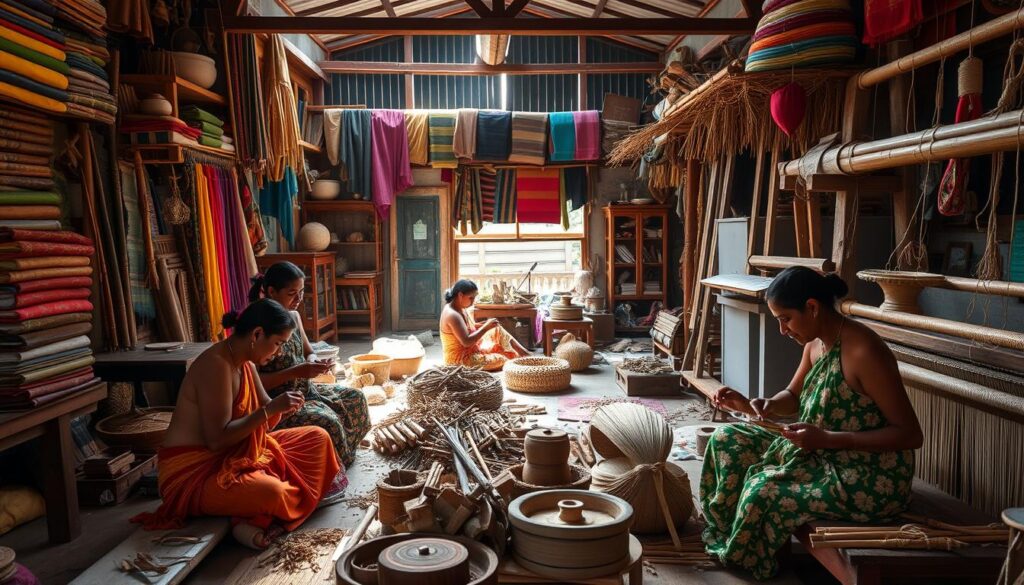
In 2023, traditional handicrafts have made a comeback in Sri Lanka. This revival has empowered local artisans and boosted economic growth. The renewed interest in handmade goods, along with government support, has created a thriving handicraft sector.

Revival of Traditional Handicrafts Boosts Local Artisans in 2023

The creative economy plays a vital role in global GDP. It contributes between 2% and 7% to national GDPs worldwide. In Sri Lanka, the handicraft sector has grown significantly, offering jobs to many people.

Women and young adults aged 15-29 have particularly benefited from this growth. The government has recognized the importance of handicrafts in preserving culture and promoting development.

To support artisans, the government has launched various initiatives. These programs provide training, market access, and financial aid. This support has been crucial in reviving traditional crafts and empowering local artisans.

Sustainable and eco-friendly materials have become increasingly popular in handicrafts. Artisans now use more locally sourced, natural materials. This approach reduces environmental impact and adds value to the products.

These sustainable practices highlight the authenticity of the crafts. They also strengthen the connection between the products and local culture.

The Resurgence of Traditional Handicrafts

Traditional handicrafts are making a comeback. People now value handmade goods and want to support local artisans. This trend has created new opportunities for craftspeople to showcase their talents.

Consumers seek unique, authentic, and sustainable products. These items reflect the rich cultural heritage of their communities. The demand for indigenous crafts has grown as a result.

Renewed Interest in Handmade Products

The global handicrafts market is booming. It’s expected to reach USD 847,730 million by 2028. This growth is driven by sustainable practices and digital transformation.

Customization and personalization trends are also fueling the market. People are drawn to the uniqueness of handmade products. They appreciate the skill and cultural significance behind each piece.

Government Initiatives Supporting Artisans

Governments and NGOs recognize the potential of the handicrafts sector. They’ve launched programs to support artisans. These include training, financial aid, and marketing assistance.

In Nanhan village, China, over 1,700 locals work in traditional crafts. The village’s annual income exceeds 130 million yuan. More than 200 villagers possess multiple craft skills.

Sustainable and Eco-Friendly Crafting Materials

Consumers are becoming more environmentally conscious. This has led to a growing demand for sustainable crafting materials. Artisans are responding by adopting eco-friendly practices.

Many craftspeople now use natural dyes and recycled materials. They also source raw materials locally. These practices appeal to consumers who prioritize ethical buying.

Empowering Local Artisans through Skill Development

Sri Lanka’s handicrafts sector generates employment and boosts economic growth. Artisans face challenges like limited funds and low tech adoption. The government and organizations are helping artisans through skill development programs.

Training Programs and Workshops

The government has launched schemes to support artisans. The Ambedkar Hastshilp Vikas Yojna includes community empowerment and design upgradation workshops. These initiatives aim to enhance artisans’ skills and modernize handicraft centers.

The programs improve artisans’ living standards and create job opportunities. They focus on skill enhancement and technology adoption in the handicraft sector.

Collaborations with Designers and Entrepreneurs

Artisan-designer collaborations create unique handmade products, attracting new audiences. Designers like Anita Dongre and Ritu Kumar work in textile conservation and revival. They showcase Sri Lanka’s handmade traditions globally.

These partnerships preserve cultural heritage and bridge traditional and modern textiles. They combine traditional techniques with innovative design approaches.

Local organizations support artisan communities through cultural heritage programs. These efforts revive traditional textile-making techniques and increase demand for authentic products. Sri Lanka preserves its heritage while creating sustainable livelihoods in the creative economy.

Preserving Cultural Heritage and Promoting Sustainable Tourism

Traditional handicrafts play a vital role in preserving cultural heritage. They also foster sustainable tourism practices. Travelers now seek authentic experiences beyond landmarks, engaging with local customs and identities.

Supporting artisans contributes to community economic vitality. It also establishes a connection between cultural preservation and sustainable destination development.

Preserving Cultural Heritage

In many Best Tourism Villages, women lead in preserving cultural heritage. They do this through traditional handicrafts like weave-making, pottery, and beekeeping.

Women’s leadership in promoting local heritage is evident in places like Nglanggeran, Indonesia. Their role highlights community engagement and empowerment in sustainable tourism activities.

Creating Sustainable Livelihoods

Women-led entrepreneurship drives economic development and cultural preservation in artisan communities. In Aguarico, Ecuador, women lead culinary entrepreneurship. In Chacas, Peru, they craft artisanal products.

SMART village strategies blend traditional practices with modern techniques. These create sustainable livelihoods for artisans and their families in places like Valeni, Moldova.

Fostering Community Engagement

Women-led initiatives celebrate and preserve unique local cultural traditions. The Tokaj Women and Wine Association in Hungary is one example.

These efforts engage the community and attract culture-seeking tourists. Women drive sustainable tourism practices that benefit local economies and preserve cultural heritage.

Conclusion

The revival of traditional handicrafts in 2023 can boost local artisans and preserve cultural heritage. It promotes sustainable development in Sri Lanka. By embracing innovation and fair practices, the handicraft sector can empower artisans and create sustainable livelihoods.

Mass-produced goods and waning youth interest pose challenges to the handicraft sector. However, various initiatives aim to preserve heritage and ensure artisans’ livelihoods. International agencies, governments, and NGOs provide crucial support for craft production.

Artisans are forming cooperatives to share resources and improve bargaining power. Craft villages worldwide showcase thriving traditional crafts supported by cooperatives and government schemes. Global craft exports are reaching significant levels, with substantial growth in the Indian handicraft industry.

The future of handicrafts looks promising, with growth expected in emerging markets. There’s a rising demand for sustainable and unique products. Sri Lanka’s support for traditional handicrafts is essential for preserving these cultural treasures.

Safeguarding crafts involves understanding, representing, and valuing these cultural assets. Artisans, governments, and organizations must work together to ensure handicrafts’ revival. This effort will boost local artisans and contribute to cultural heritage preservation.

Dr. Hans to Step Down from Axiata Group to Lead SL

Dr. Hans to Step Down from Axiata Group to Lead SL

Dr. Hans Wijayasuriya, a key figure in telecommunications, is leaving Axiata Group. He’s been with them for over 30 years. He played a major role in markets like Malaysia, Indonesia, and others. Now, he’s moving to head Sri Lanka’s digital drive.

Dr. Wijayasuriya won the 2024 GSMA Chairman’s Award for his global mobile industry work. He’s the new Chief Advisor to Sri Lanka’s President on Digital Economy. His work starts on January 15, 2025, advising on digital policies.

He’s still helping Axiata Group as CEO of Telecommunications Business. He’ll hold this position until he starts his new role in Sri Lanka. There, he aims to enhance the digital landscape. This move could position Sri Lanka to top Asian Frontier Markets in 2025.

Dr. Hans to Step Down from Axiata Group to Lead SL’s Digital Economy Agenda

Dr. Hans Wijayasuriya’s Departure from Axiata Group

For over three decades, Dr. Hans Wijayasuriya played a key role at Axiata Group. His work led to major changes in the telecommunications industry. He also began a leadership transition and corporate restructuring. Wijayasuriya’s guidance helped Axiata grow and reach new markets.

Celebrating a 30-Year Tenure and His Role in Telecommunications

Dr. Wijayasuriya spent more than 20 years leading Dialog Axiata. Under his watch, it grew into a top player in its market. With over 11 million customers, it moved from 4th to 1st place because of his efforts.

Axiata Group Leadership and Global Mobile Industry Impact

With Dr. Wijayasuriya in charge, Axiata Group made huge investments in Sri Lanka reaching $1.9 billion by 2015. He led the acquisition of MTT and expanded services. His push for digital solutions made Axiata a tougher competitor.

His work boosted Axiata’s operations and set the stage for future leadership. Key milestones during his time are listed in the table below:

Year Event Impact
1997-2000 Transition to Market Leader Established as No. 1 in Mobile Industry
2008-2009 Restructuring and Downsizing Rebounded within 6-8 Quarters Post-restructuring
2015 Investment in Sri Lanka Reached $1.9 Billion, Expanding Market Dominance

Transition Plan for Axiata Group and the Role of Dr. Wijayasuriya until 2025

Dr. Wijayasuriya is getting ready to leave. But a strong leadership transition plan is in place. He will advise until 2025 to help Axiata and Sri Lanka’s digital future. For more on Sri Lanka’s economy and politics, check this article.

This careful planning shows Dr. Wijayasuriya’s impact. It prepares future leaders for the changing world of telecommunications.

Dr. Hans to Step Down from Axiata Group to Lead SL’s Digital Economy Agenda

Dr. Hans Wijayasuriya is making a big change. He’s moving from Axiata Group to lead Sri Lanka’s digital economy. His goal is to boost technology use in different sectors to help the economy grow.

Appointment as Chief Advisor to President on Digital Economy

Dr. Wijayasuriya is now the Chief Advisor to President Anura Kumara Dissanayake. This move is huge for adding digital tech in government. He will focus on making departments like Customs and Inland Revenue work better online.

He plans to work with others to make the economy stronger through tech. This includes sharing technology and working together on economic development.

Strategic Vision for Sri Lanka’s Digital Transformation

Dr. Wijayasuriya has big plans for Sri Lanka’s digital future. He wants to spend money on digital tools and train a tech-savvy workforce. His aim is to make the country a tech leader in the area.

He has a plan that uses resources from both the public and private sectors. The goal is to remake digital systems to help Sri Lanka’s economy.

Leveraging Technology Adoption for Economic Development

Dr. Wijayasuriya believes using technology well can grow the economy. He wants to digitalize how the government works and support tech start-ups. The plan is to build a place where new tech leads to growth.

Working with global tech leaders is key to this strategy. Their expertise and money are important. They’ll help Sri Lanka grow in a digital world, offering both sustainability and big economic pluses.

Future Prospects: Envisioning Sri Lanka’s Digital Economy Under New Leadership

Sri Lanka’s digital economy is ready for a big change. Dr. Hans Wijayasuriya is leading this change. As the head of Dialog Axiata PLC, he brings a lot of experience. Dialog Axiata is the largest listed company on the Colombo Stock and the top foreign investor in the country. Under his leadership, Dialog Axiata’s revenue went up to Rs. 141.9 billion. This was an 18% increase from the year before, showing the power of strong digital infrastructure.

Dialog Axiata has over 17 million subscribers. In 2021, they invested about Rs. 31.7 billion in connectivity. This shows their commitment to improving Sri Lanka’s digital landscape. Because of this investment, revenue from Mobile and Fixed Broadband grew by 10% and 39%, respectively. With Dr. Wijayasuriya’s vision, Sri Lanka’s digital economy is set to get even better.

Dr. Wijayasuriya also advises the President on the digital economy. This shows Sri Lanka’s focus on digital growth. The Sri Lanka Digital Marketing Summit 2023 is a big event. It has leaders from big companies like Google and Meta. Dialog Axiata is the main sponsor and plays a big role in organizing it. This underlines their importance in boosting Sri Lanka’s digital ecosystem. Despite economic challenges, the push for digital growth is strong. This promises a future where technology leads to progress and resilience.