Browsed by
Category: News

Sri Lankan Authorities Detain Hindu Worshippers

Sri Lankan Authorities Detain Hindu Worshippers

A recent event has caused a lot of talk. Sri Lankan Authorities Detain Hindu Worshippers, bringing up big worries about religious freedom violations and how minority groups are treated. This shows the big issues with Sri Lanka human rights.

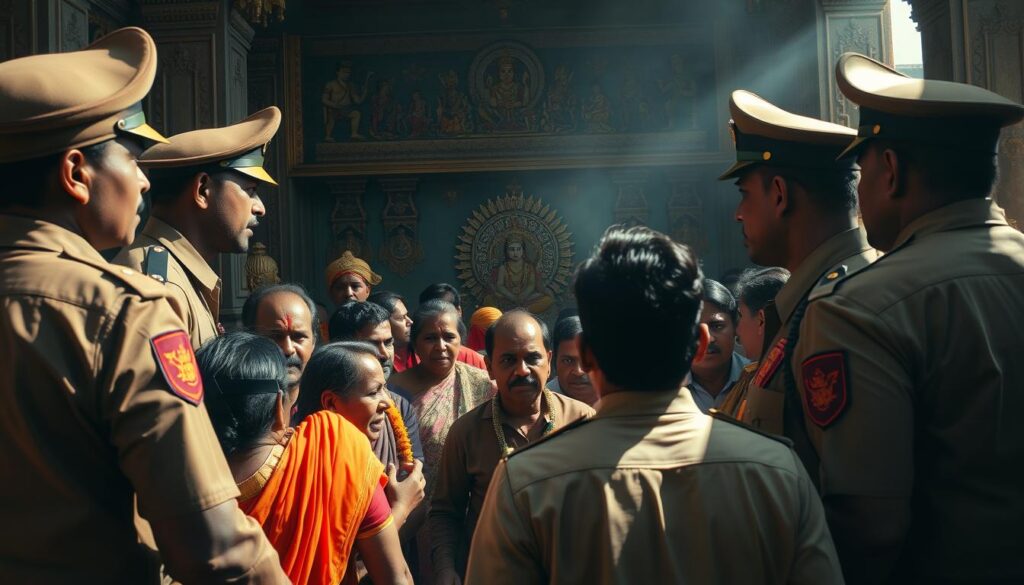
During a festival, eight Tamil Hindu worshippers were arrested at the Veddukkunari temple near Vavuniya. They were taken while doing their rituals and kept for a long time. This event highlights the problems minorities in Sri Lanka face.

The arrests made people question the authorities’ actions, as there was earlier approval for the festival. Even though there were concerns about ritual fires causing damage, the court later freed the worshippers. This made people wonder if the arrests were right.

Amid these issues, it’s important to remember that Sri Lanka is also dealing with a big economic crisis. This makes the situation even harder for the country.
Sri Lankan Authorities Detain Hindu Worshippers

Key Takeaways

  • Authorities’ detention of Hindu worshippers raises concerns over religious freedom in Sri Lanka.
  • The incident at Veddukkunari temple reflects broader issues of minority rights.
  • Legal precedents for religious festivals clash with governmental actions.
  • The role of nationalist groups and government agencies in minority oppression is under scrutiny.
  • Sri Lanka’s economic struggles may compound its human rights challenges.
  • International awareness and dialogue are crucial for remedying religious freedom violations in Sri Lanka.

Violation of Religious Freedom in Sri Lanka: Hindu Worshippers’ Rights Breached

In Sri Lanka, the right to practice religion freely is under threat. This is especially true for the Tamil Hindu community. They face many challenges due to disputes over religious sites. The Department of Archaeology and the Tamil community often clash. This is over claims of Buddhist temples being built on Tamil lands.

Recent data from 2023 shows a worrying trend in the north and east of the island. The Department of Archaeology, with help from the Ministry of Defense, has tried to build Buddhist temples on lands owned or used by Tamil Hindus 37 times. This has sparked religious tension and added to the conflict between different cultural and religious groups.

This issue is raising alarms among human rights groups, both locally and worldwide. They call for balance and respect for the rights of the Tamil minority. Such disputes show a problematic pattern that could lead to deeper divisions in society if not handled properly.

The situation could impact the 12.6% of Sri Lanka’s population that follows Hinduism. The nation’s constitution also recognizes Buddhism, Islam, and Christianity. But, it places Buddhism in a special position. This often leads to favoritism in public policy and affects the Tamil Hindus’ religious and cultural lives.

Given these complex issues, it’s critical for Sri Lanka to uphold human rights and religious freedom. Fair treatment of all religious groups is a must. Laws must be strengthened and applied fairly to foster peace among Sri Lanka’s diverse religious communities.

By recognizing these challenges and striving for legal and social changes, Sri Lanka can hope for harmony. It’s essential for respecting all religious traditions equally. This is key for Sri Lanka’s advancement in the global human rights arena.

Sri Lankan Authorities Detain Hindu Worshippers During Veddukkunaari Temple Rituals

Sri Lanka is at a crossroad, balancing religious freedoms and human rights. The nation, rich in culture and religion, faces issues. Recent events at the Veddukkunaari temple have raised concerns. Hindu worshippers were detained, affecting Tamil minority rights. This action underscores ongoing religious freedom violations.

Contextual Background of the Veddukkunaari Temple Controversy

The Veddukkunaari Temple is important to Hindu Tamils. Sinhala Buddhist monks claimed the site, with government support. This has caused tension and raised human rights issues. The Hindu religious practices there are historic. The conflict has led to legal consequences for the local community.

Legal Developments and Court Rulings for Detained Worshippers

Hindu worshippers were mistreated after their detainment. There was a public outcry and legal intervention. Courts ruled in favor of releasing the detainees. These incidents highlight the importance of religious freedom and minority rights in Sri Lanka.

The Role of Nationalist Buddhist Monks and Government Agencies

Nationalist Buddhist monks and the military attended a temple event. Their presence raised concerns over freedom and community division. These monks and agencies have taken actions that limit religious practices.

Tamil Hindu Minority: Targeted Traditions and Religious Practices

The Tamil Hindu Minority faces challenges. Their religious spaces and rituals are targeted. This leads to religious conflict and human rights issues. A respectful solution for all religious identities is needed in Sri Lanka.

OMP Sri Lanka keeps the world informed about these issues. They provide updates on religious freedom and human rights in the country. It’s important for the public to stay informed.
Elephants Rampage at Festival: 13 Injured in Stampede

Elephants Rampage at Festival: 13 Injured in Stampede

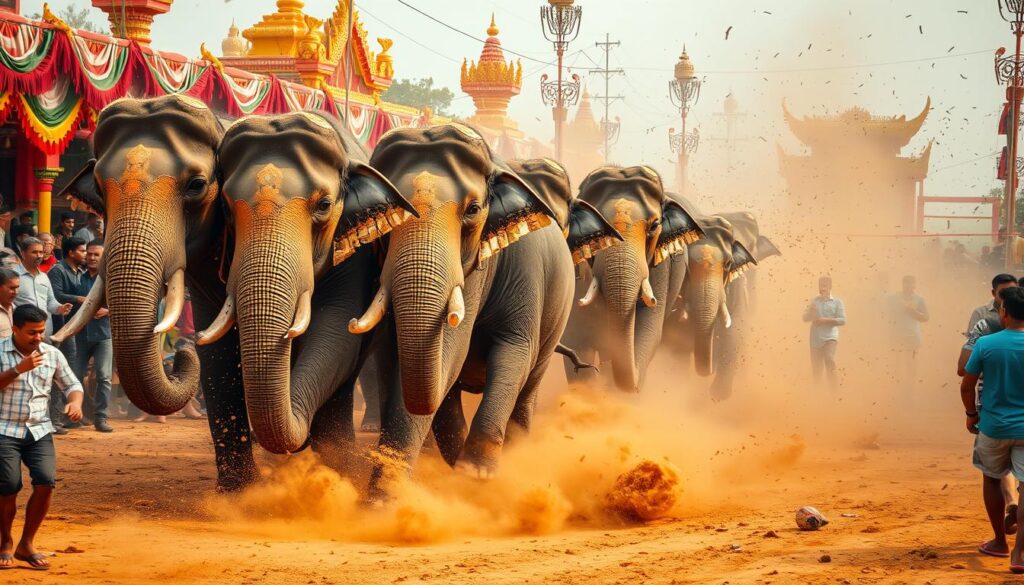
At a Hindu festival in Kataragama, Sri Lanka, joy turned to chaos. An elephant, startled during the festivities, ran through the crowd. This caused other elephants to join in, leading to a dangerous situation.

In Sri Lanka, 13 people were hurt and needed hospital care. Thankfully, they have all recovered. Elephants are a big part of religious events in Sri Lanka. But this incident raises concerns about their role and the safety of people.

elephants go on rampage & stampede injuring 13 at religious festival

Key Takeaways

  • An elephant stampede at the Kataragama festival led to injuries and safety worries.
  • This event shows the dangers of elephants in crowded places.
  • The injured people have all been looked after and are now out of the hospital.
  • It’s time to think about how we include animals in our traditions, considering both ethics and safety.
  • People organizing festivals, those who care about animals, and officials must work together. This will help avoid accidents in the future.

Chaos and Fear: How the Celebration Turned Catastrophic

The peaceful Ruhunu Kataragama Perahera festival in Sri Lanka suddenly changed. An elephant in the procession got aggressive. This led to 13 people getting hurt in Kataragama, about 175 miles from Colombo. Emergency teams came fast to help, and many injured were taken to hospitals.

Looking closely at these events shows how hard it is to manage big animals at festivals. Incidents not just in Sri Lanka but around the world call for better animal control. Even the best plans can fail when an elephant suddenly acts out, as seen in Colombo and Kandy.

The issues raise big worries about the safety of animals and people at these festivals. It’s essential to have good emergency plans ready. After this event, there’s been a lot of talk about changing how we handle animals at such events to keep everyone safe.

It’s tricky when tradition and safety intersect. We need smart, kind ways to manage animals and crowds. By learning from incidents around the world, we can handle high-risk situations better. This keeps our traditions alive safely.

Elephants Go on Rampage & Stampede Injuring 13 at Religious Festival

A sacred festival in Sri Lanka turned chaotic, injuring 13 people. This happened at the Ruhunu Kataragama Perahera, around 8:30 pm. Elephants and people panicked, showing we need better safety and animal care measures at these events.

Initial Panic: The Beginning of the Rampede

The trouble began 175 miles south of Colombo, in Kataragama. An elephant strayed, causing panic among people and other elephants. This led to a dangerous stampede. It shows the importance of strict crowd control and public safety at big gatherings.

Emergency Response: Controlling the Mayhem

Emergency teams quickly came to help those hurt and control the chaos. They worked hard to calm the elephants and help the injured. This highlighted the need for careful planning when animals are part of cultural events.

Aftermath: Injuries Treated and Discharged

Those hurt were rushed to Kataragama hospital for treatment. Thankfully, they all left the hospital okay. This raises talks about safety and managing events with animals, especially with the Sri Lankan elephant’s endangered status.

Sri Lanka: Inflation Drops to Single Digits by Mid-2024

Sri Lanka: Inflation Drops to Single Digits by Mid-2024

Sri Lanka’s economy is bouncing back after the 2022 economic crisis. Inflation has dropped from 69.8% in September 2022 to single digits by mid-2023. This shows a positive change in the country’s finances.

Smart money policies and reforms have helped stabilize the exchange rate. The IMF program has also supported the economic recovery. As a result, the economy grew in the last two quarters of 2023.

Inflation Drops to Single Digits by Mid-2024 After Peaking in 2022

Official reserves increased to US$3.0 billion by the end of 2023. This is a big jump from US$500 million at the end of 2022. The Sri Lankan rupee also gained 10.8% in value during 2023.

The economy is stabilizing faster than expected. This has improved the short-term growth outlook. Experts now predict 4.4% growth in 2024.

These trends show the Sri Lankan economy’s strength. They also prove that government and central bank measures are working well.

Sri Lanka’s Economic Crisis and Inflation Peak in 2022

Sri Lanka faced a severe economic crisis in 2022. The country defaulted on its debt due to unsustainable levels and depleted reserves. Multiple factors caused this crisis, including poor economic management and structural weaknesses.

The economy shrank by 7.8% in 2022 and 7.9% in early 2023. Tourism, a key industry, collapsed during the crisis. This led to widespread job losses and shortages of essential goods.

The country experienced power cuts lasting up to 15 hours daily. This further strained the already struggling economy and affected daily life.

Factors Contributing to the Economic Crisis

Several factors contributed to Sri Lanka’s economic crisis, including:

  • Macroeconomic mismanagement
  • Long-standing structural weaknesses
  • Exogenous shocks
  • Unsustainable debt levels
  • Depleted reserves

Sri Lanka economic crisis

The Ceylon Electricity Board and Petroleum Corporation faced huge losses. They needed government help and loans from state banks to survive. The government had to support state banks with increased tax revenue.

Inflation Reaching Record Highs in 2022

Inflation in Sri Lanka peaked at 69.8% in September 2022. This caused the rupee to lose 81.2% of its value against the US dollar. Household budgets suffered due to tax hikes, price increases, and income losses.

Real wages fell by 16.9% in the private sector between 2021 and 2024. In the public sector, they dropped by 22% during the same period.

Year Inflation Rate Currency Depreciation
2022 69.8% 81.2%
2023 (August) 4% 11% appreciation

Rising fuel and electricity prices hurt households. Higher taxes affected individuals and businesses, increasing production costs. The government suspended imports to stabilize the economy. However, key sectors still lacked cost-reflective pricing.

Government Reforms and Policy Adjustments

Sri Lanka’s government has taken action to stabilize the economy amid a severe crisis. They’ve implemented reforms focusing on fiscal consolidation, revenue measures, and expenditure control. These efforts aim to set the stage for economic recovery.

Key measures include prudent monetary policy, domestic debt restructuring, and structural reforms. The government has also prioritized revenue measures to address the country’s fiscal challenges.

Fiscal Consolidation Measures

The budget deficit grew from Rs. 1,244 billion to Rs. 1,614 billion from January to September. To address this, the government introduced cost-reflective utility pricing and new revenue measures.

These efforts have shown positive results. Total revenue increased from Rs. 1,448 billion to Rs. 2,110 billion in the same period.

Monetary Policy Stance and Interest Rates

The Central Bank of Sri Lanka has adopted a prudent monetary policy. The Standing Deposit Facility Rate decreased from 14.50% to 10.00% by October’s end.

These adjustments have helped moderate inflation. The Consumer Price Index dropped from 66.0% in 2022 to 1.5% in 2023.

The commercial bank average weighted new lending rate was 12.67% at April’s end. This indicates a gradual transmission of monetary policy changes.

Structural Reforms in Key Sectors

The government has started reforms to boost long-term growth and resilience. These focus on improving the business environment and strengthening the financial sector.

Infrastructure development is also a key area of investment. The IMF’s $2.9 billion bailout package has been crucial in supporting these reforms.

Indicator 2022 2023
Inflation (Point to Point) – Consumer Price Index (2013=100) 66.0% 1.5%
Unemployment Rate 4.6% (Q2) 5.2% (Q2)
Budget Deficit (Jan-Sep) Rs. 1,244 billion Rs. 1,614 billion
Total Revenue (Jan-Sep) Rs. 1,448 billion Rs. 2,110 billion

Inflation Drops to Single Digits by Mid-2024 After Peaking in 2022

Sri Lanka’s inflation rate has steadily declined since its record highs in 2022. By mid-2024, it dropped to single digits. This decrease is due to government reforms, monetary policy changes, and improved supply conditions.

The World Bank projects Sri Lanka’s economy to grow by 4.4% in 2024. This growth is expected to be driven by industrial and tourism sectors.

Gradual Decline in Inflation Rates

Headline inflation in Sri Lanka stayed low throughout 2024. This was helped by price adjustments and currency appreciation. Overall PCE inflation was 2.3% year-over-year in August 2024.

Core PCE inflation stood at 2.7%. CPI inflation data showed 2.6% growth in August 2024. This was a big drop from the 8.9% peak in 2022.

Factors Contributing to the Moderation of Inflation

Several factors have helped moderate inflation in Sri Lanka. Improved supply conditions have greatly impacted inflation outcomes. Weak private consumption has also kept inflation in check.

Currency appreciation has played a role in reducing inflationary pressures. Household disposable incomes remained low, contributing to subdued demand.

Inflation Measure August 2024 Peak (Year)
Overall PCE 2.3% 6.5% (2022)
Core PCE 2.7% 3.7% (2023)
CPI 2.6% 8.9% (Peak)
Housing 5.4%
Core (ex-housing) 2.1%

Impact on Cost of Living and Consumer Spending

The drop in inflation rates has positively affected Sri Lanka’s cost of living. As prices stabilize, households should see improved purchasing power. However, private consumption recovery is likely to be slow.

Disposable incomes are still affected by the economic crisis. The government’s ongoing reforms and efforts to attract foreign investment should support growth.

These measures are expected to improve living standards in the coming years. Economic growth and stability remain key goals for Sri Lanka’s future.

Conclusion

Sri Lanka’s economic recovery depends on implementing crucial policies. Recent progress is encouraging, but the country’s stability remains fragile. Limited buffers leave Sri Lanka vulnerable to risks like insufficient debt restructuring and policy uncertainty.

The government can boost the economy by implementing comprehensive structural reforms. These should focus on fiscal management, financial sector, and social assistance. Reforms in state-owned enterprises and trade can also help attract investment.

Policymakers must balance short-term measures with long-term changes. Building resilience through robust buffers is crucial. This can help Sri Lanka withstand future shocks and create a more stable economy.

By addressing these issues, Sri Lanka can increase investor confidence. This can lead to fresh capital inflows and sustainable growth. Ultimately, these efforts can help reduce poverty in the medium term.

Sri Lanka Strengthens Diplomatic Ties with India, China

Sri Lanka Strengthens Diplomatic Ties with India, China

Sri Lanka is making big moves in South Asia. It’s boosting its foreign policy by getting closer to India and China. This is crucial because Sri Lanka is in a key spot for sea routes. Seeing how important these partnerships are, especially after a tough economic hit, Sri Lanka is stepping up.

The country got a huge $4 billion aid from India and China is its main lender. President Wickremesinghe is all in on building these relationships. He wants alliances that support Sri Lanka’s future and independence.

Key Takeaways

  • India’s $4 billion economic support supersedes IMF’s assistance during Sri Lanka’s recent fiscal crisis.
  • China’s extensive involvement in post-civil war development projects underscores its significant influence in Sri Lankan affairs.
  • The Janatha Vimukthi Perumana’s stance on foreign policy exhibits a tilt towards China, creating a complex diplomatic landscape.
  • Delicate balancing of Sri Lanka’s alliances with India and China remains a focal point for the administration.
  • India’s proactive “India Out” tourism campaign and immediate aid reflect a strategic investment in Sri Lankan stability.
  • India and China, with competing interests, remain unlikely allies in Sri Lanka’s path to recovery.
  • New initiatives under the “Indo-Lankan investment partnership” highlight India’s commitment to regional solidarity.

Overview of Sri Lanka’s Diplomatic Strategy

Sri Lanka is carefully crafting its foreign policies due to increasing geopolitical rivalry. The country aims to boost its strategic autonomy. Strengthening relationships with major Asian countries, especially India and China, is key. Sri Lanka’s focus is on improving its economy and military, and smoothly handling regional politics. They commit to nonaligned foreign policies.

The nation has a clear stance on global conflict management. Its neutral position in the Ukraine conflict highlights this approach. By staying non-aligned, Sri Lanka wisely manages its international relations during global tensions. Strengthening ties with India shows a smart balance. They are working more on energy and economic areas together.

Engaging diplomatically with India and China brings clear benefits. Projects in defense, trade, and infrastructure are ongoing. These efforts show Sri Lanka’s smart strategy. It aims to gain diplomatically while keeping balanced ties globally.

Sector Initiative Partner Country Details
Defense Capacity-building for Police Officers India Training courses for over 130 officers in India’s premier defense institutions, focusing on counter-terrorism and internal security.
Economic Financial Assistance India Financial support under the “Aid to Sri Lanka” program, reinforcing economic ties and facilitating Sri Lanka’s financial restructuring with international bodies.
Energy Enhanced Cooperation India Agreement in 2023 focused on strengthening energy and economic exchanges, crucial for Sri Lanka’s sustained growth and energy security.

In navigating global diplomacy, Sri Lanka is keen on a balanced, independent policy. By connecting with both India and China, it boosts its role. Sri Lanka aims for regional stability and prosperity. Its strategy of forming varied alliances while staying autonomous makes it key in South Asia.

Sri Lanka Strengthens Diplomatic Ties with India and China

Sri Lanka is in a key spot in the Indian Ocean, making big moves diplomatically. It’s working closely with India and China, two big names in the region. These partnerships cover defense, economy, and big projects, all while keeping a balanced foreign policy.

Enhanced Defense Cooperation with India Reflects Deeper Ties

The partnership between Sri Lanka and India has reached a new level. Thanks to the ITEC program, India is helping Sri Lanka’s officers with special training and support. This is key for India to keep its influence in the Indian Ocean. The two countries also work together on protecting marine ecosystems and boost trade with renewable energy projects in focus.

Sri Lanka’s Economic Engagements and Infrastructure Projects with China

Sri Lanka and China are also working closely, with big agreements shaping their partnership. Landmark projects like Port City Colombo show China’s big role, as Sri Lanka’s top creditor. Despite financial and political challenges, these projects keep moving forward, linking to China’s broad economic plans.

Strategic Balancing in Regional Partnerships

Sri Lanka is smartly managing its relations with big economies like China, India, and the US. Even with India and China’s tensions, Sri Lanka seeks balance, keeping its interests first. This diplomatic skill helps it stay important in regional and global politics, where smart choices matter a lot.

UNESCO Recognizes Sri Lanka’s Traditional “Kolam” Dance as Intangible Cultural Heritage

UNESCO Recognizes Sri Lanka’s Traditional “Kolam” Dance as Intangible Cultural Heritage

UNESCO has officially recognized Sri Lanka’s traditional Kolam dance as an Intangible Cultural Heritage. This honor highlights the importance of preserving Sri Lanka’s rich cultural heritage. Kolam is a unique art form that showcases the country’s vibrant traditions.

Kolam is a masked dance drama that represents Sri Lanka’s diverse cultural tapestry. This recognition underscores Kolam’s significance in representing Sri Lankan identity globally.

UNESCO Recognizes Sri Lanka's Traditional "Kolam"

UNESCO encourages countries to nominate elements of their intangible cultural heritage for inscription. This effort aims to safeguard and promote cultural diversity worldwide. The inclusion of Kolam celebrates its artistic value and ensures its preservation for future generations.

The Significance of UNESCO’s Recognition of Kolam Dance

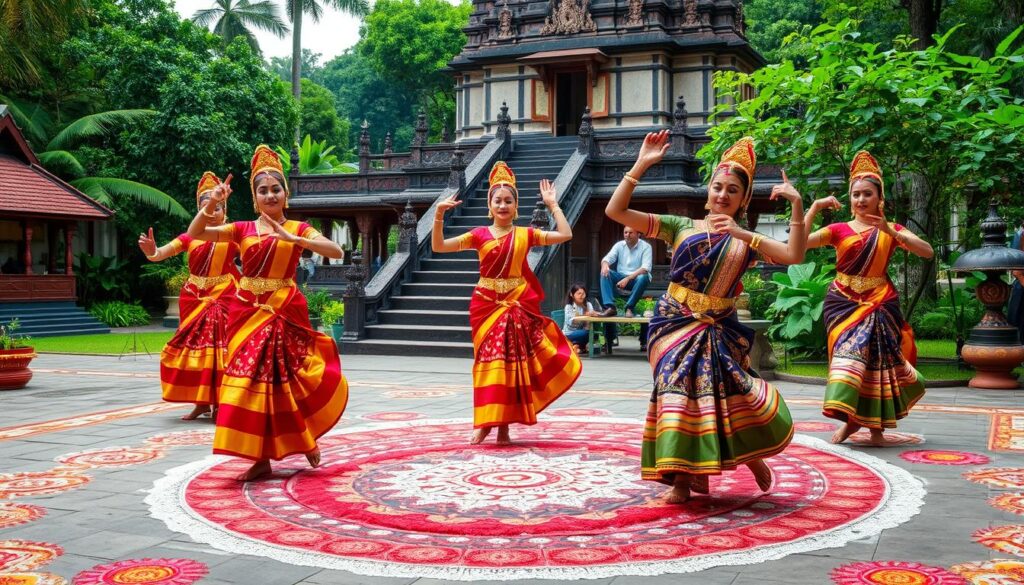
UNESCO’s recognition of Sri Lanka’s kolam dance as intangible cultural heritage is a major milestone. Kolam blends intricate rice flour patterns with graceful dance moves. This Tamil tradition is now protected for future generations.

The UNESCO nod safeguards this ancient art form. It also promotes cultural diversity and human creativity globally. Kolam’s unique artistic elements and traditional significance are now showcased worldwide.

Preserving Sri Lanka’s Rich Cultural Heritage

UNESCO’s recognition highlights the importance of preserving Sri Lanka’s vibrant culture. The 2024 International Conference on “Art and Culture of Tamils” drew over 500 delegates. Eleven countries participated, showing growing interest in Tamil art.

The conference proceedings were compiled into a 188-page volume. It features 82 papers, serving as a valuable resource for researchers and policymakers.

Promoting Cultural Diversity and Human Creativity

UNESCO’s acknowledgment celebrates the diversity of human creativity. It spotlights Sri Lanka’s cultural richness and encourages appreciation of traditional art forms. This recognition fosters cultural exchange and inspires exploration of decorative folk art.

Ensuring the Continuity of Traditional Art Forms

UNESCO’s listing helps ensure kolam dance’s continuity for future generations. It encourages the transmission of knowledge and skills associated with the art form. Young artists can now learn from experienced practitioners.

UNESCO provides a platform for showcasing and celebrating kolam dance. This contributes to its preservation and maintains the vibrancy of Tamil tradition.

The History and Evolution of Kolam Dance

Kolam dance is a captivating Sri Lankan art form. It has evolved over centuries, blending history, beliefs, and artistic expressions. This unique performance art showcases the ingenuity of Sri Lankan artists.

Sri Lanka’s cultural heritage features diverse art and crafts. Traditional dances like Kolam have been shaped by Buddhism and Hinduism. The intricate masks in Kolam performances are stunning and believed to have curative powers.

Origins and Traditional Significance of Kolam

Kolam dance has ancient roots in Sri Lankan rituals and ceremonies. It has been practiced for centuries during religious festivals and social gatherings. The dance serves as storytelling, entertainment, and spiritual expression.

Kolam masks hold great significance in Sri Lankan culture. They represent human, supernatural, and demonic characters. Dancers wearing these masks are believed to channel spiritual energy during performances.

Unique Features and Artistic Elements of Kolam Dance

Kolam dance blends intricate masks, vibrant costumes, and symbolic movements. Skilled artisans craft masks from wood, clay, or paper mache. Each mask represents a specific character or emotion.

Kolam costumes feature colorful fabrics, embroidery, and ornate jewelry. Dancers’ movements convey complex narratives through gestures and rhythmic patterns. Traditional instruments like the Geta-bera drum accompany the performances.

Kolam dance is part of Sri Lanka’s art and crafts heritage. It showcases the country’s rich cultural tapestry alongside handicrafts, architecture, and sculptures. These artistic expressions contribute to Sri Lanka’s diverse cultural landscape.

UNESCO Recognizes Sri Lanka’s Traditional “Kolam” Dance

UNESCO has recognized Sri Lanka’s Kolam dance as Intangible Cultural Heritage. This milestone helps safeguard cultural heritage worldwide. The UNESCO Convention protects traditional art forms and promotes cultural diversity.

Sri Lanka proposed Kolam dance for the UNESCO Intangible Cultural Heritage list. The country has worked hard to preserve this art form. They’ve documented it and taught it to new generations.

UNESCO’s efforts align with Sri Lanka’s initiatives to protect its cultural heritage. These include inventorying practices and ensuring access to related materials and places.

The Process of UNESCO’s Intangible Cultural Heritage Listing

UNESCO encourages countries to submit elements together. They prioritize submissions from more than 10 countries. The listing process evaluates an element’s significance, authenticity, and preservation measures.

Currently, 364 elements are on the ICH Representative and Urgent Safeguarding Lists. There are 12 elements on the Best Practices List. Sri Lanka’s success shows its rich cultural tapestry.

Sri Lanka’s Efforts in Safeguarding Kolam Dance

Kolam dances are famous in Sri Lanka’s coastal areas, especially the southwest. They feature masked dancers and puppetry depicting folklore and historical stories. Sri Lanka has taken steps to protect this art form.

The country has documented Kolam dance and taught it to younger generations. They’ve also worked to raise public awareness about its importance. The partnership between FAO, USAID, and Sri Lanka’s Ministry shows how culture and development are linked.

Global Appreciation for Sri Lankan Traditional Arts

UNESCO’s recognition has brought global attention to Sri Lankan arts. It highlights the country’s diverse artistic expressions, from wood carvings to handloom weaving. This recognition celebrates Sri Lanka’s unique culture.

It also shows the importance of protecting intangible cultural heritage worldwide. Sri Lanka continues to promote its arts on international platforms like the Colombo Art Biennale.