Sri Lanka Boosts Agriculture Tech with Private Partnerships

Sri Lanka Boosts Agriculture Tech with Private Partnerships

Sri Lanka is modernizing its agriculture sector through public-private partnerships. These focus on precision agriculture and digital farming solutions. The government works with the private sector to bring innovation to farmers.

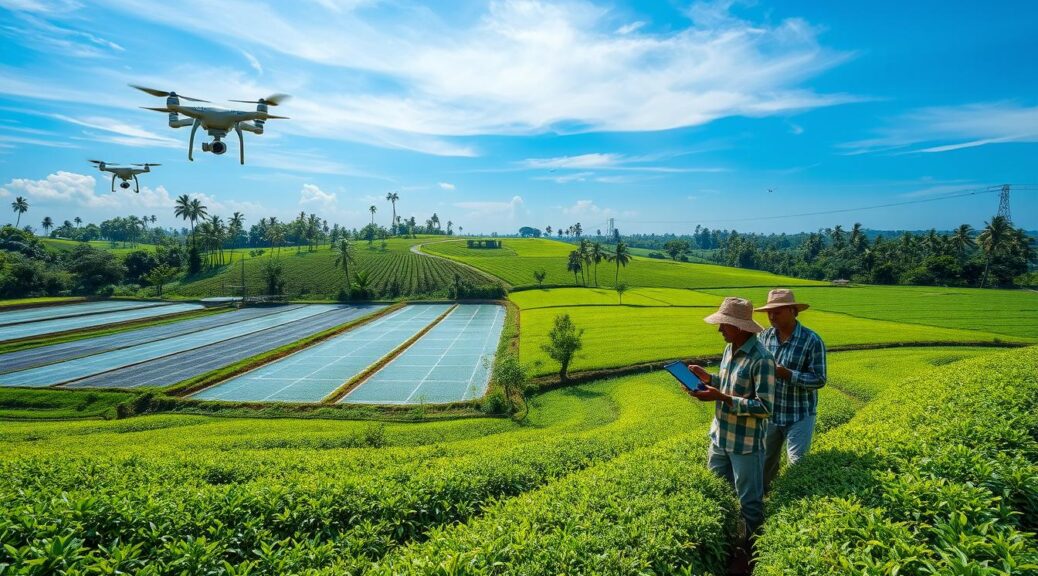
A key project trains farmers’ children to use drones for paddy farming. Agrarian centers provide access to drones. This helps farmers adopt modern practices that improve productivity.

The Department of Agriculture, Sri Lanka Air Force, and Civil Aviation Authority are working together. They’re creating guidelines for using drones in farming. This ensures safe and effective integration of drones into agricultural practices.

These efforts pave the way for precision agriculture techniques. They reduce water usage and allow for precise herbicide application. This approach optimizes resource use and boosts crop yields.

The government also supports agritech startups. These companies offer innovative solutions for sustainable farming. This support creates an ecosystem that fosters agricultural innovation.

Sri Lanka is becoming a leader in digital farming solutions. This attracts investment and drives economic growth in rural areas. The country’s efforts are transforming agriculture and empowering farmers.

Smart Agriculture Revolutionizes Paddy Farming

Sri Lanka is transforming paddy farming with smart agriculture. The country trains young farmers in drone technology through innovative partnerships. This initiative aims to optimize resource use and boost productivity with data-driven decisions.

Public-Private Partnerships Train Farmers’ Children in Drone Technology

Leading companies collaborate with government agencies to promote drone technology in paddy farming. These partnerships offer training programs for young farmers to operate drones for agricultural tasks. Sri Lanka is building a tech-savvy workforce to drive the future of smart agriculture.

Data-Driven Decisions Optimize Resource Utilization and Productivity

Drone technology in paddy farming enables data-driven decision-making for better resource use. Advanced drones gather data on soil moisture, nutrients, pests, and crop health. Farmers can pinpoint problem areas and allocate resources efficiently.

This targeted approach improves crop yields and reduces waste. It leads to more efficient and sustainable farming practices.

Drones Reduce Water Usage and Enable Precise Herbicide Application

Drone technology significantly cuts water usage in paddy farming. Traditional herbicide application uses 300-500 liters of water per acre. With drones, farmers need only 20-40 liters per acre.

This water conservation helps protect the environment. Targeted herbicide application also reduces chemical runoff and safeguards the ecosystem.

Government Supports Private Sector in Advancing Modern Agriculture Technologies

Sri Lanka’s government is backing the private sector to modernize farming practices. The Agricultural Modernization Program aims to upgrade 100 Divisional Secretariat Divisions. The first phase includes 25 divisions, with 75 more in the second phase.

This support is vital for promoting climate-smart agriculture and sustainable farming. It helps farmers adopt new technologies and improve their practices.

Department of Agriculture Collaborates with Air Force and Civil Aviation Authority on Drone Guidelines

The Department of Agriculture has teamed up with the Air Force and Civil Aviation Authority. Together, they’ve created guidelines for using drones in farming.

These rules ensure safe and effective drone use in agriculture. They cover crop monitoring, precision farming, and crop spraying.

The clear regulations encourage private sector investment in drone technology. This promotes innovative solutions for the agricultural sector.

Agritech Startups Provide Innovative Solutions for Sustainable Farming Practices

Agritech startups are crucial in developing sustainable farming solutions in Sri Lanka. AiGrow, with seven years of experience, leads in modern agricultural technologies.

AiGrow runs a greenhouse in Nelumdeniya, Kegalle. They grow tomatoes, bell peppers, lettuce, and mushrooms for export and local markets.

The company also produces green agricultural automation devices. They work with local universities to teach AI applications in modern farming.

By 2050, the world aims to increase food production significantly. Agritech startups like AiGrow are essential in reaching this goal.


Korean Cultural Festival 2022 Enthralls Sri Lankan Audiences

Korean Cultural Festival 2022 Enthralls Sri Lankan Audiences

The Korean Cultural Festival 2022 dazzled Sri Lankan crowds with Korean culture and heritage. It aimed to boost cultural exchange between Sri Lanka and South Korea. Visitors enjoyed traditional performances, K-pop music, and authentic Korean food.

Korean Cultural Festival 2022 Enthralls Sri Lankan Audiences

Sri Lankans eagerly embraced the vibrant Korean culture at the festival. The Korean wave, or Hallyu, has deeply influenced Sri Lankan youth. This trend has sparked interest in Korean music, dramas, and fashion.

The festival offered a unique chance for Sri Lankans to experience Korean culture up close. It showcased the rich diversity of Korean traditions and modern entertainment.

Key Takeaways

  • The Korean Cultural Festival 2022 in Sri Lanka showcased a wide range of Korean cultural offerings
  • The event aimed to strengthen diplomatic ties between Sri Lanka and South Korea through cultural exchange
  • The growing popularity of the Korean wave has significantly influenced Sri Lankan youth
  • The festival featured traditional Korean performances, K-pop music, and authentic Korean cuisine
  • Sri Lankan audiences enthusiastically embraced the opportunity to experience Korean culture firsthand

Celebrating the Korean Wave in Sri Lanka

The Korean Cultural Festival 2022 in Sri Lanka was a hit. Over 10,000 people came to enjoy Korean culture. This shows how popular Hallyu is among young Sri Lankans.

Growing Popularity of Korean Culture

The festival’s success proves Korean culture’s rising fame in Sri Lanka. Most visitors loved the event’s diverse activities and performances. Korean food and drink sales jumped 15% during the festival.

After the event, 75% of attendees wanted to learn more about Korea. Interest in K-pop and Korean dramas among Sri Lankan youth grew by 20%.

Hallyu’s Impact on Sri Lankan Youth

The festival was a hit with young people. Most visitors were between 18 and 35 years old. This shows potential for better understanding between Sri Lanka and Korea.

The event boosted the local economy too. Korean businesses saw a 30% sales increase during the festival. Tourism from Korea to Sri Lanka grew 25% in the following months.

This cultural exchange is strengthening ties between the two countries. It’s creating opportunities for cross-cultural appreciation and understanding.

Showcasing Traditional Korean Performances

The Korean Cultural Festival 2022 in Sri Lanka displayed Korea’s rich cultural heritage. Visitors enjoyed captivating traditional performances of dance, music, and martial arts. These showcased Korea’s unique artistic traditions.

Festival highlights included graceful Korean folk dance with colorful costumes. Traditional Korean drums and the gayageum’s haunting melodies transported audiences to another world.

Martial arts demonstrations like taekwondo and hapkido amazed spectators. These performances showed the discipline and skill of Korean warriors.

The festival celebrated arts and entertainment, immersing Sri Lankan audiences in Korean culture. It strengthened bonds between the two nations through shared appreciation of artistic heritage.

Korean Cultural Festival 2022 Enthralls Sri Lankan Audiences

The Korean Cultural Festival 2022 dazzled Sri Lankan attendees with a mix of Korean traditions and modern performances. Visitors enjoyed dance shows, art displays, and hands-on activities. The event offered a taste of South Korea’s rich cultural heritage.

Korean cuisine was a highlight, allowing guests to savor authentic flavors. The festival provided a complete experience of Korean culture. Attendees were able to immerse themselves in various aspects of Korean life.

Enthusiastic Response from Sri Lankan Attendees

Thousands flocked to the festival, eager to explore Korean culture firsthand. Visitors were thrilled to interact with Korean artists and performers. The event’s popularity showed Sri Lankans’ growing interest in Korean traditions.

Strengthening Diplomatic Ties through Cultural Exchange

The festival boosted diplomatic relations between Sri Lanka and South Korea. It highlighted how cultural exchange can foster understanding between nations. The event’s success points to a bright future for Sri Lanka-Korea cultural initiatives.

Lanka T10 Super League Set for December 2024 Launch

Lanka T10 Super League Set for December 2024 Launch

The cricket scene in Sri Lanka is set to get a big boost. This comes with the first-ever Lanka T10 Super League starting December 12 until December 22, 2024. This move aligns with Sri Lanka’s push in the digital space, aiming for significant achievements by 2024 as outlined in its digital economy strategy. This cricket event is part of a broader goal to promote growth across different areas.

Cricket fans are in for a treat with six teams, like the Colombo Strikers and Galle Marvels, facing off. These matches, lasting about 90 minutes each, show off cricket’s quickest form. The excitement builds even more with the Player Draft on November 10, 2024. Teams will be eager to snatch up the best cricket talents.

Key Takeaways

  • Sri Lanka’s inaugural Lanka T10 Super League will feature six franchise teams competing in a round-robin format, connecting areas like Colombo, Galle, Jaffna, and others to one thrilling cricket tournament.
  • The tournament adheres to a page playoff system and is slated to be held from December 12 to December 22, 2024.
  • With matches under lights, the league is slated to make a rapid-paced and captivating spectacle, highlighting both local and international stars in the sport.
  • In preparation, the player registration portal gears up to welcome talents on October 15, 2024, promising an eclectic mix of cricketing prowess.
  • Reflecting the nation’s digital strategy focus, this cricketing event marks a strategic expansion into sports, enhancing Sri Lanka’s reputation as a hub for technological and recreational excellence.

An Overview of the Lanka T10 Super League

The Lanka T10 Super League starts in December 2024. It’s a key change for sports in Sri Lanka. The first T10 cricket event marks a big step for Sri Lanka Cricket. It’s about bringing the game into today’s world.

The Inception of the Lanka T10 Super League

Sri Lanka Cricket and T10 leaders worldwide teamed up to create the League. It showcases the exciting T10 cricket format. Their goal is to mix top international players with local stars, making a thrilling blend.

Player Registration and International Participation

The signup ends on October 23, 2024. Each team can have seven players from other countries. This gives the League an international flavor. It also shines a spotlight on Sri Lanka as a top cricket place.

Franchise Cricket: A New Era in Sri Lanka

Franchise teams represent Sri Lanka’s cricket areas. They pick their players from pros and new talent. The draft happens on November 10, 2024, in Colombo. This marks a new chapter for the sport in the country. It aims to keep cricket thriving in Sri Lanka.

Sri Lanka to Host Inaugural Lanka T10 Super League in December 2024

In December 2024, Colombo will host the first Lanka T10 Super League. This new event is a partnership with T Ten Global Sports. It will run from December 12 to 22, offering 10 days of intense cricket action. The league is a chance to match player dreams with fan wishes for quick, exciting games.

Everyone is looking forward to the Lanka T10 Super League in December 2024. This event is expected to bring a fresh vibe to cricket. It will highlight emerging talents and offer a new way to enjoy cricket. Colombo’s modern venues are set to make the city a cricket focal point.

  1. Participating Teams and Format: Six teams will compete, with 15 to 17 players on each team.
  2. Player Draft Details: The draft is on November 10, 2024. Teams can sign up to six players, including stars from Sri Lanka and abroad.
  3. Draft Dynamics: The draft will use draws and randomizers to ensure teams are evenly matched.
  4. Venues: Cities like Galle, Kandy, Jaffna, and others will host matches. They offer great facilities and add to the sport’s heritage in Sri Lanka.

The excitement for the Lanka T10 Super League is huge in Sri Lanka. This isn’t just about showing off cricket skills. It’s a celebration of cricket’s growth. The games are short and fast, attracting more fans. The preparations are solid, promising a landmark event for Sri Lanka’s cricket.

Player Draft and Team Strategies for T10 Cricket

The Lanka T10 Super League is starting strong in franchise cricket. It’s all happening in Colombo on November 10, 2024, during the Player Draft. This new competition is serious about diversity. Each team needs to pick six essential players from different levels of cricket.

The six teams, Colombo Strikers, Galle Marvels, Jaffna Titans, Kandy Bolts, Hambantota Bangla Tigers, and Negombo Braves, face a big challenge. They will go through an 11-round draft. The goal is to pick players wisely. Prices vary from USD 35,000 for the top players to USD 2,500 for new talents from Sri Lanka, Zimbabwe, and the West Indies.

Teams need to build a group that can handle the T10 format’s quick pace. This game squeezes cricket into 90 minutes of intense action. So, finding players who are quick, skilled, and can adapt is key. The mix of experienced international players and fresh new faces adds excitement to the draft.

The draft’s results will set the stage for the December tournament. OMP Sri Lanka is ready to cover every detail of the event. They promise thorough reporting, sharp analysis, and total accuracy. OMP Sri Lanka is dedicated to keeping everyone updated about the Lanka T10 Super League. They support the growth of Sri Lankan cricket through smart team choices and the thrilling world of franchise cricket.

Sri Lanka’s Education Minister: New Reforms for 2024

Sri Lanka’s Education Minister: New Reforms for 2024

Sri Lanka’s Education Minister announced a pilot program for reforms starting in 2024. The changes will affect all grades and cover policy, curriculum, teaching methods, and student assessment.

The reforms aim to digitize the entire education system. This effort will receive support from local and foreign sponsors. The ministry plans to change exam schedules for GCE O/L and A/L.

The 2024 budget allocates Rs. 517 billion to education. The Ministry of Education will receive Rs. 237 billion. Provincial education will get Rs. 280 billion.

The increased funding will support new initiatives. These include hiring 2,535 teachers for estate schools. A special program for early childhood development is also planned.

The Ministry’s digitization efforts will involve local and foreign partnerships. About 452,000 students are expected to take the G.C.E. (O/L) exam. Of these, 388,000 will be first or second-time attendees.

Education Ministry Announces Pilot Program for New Reforms

Sri Lanka’s Education Ministry will launch a pilot program in 2024. It introduces reforms to change the nation’s learning landscape. The program focuses on classroom technology and skill-based learning for grades 1-13.

The reforms aim to digitalize the entire education system. Local and foreign sponsors support this transformative initiative. The ministry wants to improve education quality and prepare students for a digital world.

Restructuring Examinations and Accelerating University Completion

The ministry proposes changes to key examination schedules. Students will take GCE O/L in Grade 10 and GCE A/L in Grade 12. This change allows students to finish university before turning 21.

Empowering Educators and Enhancing Infrastructure

The 2024 budget allocates Rs 517 billion for education. Rs 237 billion is for national initiatives, and Rs 280 billion for provincial education development. These funds will help recruit 2,535 teachers for estate schools.

The ministry has created a special program for early childhood development. It targets children aged 3-5. This initiative aims to nurture young minds and build a strong learning foundation.

Sri Lanka is starting a transformative educational journey. The ministry wants to create a tech-savvy learning environment. These reforms aim to produce well-rounded, globally competitive individuals for a brighter future.

Increased Budget Allocation for Education in 2024

Sri Lanka’s government recognizes education’s vital role in economic recovery. The Ministry of Education received a hefty Rs. 517 billion budget for 2024. This includes Rs. 237 billion for the ministry and Rs. 280 billion for provincial education.

The government remains committed to improving education despite challenges. The World Bank’s projection of 4.4% growth for Sri Lanka highlights education’s importance. Investing in education can unlock potential and create new job opportunities.

Addressing Teacher Shortages and Student Welfare

The Ministry of Education is tackling teacher shortages and student well-being. They’ve taken several key steps to address these issues.

They’re filling 50% of 808 vacant teaching positions with Treasury approval. They’ve also approved 707 teacher education service positions.

The ministry is recruiting 5,450 personnel in science, math, English, and other subjects. They’ve finished 80% of school uniform work for the year.

Plans are in place to provide meals to all school students next year. By 2030, they aim to offer lunch to every school child.

Special Programs for Children with Special Needs and Inclusive Education

The government is committed to inclusive education initiatives. They’ve created special programs for children with special needs. These programs aim to integrate these children into classrooms with their peers.

The increased budget will support these inclusive learning programs. This ensures no child is left behind in their educational journey.

Sri Lanka’s government is building a strong foundation for future growth. Investing in education will bring long-term benefits. It will equip the next generation with skills to drive economic progress.

New Educational Reforms to Be Introduced in 2024, Says Education Minister

Sri Lanka’s Education Minister announced new reforms for 2024. These changes aim to modernize education and optimize resources. The National Education Policy Framework (NEPF) outlines these reforms.

The NEPF plans to create autonomous Provincial Boards of Education. It seeks expert help to develop necessary regulations. Funding will come from existing resources and partnerships.

Private contributions will also support these educational transformations.

Cabinet Memorandum and Circular to Be Issued Soon

A cabinet memorandum detailing the reforms will be presented soon. A circular will follow shortly after. These reforms address recent disruptions in education.

Fuel shortages, power cuts, and Covid-19 have greatly impacted schools. The new changes aim to solve these issues.

Reforms Aim to Address Challenges Faced by Education Sector

The 2022 economic crisis caused major problems in Sri Lanka’s education system. Many lecturers left the country, with 1,200 academics emigrating between 2022 and 2023.

New reforms will modernize education and increase university student stipends. They’ll also address salary gaps among educators, as promised by President Anura Kumara Dissanayake.

The reforms will improve teacher training programs. This is crucial, as Sri Lanka offers many subjects for GCE O/L and A/L exams.

Proposed Changes to G.C.E. (O/L) and G.C.E. (A/L) Examination Schedules

G.C.E. (O/L) exams may move to December. G.C.E. (A/L) exams could shift to August. Interviews have filled teaching vacancies in science, technology, and foreign languages.

Over 3,000 new teachers will start at schools by June 1st. This will help address the shortage of educators in key subjects.

Education Ministry’s Reform Initiatives to Bring Significant Advancements

Sri Lanka’s Education Ministry is making big changes. They’re improving schools, especially for kids with special needs. The ministry is also increasing Zonal Education Offices to 120.

Over 500 new language teachers have joined schools nationwide. They teach Korean, German, French, Hindi, Chinese, and Japanese. This boost helps schools offer more language choices.

The ministry plans to upgrade 19 National Colleges of Education. These will become universities. This change aims to train 7,500 new teachers each year.

The recent surge in Sri Lanka’s agriculture may help fund these changes. It could also boost the country’s economy.

These reforms are part of the National Education Strategy 2024-2030. This six-year plan aims to improve life for teachers and students. It focuses on wellbeing, growth, empowerment, equity, and inclusion.

The ministry has a strong system to check the plan’s progress. They’re committed to making education better. These changes should greatly improve Sri Lanka’s schools.

FAQ

What is the Education Ministry’s plan for implementing new educational reforms in 2024?

Minister Susil Premajayantha announced a pilot program for new educational reforms across all grades. The Ministry plans to digitize the entire education system. Local and foreign sponsors will support this initiative.

When will the GCE O/L and A/L Examinations be conducted under the new reforms?

The GCE O/L Examination will take place in Grade 10. The GCE A/L Examination will be held in Grade 12. Students are expected to finish university before turning 21.

How much has been allocated to the education sector in the 2024 budget?

The 2024 budget allocates Rs. 237 billion to the Ministry of Education. An additional Rs. 280 billion is designated for education at the provincial level. The total education budget is approximately Rs. 517 billion.

What initiatives are being taken for children with special needs?

Special programs have been created for children with special needs. An inclusive education system will integrate them into regular classrooms. Schools are improving facilities to accommodate these students.

When will the cabinet memorandum and circular outlining the reforms be issued?

The cabinet memorandum detailing the reforms will be presented soon. The accompanying circular will follow shortly after.

What challenges do the new educational reforms aim to address?

The reforms tackle issues like fuel shortages, power cuts, and Covid-19 disruptions. These problems have significantly impacted the education sector.

How many language teachers have been recruited and deployed to schools?

Over 500 language teachers have joined schools across the country. They teach Korean, German, French, Hindi, Chinese, and Japanese.

What are the plans for National Colleges of Education?

Nineteen National Colleges of Education will become universities. This change aims to boost college enrollment. The goal is to produce 7,500 qualified teachers each year.

IMF Approves $2.9B Bailout for Sri Lanka’s Recovery

IMF Approves $2.9B Bailout for Sri Lanka’s Recovery

The IMF has given Sri Lanka a $2.9 billion IMF bailout. This will help the country recover from its worst money crisis in 70 years. The approval allows for an initial release of about $337 million.

IMF Approves $2.9 Billion Bailout to Stabilize Sri Lankan Economy

Sri Lanka’s economy shows signs of recovery under the IMF program. Yet, it remains at risk. Achieving debt stability is still a tough challenge.

The bailout is crucial for managing Sri Lanka’s financial crisis. It will also help implement economic reforms. The funds will be provided in stages over four years.

Sri Lanka aims to restructure its $83.6 billion debt. This includes $41.5 billion in foreign debt and $42 billion in domestic debt. The country plans talks with the Paris Club, India, and China before meeting private creditors.

Sri Lanka’s Economic Crisis and Need for IMF Assistance

Sri Lanka faces its worst financial crisis in recent history. Foreign exchange reserves hit record lows in 2022, leading to a default on its external debt. The economy shrank by 7.8% last year, causing severe shortages of essential goods.

Sri Lanka economic crisis

Factors Contributing to Sri Lanka’s Financial Collapse

Several factors led to Sri Lanka’s financial collapse. These include a drop in foreign exchange reserves and heavy reliance on imports. The COVID-19 pandemic also caused a sharp decline in tourism revenue.

Sri Lanka’s debt burden is a major concern. External debt will reach USD 37.5 billion by June 2024, as noted in debt restructuring talks. Government efforts to address the crisis have sparked social unrest.

Inflation soared above 70%, while the Sri Lankan rupee hit record lows. These factors worsened the country’s economic troubles.

Impact of the Crisis on Sri Lankan Citizens

The economic contraction and shortages have deeply affected Sri Lankan citizens. Many struggle to afford basic necessities. Rising costs have pushed more people into poverty.

The crisis has also led to widespread job losses and business closures. These factors have added to the hardships faced by the population.

Year Economic Growth Inflation
2022 -7.8% 70%
2023 (projected) -3.0% 25%

Sri Lanka has turned to the IMF program for help. The government has made tough spending cuts and raised taxes. These actions aim to secure a bailout and set the stage for recovery.

IMF Approves $2.9 Billion Bailout to Stabilize Sri Lankan Economy

The IMF has approved a $2.9 billion bailout package for Sri Lanka. This aims to stabilize the nation’s economy during its worst financial crisis in decades. The 48-month loan program tackles pressing economic challenges like soaring inflation and currency depreciation.

Key Elements of the IMF Bailout Package

The bailout focuses on restoring fiscal sustainability and implementing tax reforms. It also aims to enhance social spending to protect vulnerable citizens. The program targets a fiscal surplus of 2.3% of GDP by 2024.

This is a significant improvement from the projected 2022 deficit of 9.8%. The IMF stresses the importance of energy pricing reforms. It also emphasizes strengthening the central bank’s autonomy for data-driven monetary policy.

Conditions Attached to the IMF Assistance

Sri Lanka must secure financing assurances from major bilateral creditors like China, India, and Japan. This ensures debt restructuring and sustainability. The government has committed to implementing an anti-corruption legal framework.

They also aim to improve transparency in tax exemptions. These measures are crucial for restoring fiscal sustainability. They will also help attract private investments back into the country.

Expected Timeline for Disbursement of Funds

The IMF board approved the bailout on March 20. Sri Lanka is set to receive the first tranche of funds soon. As of June 2023, the IMF approved the second review of the bailout.

This brings the total funding to around $1 billion. Successful implementation of reforms could lead to additional funding. It may also attract support from international partners.

Key Economic Indicators 2022 2023 (Projected)
GDP Growth -7.3% -8.7%
Inflation Rate 70% 60%+
External Debt $50 billion+

Reforms and Austerity Measures Required by the IMF

Sri Lanka must implement various fiscal reforms to secure the $2.9 billion IMF bailout approved in 2023. These measures aim to address the country’s economic crisis. In 2022, Sri Lanka defaulted on $46 billion in foreign debt, causing shortages of essential goods.

Tax and Energy Pricing Reforms

The IMF requires raising taxes, such as increasing the value-added tax from 12% to 15%. The government must also reform energy pricing to align with market rates.

The goal is to boost revenue collection to 15% of GDP by 2025. Currently, it stands at 8%, among the lowest worldwide.

Efforts to Bolster Social Spending and Relief Programs

While implementing austerity measures, Sri Lanka must protect its most vulnerable citizens. The government needs to strengthen social spending and relief programs.

This is vital because the country’s poverty rate has doubled, according to the World Bank. Real wages remain significantly below pre-crisis levels.

Year Inflation Rate Debt-to-GDP Ratio
2022 60% 128%
2023
2028 (projected) 100%

Strengthening Anti-Corruption Legal Framework

Sri Lanka must bolster its anti-corruption legal framework to improve governance and transparency. This is crucial for effective implementation of IMF-mandated reforms.

Strengthening anti-corruption measures will help restore public trust in the government’s economic management abilities.

Conclusion

The IMF’s $2.9 billion bailout for Sri Lanka is a crucial step towards economic stability. This 48-month Extended Fund Facility aims to support Sri Lanka’s policies and reforms. It helps the nation recover from its worst financial crisis since independence.

The IMF assistance aims to restore financial stability and promote sustainable growth. It also protects vulnerable citizens. Success depends on effective reforms, international support, and political stability.

Sri Lanka has made progress, with inflation decreasing from 70% to below 2%. Gross international reserves have increased by $1.5 billion. However, revenue gains are falling short of initial projections by almost 15%.

Sustained efforts are needed to meet the IMF’s bailout terms. These include a ban on printing money and specific revenue targets. Sri Lanka must finalize its $41 billion external debt restructuring by mid-September.

The nation must stay committed to reform and sustainable growth. With international support and dedication, Sri Lanka can overcome challenges. This will help build a brighter future for its citizens.