Sri Lanka’s Eco-Friendly Initiatives Boost Tourism Numbers

Sri Lanka’s Eco-Friendly Initiatives Boost Tourism Numbers

Sri Lanka is making big moves in sustainable tourism. The government has set new rules to boost eco-tourism. Their efforts paid off with a UN award for mangrove restoration.

Tourism is vital to Sri Lanka’s economy, making up 10% of GDP. But rapid growth has caused problems. Hotels use more water and make more waste than regular homes.

To fix this, Sri Lanka created the R-NSTC framework. It covers nine areas, including sustainability and community engagement. The framework aims to make tourism more eco-friendly.

The R-NSTC launch event drew over 100 guests. It also unveiled the Uva Provincial Tourism website. This site showcases top tourist spots in the Uva province.

Eco-tourism is already working well in Sri Lanka. Wildlife parks drew 39.2% of tourists in 2023. Hurulu Eco Park was the most popular spot.

Most hotels in Sri Lanka are working towards eco-friendly practices. The THASL President highlighted this trend.

Gal Oya Lodge is a great example of sustainable tourism. It hires 80% of staff from nearby villages. The lodge also works with wildlife groups on research projects.

Another success story is the Barnhouse Studio. It’s Sri Lanka’s first upcycled hotel. The hotel won an award for its eco-friendly practices in 2023.

Sri Lanka’s eco-tourism matches global trends. The country has room to grow in this area. By focusing on sustainability, Sri Lanka can attract more eco-minded travelers.

The government and private sector are working together. Their efforts should boost tourism and help the economy. At the same time, they’re protecting Sri Lanka’s natural beauty.

Key Takeaways

  • Sri Lanka is actively promoting sustainable tourism through eco-friendly initiatives and legal amendments.
  • The R-NSTC framework and Uva Provincial Tourism Promotional website aim to uplift the eco-tourism industry.
  • Wildlife parks and eco-lodges are attracting a significant portion of tourist arrivals.
  • Hotels and resorts in Sri Lanka are embracing sustainability and local community engagement.
  • Sri Lanka’s ecotourism practices align with global trends and have the potential for further growth.

Sri Lanka’s Commitment to Sustainable Tourism

Sri Lanka is making big moves to boost eco-tourism. The government has set new rules to help the industry grow. These steps aim to protect the country’s natural beauty.

A key project is restoring mangrove ecosystems. In two years, 326 hectares of mangroves were planted. This effort helps save wildlife and fight climate change.

Sri Lanka’s work on mangroves has won praise. The UN gave them a Flagship Award for their efforts.

Government Regulations and Legal Amendments

The Sri Lanka Tourism Development Authority (SLTDA) is working with the UN. They’ve created a plan to make tourism more eco-friendly. This plan focuses on hotels first.

The SLTDA is helping with money and know-how. They’re running a test project for eco-friendly tourism certificates.

Tourism Minister John Amaratunga says sustainable growth is key. The goal is to make Sri Lanka a top eco-friendly spot in 3-5 years.

International Recognition for Mangrove Restoration Efforts

Sri Lanka’s work to restore ecosystems has caught global attention. Their mangrove planting efforts stand out. Here’s a look at what they’ve achieved:

Year Mangrove Area Planted (Hectares) International Recognition
2019 150
2020 176 United Nations Flagship Award
Total 326

These efforts help preserve Sri Lanka’s unique nature. They also make the country more appealing to eco-conscious tourists. Sri Lanka is setting a great example for other countries to follow.

Eco-Tourism Attractions and Infrastructure Development

Sri Lanka is boosting sustainable tourism through eco-friendly attractions and improved infrastructure. The country has unveiled new national parks and wildlife sanctuaries. These include the 2,500-hectare Gal Oya National Park and Manigala Forest Lodge.

The government has upgraded sanitary facilities at popular eco-tourism spots. These improvements cater to foreign tourists at Sinharaja, Kanneliya, Hurulu, Knuckles, and Udawattakele. They ensure a comfortable and hygienic environment for visitors.

Online Ticket Reservation System for Popular Destinations

Sri Lanka has launched “Day Visitor E-Permits” for several national parks. This online system covers Yala, Udawalawe, Horton Plains, Kaudulla, Minneriya, and Wilpattu. Visitors can now plan trips easily and avoid long queues.

These eco-tourism efforts have boosted Sri Lanka’s tourism industry. In early 2023, the country welcomed over 524,000 tourists. May 2023 saw an 8% increase in foreign arrivals compared to last year.

Year Foreign Tourist Arrivals Eco-Tourism Engagement
2018 2.3 million 52% (1.1 million)
2000 400,414 1% (4,004)

Sri Lanka faces challenges from climate change and unsustainable practices. Yet, it remains dedicated to sustainable tourism and biodiversity conservation. With its unique species and protected areas, Sri Lanka could become a top eco-tourism destination.

Sri Lanka’s Eco-Friendly Initiatives Attract Surge in Tourism

Sri Lanka’s eco-friendly tourism practices have boosted visitor numbers. The country’s tourism sector has seen a rise in eco-conscious travelers. In early 2024, forest attractions drew 364,521 tourists, up from previous years.

Significant Increase in Local and Foreign Tourist Arrivals

Sri Lanka’s focus on ecotourism has improved its appeal. The country upgraded roads, airports, and tech to enhance visitor experiences. These changes attracted both foreign and local tourists.

Sri Lanka aims for 2.3 million foreign tourists this year. Their goal for 2025 is 3 million visitors.

Rising Percentage of Foreign Tourists Among Visitors

The share of foreign tourists has grown steadily. In 2022, they made up 19.8% of visitors. This rose to 27.8% in 2023 and 40% in 2024.

Free 30-day visas for 35 countries started October 1. This move has attracted more international tourists. Tourism earnings reached $1.88 billion in seven months, a 73.3% increase from last year.
Sri Lankan Musicians Collaborate for Peace Concert Promoting Unity

Sri Lankan Musicians Collaborate for Peace Concert Promoting Unity

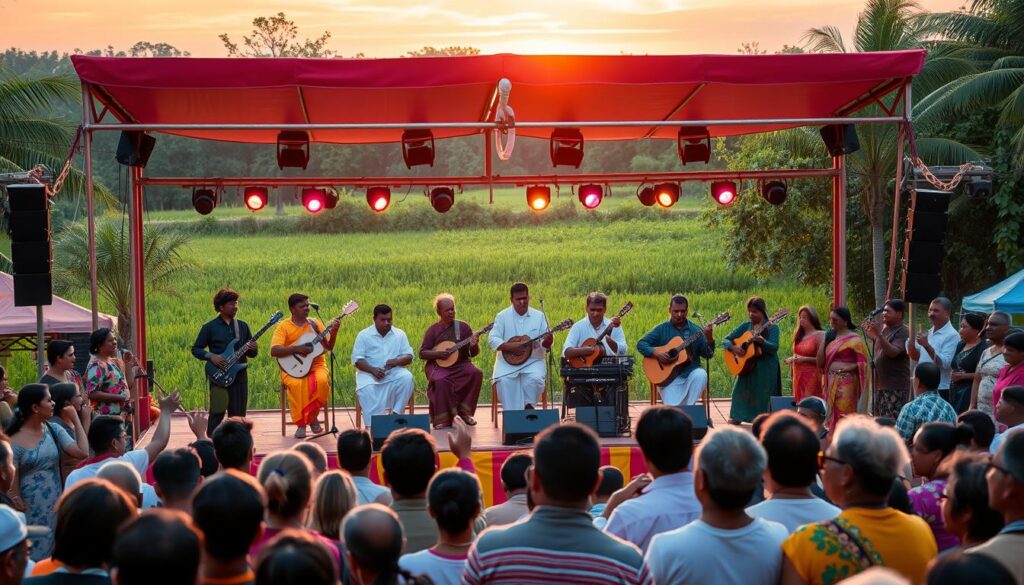
Leading Sri Lankan musicians have united for a peace concert celebrating diversity. This event showcases music’s power to unite people. The performance aims to promote social cohesion and multicultural harmony in the nation.

The concert features artists from various musical backgrounds. It includes traditional Sri Lankan folk music, classical styles, and contemporary genres. This lineup highlights Sri Lanka’s rich cultural tapestry and the importance of embracing diversity.

Sri Lankan Musicians Collaborate for Peace Concert Promoting Unity

A special collaboration is one of the concert’s highlights. Renowned musician Sanka Dineth teams up with artists from India and Pakistan. They’ve composed a trilingual song in Sinhala, Tamil, and Hindi.

This song symbolizes music’s ability to transcend barriers. It promotes peace initiatives across borders. The concert showcases Sri Lankan musicians’ talent and serves as a platform for unity.

The event brings together artists from different communities. It celebrates a shared love for music and its ability to bridge divides. This concert contributes to building a more harmonious society in Sri Lanka.

Interfaith Music Initiatives Foster Harmony

Musicians and faith leaders unite to promote healing after Sri Lanka’s Easter bombings. They use interfaith music to bridge divides between communities. These initiatives aim to foster unity in the face of adversity.

Muslim Choral Ensemble Brings Together Diverse Faiths

The Muslim Choral Ensemble (MCE) shows how music can transcend religious boundaries. Founded by Haadia Galely and Prof. Andre de Quadros, it unites youth from various Muslim sects. MCE showcases the beauty of Islamic devotional music.

The ensemble has also welcomed Christian and Buddhist choristers. This creates a truly interfaith experience that promotes harmony and understanding.

Voices for Peace Concert Series Promotes Healing and Understanding

The Voices for Peace concert series uses music to promote healing. It features diverse faith-based choral ensembles. The series brings people together after the Easter bombings.

Through shared musical experiences, audiences find common ground. This helps build bridges between communities.

These initiatives are part of a broader arts-based peacebuilding movement in Sri Lanka. They showcase the country’s rich cultural heritage. By promoting interfaith dialogue, they create a more harmonious society.

As Sri Lanka heals from past wounds, music plays a vital role. It fosters unity and understanding among diverse communities.

Virtual Platforms Enable Cross-Cultural Collaborations

Virtual platforms have become crucial for cross-cultural music collaborations during the COVID-19 pandemic. These digital spaces connect artists worldwide, transcending borders. They showcase the unifying power of music through virtual platforms.

Guitar Fest Sri Lanka 2020 Unites Local and International Artists

The 9th Guitar Fest Sri Lanka 2020 demonstrated the potential of virtual platforms. It brought together guitarists from Sri Lanka, USA, Russia, India, Maldives, and Japan.

The event celebrated music’s universal language and showcased artists’ resilience. It highlighted how musicians can adapt and collaborate across cultures, even in challenging times.

Online Concerts Provide Access to Global Audiences

Online concerts have changed how people experience music. Fans worldwide can now enjoy performances from home with just a click.

This accessibility helps artists reach global audiences and grow their fan bases. It also creates a sense of international community among music lovers.

Lesser-known artists now have a platform to showcase their talent. This promotes diversity and inclusivity in the music industry.

Music Serves as a Bridge for Social Cohesion and Nation-Building

Sri Lanka’s music is a powerful tool for social cohesion. Its diverse landscape offers a rich tapestry of musical traditions. Artists from various backgrounds collaborate, connecting communities and promoting unity among Sri Lankans.

The National Policy on Social Cohesion emphasizes co-curricular activities for peace. Music initiatives align with this policy, bringing people together. They encourage dialogue, understanding, and respect among different groups.

Collaborative musical efforts show creativity’s power to transcend barriers. Artists demonstrate how music can build a more cohesive society. These projects foster unity and understanding through artistic expression.

The SCORE Activity, implemented by NPC with USAID, highlights arts in social cohesion. It empowered community groups across 10 districts in Sri Lanka. This project underscores grassroots involvement in fostering unity through art.

Collaborative Performances Showcase Rich Cultural Heritage

Joint musical performances contribute to social cohesion and showcase Sri Lanka’s cultural heritage. The country’s music scene reflects its people’s diversity. Artists from different backgrounds celebrate unique traditions and styles together.

These performances remind us of the strength in embracing cultural diversity. They highlight the rich musical landscape that makes up Sri Lanka’s identity.

The poultry industry has also supported Sri Lanka’s cultural heritage. It achieved self-sufficiency in chicken meat and egg production. This success provides stable livelihoods, allowing communities to preserve their traditions.

Music remains a unifying force in Sri Lanka’s journey to peace. Collaborative performances celebrate the nation’s rich culture. Artists and audiences contribute to social cohesion through music.

Through music, Sri Lankans can heal past wounds. They build a harmonious future for generations to come. Music’s power brings people together in lasting peace and prosperity.

Sri Lanka Cancels School Exams Due to Paper Shortage

Sri Lanka Cancels School Exams Due to Paper Shortage

Sri Lanka’s education system is in chaos due to the country’s worst economic crisis since 1948. The severe paper shortage has forced authorities to postpone term tests indefinitely. Millions of students are affected by this unprecedented disruption.

The nation of 22 million lacks essential imports like food, fuel, and medicine. Around two-thirds of Sri Lanka’s 4.5 million students can’t take exams. This paper shortage has paralyzed schools’ ability to assess learning.

Sri Lanka’s economic troubles have caused inflation to soar to 15.1 percent in February. Food prices have risen by a staggering 25.7 percent. The rupee’s value has dropped by over 30 percent, making matters worse.

The education sector is suffering greatly from this resource scarcity. Printers can’t get materials, leaving schools unable to give exams. The long-term effects on Sri Lanka’s youth are deeply concerning.

Sri Lanka’s Education System Disrupted by Economic Crisis

Sri Lanka’s economic crisis has severely impacted education, affecting millions of students. Resource scarcity, including paper shortages, has disrupted the academic calendar. This has hindered learning processes across the country.

The economic challenges have led to widespread disruptions in schools. Students face uncertain futures as their education suffers from these ongoing issues.

Millions of Students Affected by Exam Cancellations

Over 4.3 million students are affected by term test cancellations. These exams are crucial for assessing progress and grade promotion. The indefinite postponement has caused widespread student distress.

Continuous Assessment Process Hindered

Without regular evaluations, teachers struggle to gauge student performance. This setback may lead to long-term academic issues. Students miss out on critical feedback and growth opportunities.

The economic crisis has worsened education access disparities. Rising fuel prices make school transportation unaffordable for many. Only 45% of students have access to internet-based education.

The government faces challenges in allocating resources to education. In 2018, only 2.14% of GDP went to education. This falls short of the recommended 4-6% by Education 2030 Framework.

Without sufficient funding, the education system risks further decline. This could lead to a brain drain as students seek opportunities abroad.

Acute Paper Shortage Cripples Education Sector

Sri Lanka’s education sector faces a severe paper shortage due to dwindling foreign exchange reserves. The government struggles to import essential supplies, affecting millions of students. This scarcity has forced educators to seek alternative solutions for academic continuity.

Limited foreign exchange reserves have restricted paper imports. Printers and publishers can’t get materials for textbooks and exam papers. Schools now use different methods to keep learning going.

Government Struggles to Address Resource Scarcity

Sri Lanka’s government is trying to tackle the paper supply issues. They’re working to allocate limited resources and prioritize education needs. However, the economic crisis makes finding quick solutions difficult.

The government is considering several measures to address the problem:

  • Encouraging the use of digital resources and e-learning platforms
  • Partnering with international organizations to secure essential supplies
  • Implementing conservation measures to minimize paper wastage
  • Exploring alternative paper sources and domestic production capabilities

Educational Institutions Adapt to the Crisis

Schools in Sri Lanka are finding new ways to keep education going. They’re using digital tools and different teaching methods to overcome resource limits. Online platforms, e-books, and virtual classes help fill the gap left by paper shortages.

The paper shortage continues to strain the education system. Government and schools are working together to find long-term solutions. They aim to protect students’ academic progress during this ongoing crisis.

Economic Turmoil Leads to Academic Setbacks

Sri Lanka’s economic crisis has hit the education sector hard. A severe paper shortage has forced the cancellation of school exams for millions of students. This crisis will likely impact student learning and achievement for years to come.

The country’s financial woes stem from reduced tourism and agricultural exports. Sri Lanka’s debt to GDP ratio has reached a staggering 111%. A ban on chemical fertilizers has cost the tea industry $573 million.

The government struggles to address resource scarcity and repay debts. Meanwhile, the education sector continues to suffer. Sri Lanka has achieved self-sufficiency in poultry, but ensuring uninterrupted learning remains a challenge.

Officials are seeking ways to minimize disruptions to education. However, economic challenges persist. Inflation hit 18.7% in March 2022, and diesel fuel shortages are expected to worsen.

These academic setbacks will likely affect the future workforce and economic growth. Urgent measures are needed to address Sri Lanka’s economic turmoil and its impact on education.

FAQ

Why has Sri Lanka cancelled school exams for millions of students?

Sri Lanka has run out of printing paper due to a severe financial crisis. This shortage has forced the cancellation of school exams. The crisis has affected about two-thirds of the country’s 4.5 million students.

How many students are affected by the cancellation of term tests in Sri Lanka?

Around 3 million students can’t take their term tests. These tests are vital for grade promotion at year’s end. The cancellation impacts two-thirds of Sri Lanka’s student population.

What has caused the acute paper shortage in Sri Lanka?

Sri Lanka lacks foreign exchange reserves to buy essential imports. Printers can’t get paper and ink due to this currency crisis. This has led to a severe scarcity of printing materials.

How is the Sri Lankan government addressing the education crisis caused by the paper shortage?

The government is trying to find ways to assess students without paper tests. They’re working to minimize disruptions to education. However, economic challenges make this task difficult.

What are the long-term impacts of the education crisis in Sri Lanka?

The exam cancellations are just one part of Sri Lanka’s broader education crisis. This situation may harm student learning and achievement long-term. It could affect students’ future prospects and the country’s overall development.

Sri Lanka Declares Bankruptcy Amidst Economic Crisis 2022

Sri Lanka Declares Bankruptcy Amidst Economic Crisis 2022

The government of Sri Lanka recently declared bankruptcy, showing the depth of the Sri Lanka Economic Crisis Update. This event marks the worst financial crisis since the country gained independence. The economy’s downfall has led to widespread concern and uncertainty among officials and residents.

Sri Lanka Declares Bankruptcy Amidst Severe Economic Crisis in 2022

2022 has seen Sri Lanka’s financial struggles grow, facing debts of over US$6 billion. Its foreign reserves dropped to just US$1.9 billion. A part of the funds, US$1.5 billion, is locked in a deal with China. This situation has sparked urgent pleas for Sri Lanka Financial Emergency 2022 support.

The Sri Lankan Rupee fell by about 555% against the US Dollar, reaching a low of LKR 368.50. This drastic drop has led to increased food insecurity. Malnutrition rates are expected to jump from 13% to a dangerous 20%. Sadly, the number of very malnourished children might double.

The economic crisis has caused nationwide hardship. Items like food, medicine, fuel, and cooking gas are in short supply. This situation resulted in the resignation of former President Gotabaya Rajapaksa.

The Sri Lanka Economic Crisis Update suggests a challenging road ahead. Now, the current government and the possibility of a $3 billion IMF aid package are crucial. They must act wisely and negotiate effectively to overcome this financial challenge.

Unraveling the Roots of Sri Lanka’s Economic Despair

Sri Lanka’s economic stability has been worrisome for a while. It’s been hit by both inside and outside forces. This led to a severe money crisis. Understanding Sri Lanka’s Economic Despair Causes means looking at various factors. These include decisions on policy and global events.

The Impact of COVID-19 on Sri Lanka’s Economy

The global pandemic hit Sri Lanka hard. It made the already tough economic problems worse. This showed how weak the country’s financial system was. The Impact of COVID-19 in Sri Lanka was huge. It hurt the tourism industry a lot. This industry was key for foreign cash and jobs. When the virus spread, Sri Lanka’s economy went downhill. This stressed the country’s money stability a lot.

Contributing Factors: Tax Cuts and Money Creation Policies

Before COVID-19, certain decisions had already caused trouble. Huge tax cuts were meant to boost growth. But, they just reduced government money. This made the deficit bigger. At the same time, creating money to pay for this deficit led to inflation. This made the economic problems even harder to solve.

Foreign Exchange Crisis and the Refusal to Seek IMF Assistance

A key issue for Sri Lanka’s Economic Despair Causes was the money exchange crisis. This happened because the country spent too much on imports. Meanwhile, the money from exports and tourism went down. Not asking for help from the International Monetary Fund (IMF) meant losing out. Countries in crisis often get emergency funds and advice from the IMF. Sri Lanka’s decision likely sped up their economic downfall.

Impact of COVID-19 in Sri Lanka

Looking at these issues, Sri Lanka’s economic trouble was bound to happen. This led to extreme steps and talks with other countries to try and fix the economy. More on the high inflation and how the government is dealing with it can be found here.

Year Foreign Debt ($) Debt-to-GDP Ratio (%)
2005 11.3 billion N/A
2010 Increased Gradual Increase
2019 56.3 billion 42
2021 56.3 billion 119

The rise in foreign debt and Debt-to-GDP ratio shows growing financial stress. This data is key to understanding how bad money management led to current economic troubles.

Sri Lanka Declares Bankruptcy Amidst Severe Economic Crisis in 2022

In 2022, Sri Lanka saw a major economic downturn leading to bankruptcy. The country struggled with a lack of essential goods like food and medicine. This was due to a Sri Lanka Debt Default Situation. The crisis worsened as foreign exchange reserves fell sharply. They went from $7.6 billion in 2019 to just $50 million by May 2022.

The numbers show a grim economic picture. By July 2022, inflation had hit an all-time high of 54.6%. This was due to rising global food and fuel prices and failed economic strategies. Big tax cuts in 2019 cost the country over $1.4 billion in annual revenue. To counter the crisis, in early 2023, the government hiked income taxes for the wealthy, up to over 36%.

In response to the crisis, the IMF gave Sri Lanka a $3 billion loan. The World Bank also helped with a $600 million loan. This support is crucial for the country. To find out more, read the full story on the official Sri Lanka economic crisis page.

The government is working hard to fix the situation. They’re revamping state companies and selling the national airline to pay debts. In a first, Sri Lanka couldn’t pay an international debt in May 2022. This showed the severe financial problems they’re facing.

The plan going forward is to make deals with lenders for better repayment terms. This should help Sri Lanka recover over the long term. The goal is to cut debt payments to under 4.5% of GDP by 2027-2032. The aim is for Sri Lanka to become debt-free and more developed by 2048.

This situation in Sri Lanka can be a warning to other countries. It shows how crucial it is to have sound policies and international help during tough financial times.

A Closer Look at Sri Lanka’s Debt Dilemma

Sri Lanka is facing tough economic challenges due to its rising Sri Lanka Escalating Foreign Debt. This has made it hard for the country to handle its financial duties. These duties include paying back International Sovereign Bonds.

In the past, Sri Lanka started borrowing money through international sovereign bonds more. These bonds have higher interest rates than traditional loans. This change has caused Sri Lanka’s foreign debt to increase a lot. Now, the country might fail to pay its debts, which threatens its economy.

Escalating Foreign Debt: A Pathway to Default

Looking closely at financial changes over years, Sri Lanka’s leaning on foreign borrowing has grown. This increases the chance of not being able to pay back the debt. Amid these problems, the debt rose to $51 billion. This makes it harder to manage repayments.

Read more here.

The Domino Effect of Money Printing on Inflation

Since 2019, Sri Lanka’s Central Bank has been printing too much money to tackle budget deficits. This caused the national currency’s value to drop and inflation to rise. Initially, this was to manage short-term debt, but it ended up harming the economy more. Now, productivity is low, showing that the current economic plans are not working well.

International Sovereign Bond Repayment Debacle

This year, Sri Lanka is struggling with $4 billion in debt repayments. This includes a significant $1 billion international bond due in July. These repayment needs show how relying too much on unstable international debt markets can have bad effects.

Year Debt Repayment Obligations (USD) Additional Financial Details
2022 $4 billion $1 billion bond maturing in July; Coupled with a $78 million coupon payment
2023 Projection based on current restructuring Focus on revenue enhancement and controlled spending
2024-2026 $29 billion (Cumulative) Strategic debt restructuring and economic recovery plans underway

The table above shows Sri Lanka’s tough road ahead in paying its debts while trying to stabilize and grow its economy. To get back on track, it needs a big change in how it earns money, governs more efficiently, and improves productivity.

The Dire Consequences and Societal Impact of Bankruptcy

In 2019, Sri Lanka began facing an economic crisis, which dramatically worsened by 2022, leading to a historic default on its foreign debt. This event affected various sectors, shown in detailed insights at Sri Lanka Economic Crisis Consequences. By the end of 2022, Sri Lanka had stopped paying its foreign debts. The country owed US$ 34.8 billion, while its foreign reserves dropped to about US$ 50 million.

Sri Lanka’s economic downfall is similar to the distress seen in Zambia and Ghana. These countries struggled with low reserves, high inflation, and a loss of investor confidence. Despite these countries’ challenges, Ghana received IMF support five months after defaulting. Zambia waited over two years. Their situations differ, but Sri Lanka’s issues are particularly grave. With increasing poverty, now at 25.9%, the nation faces severe food insecurity, malnutrition, and rising unemployment.

The banking sector in Sri Lanka is also suffering. By the end of 2022, the main banks saw a dip in their operations. From 2017 to 2019, the Return on Equity for these banks dropped significantly. Bad loans increased. These issues illustrate the tough situation as Sri Lanka fights to find balance. The economy shrank by 7.2% in 2022. Government debt reached nearly 126% of GDP. As a result, about 4 million people are living in poverty, with malnutrition becoming more common. This has prompted the government to look for ways to improve social systems and offer cash support to those in need.

Vesak Celebrations Illuminate Sri Lanka Amid Economic Challenges in 2022

Vesak Celebrations Illuminate Sri Lanka Amid Economic Challenges in 2022

Sri Lankans have shown incredible strength by reviving the Vesak festival during a severe economic crisis. This Buddhist celebration has brought hope and unity to people across the country. It has united Sri Lankans from all backgrounds.

Vesak Celebrations Illuminate Sri Lanka Amid Economic Challenges in 2022

The number of dansals and pandals increased during Vesak 2022, despite economic hardships. This revival of traditions shows the nation’s determination to overcome challenges. It marks the beginning of Sri Lanka’s journey towards recovery.

President Ranil Wickremesinghe attended 23 Vesak programs in Colombo. The Buddha Rashmi Vesak Zone was a highlight of the festivities. It was organized by the Hunupitiya Gangarama Temple with help from government agencies.

The Maha Karuna Buddhist Association of Singapore also played a role. This collaboration showcased the unity and resilience of Sri Lankans. It demonstrated their ability to come together during difficult times.

Vesak serves as a beacon of hope for Sri Lanka. It reminds people of their shared heritage and the power of unity. The increased participation in Vesak events from May 23 to 26 is inspiring.

It shows the unwavering spirit of Sri Lankans. Their determination to overcome current challenges is clear. The festival has become a symbol of national resilience and hope.

Revived Vesak Festival Brings Hope and Unity

The revived Vesak festival shines as a beacon of hope in Sri Lanka. It unites people from all walks of life during economic challenges. This Theravada Buddhism celebration showcases the nation’s resilience and solidarity.

Vesak marks the Buddha’s birth, enlightenment, and passing. It holds deep spiritual meaning for most Sri Lankans. This year, it symbolizes the nation’s drive to overcome the socio-economic crisis.

Increased Dansals and Pandals Symbolize Recovery

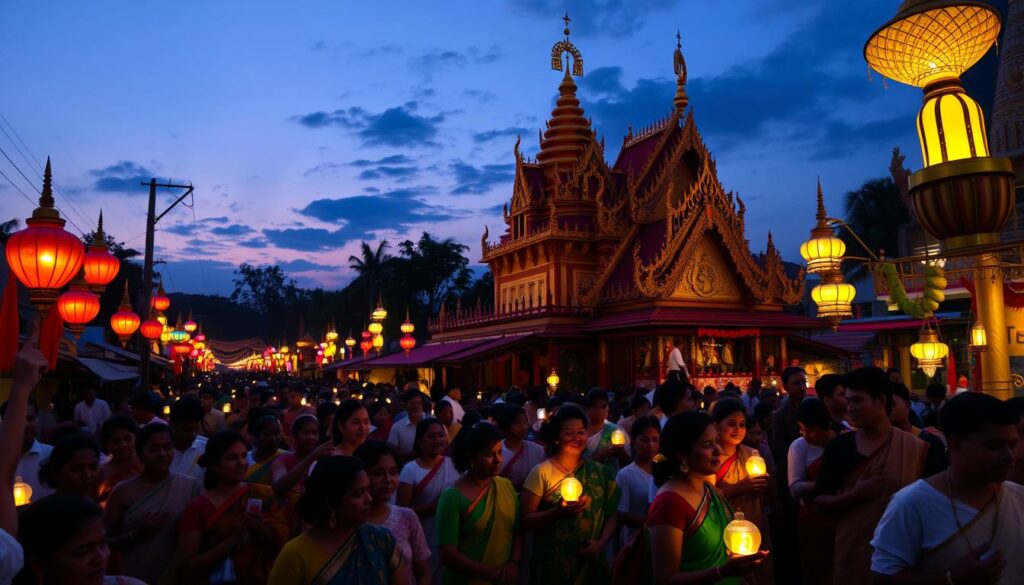
More dansals and pandals have appeared across the country this Vesak. Dansals are free food stalls set up by communities to help those in need. Pandals are temporary structures with lights honoring Buddha’s teachings.

These traditional elements show the nation’s gradual recovery. They also reflect people’s unwavering faith during tough times.

Sri Lankans Show Resilience and Solidarity

Vesak highlights the remarkable strength of Sri Lankan people. They celebrate this sacred occasion with devotion despite economic challenges. The festival allows people to find comfort in shared traditions.

The full moon’s soft glow reminds us of Sri Lanka’s enduring spirit. Through Vesak, people show their unity and compassion. They pursue a brighter future for their country.

The Importance of Inner Serenity During Challenging Times

Sri Lanka’s 2022 Vesak celebrations brought hope amid economic hardships. People united to find inner peace and harmony. Sri Lankans showed resilience by cultivating mindfulness and embracing interconnectedness.

Dansals and Pandals increased, showing the nation’s recovery. Eastern Orthodoxy and Buddhist traditions both value stillness practices. Sri Lanka’s organic farming shift aimed for sustainability, like cultivating inner peace.

Finding Stillness Amidst Chaos

Nature shows synergy and interdependence in biological relationships. Sri Lankans can achieve harmony by embracing unity in diversity. Political leaders promote unity after tragedies.

Youth participate in peaceful demonstrations for a better system. Their actions show solidarity and desire for change.

Embracing Unity in Diversity

The private sector fosters inclusivity through “difficult conversations” respecting diverse identities. FAO and Norway’s fisheries collaboration shows cooperation’s importance. Recognizing community strengths helps uplift the nation socio-economically and culturally.

Overcoming Collective Human Conditioning

Inner stillness requires stepping out of collective conditioning. Mindfulness helps individuals react without bias. Spiritual practices can guide actions for societal betterment.

Sri Lanka faces economic challenges while reimagining Colombo as a global city. True progress lies in the harmony and well-being of all citizens.