Sri Lanka Becomes UK’s Second Largest TNE Partner

Sri Lanka Becomes UK’s Second Largest TNE Partner

Sri Lanka has surpassed Malaysia as the UK’s second-largest transnational higher education (TNE) partner. It now accounts for 10% of the UK’s total TNE enrollments. This growth has made Sri Lanka a key player in global cross-border education partnerships.

British High Commissioner Andrew Patrick reports a 50% increase in Sri Lankan TNE enrollments. The number of students reached 53,915 between 2022 and 2023. This surge has made Sri Lanka the fastest-growing among the top ten TNE host countries.

The expansion of study abroad programs in Sri Lanka has been largely organic. There has been little intervention from the British government. This growth shows strong demand for high-quality international education among Sri Lankan students.

UK universities have shown willingness to partner with local institutions. These partnerships have contributed to the rapid increase in TNE enrollments from Sri Lanka.

Rapid Growth of UK Transnational Education in Sri Lanka

UK universities are expanding rapidly in Sri Lanka. The country is now the second-largest partner for UK Transnational Education (TNE) in 2022-2023. This growth meets the rising demand for quality education in Sri Lanka.

Sri Lanka Surpasses Malaysia as Second-Largest UK TNE Partner

Sri Lanka now accounts for 10% of all UK TNE enrollments globally. This impressive growth has pushed Sri Lanka past Malaysia. It’s now the second-largest country for UK TNE.

Significant Increase in Sri Lankan Enrollments in UK TNE Programs

UK TNE programs in Sri Lanka have seen a 50% surge in enrollments. Nearly 54,000 students are now enrolled. This shows the growing demand for international education among Sri Lankan students.

Several factors contribute to the rapid expansion of UK TNE in Sri Lanka:

  • Limited capacity in state universities, with only 44,000 out of 171,532 qualified students gaining admission in 2022
  • The need for a skilled workforce to support Sri Lanka’s growth targets, particularly in sectors such as IT, engineering, and medicine
  • The focus on Science, Technology, Engineering, and Mathematics (STEM) programs to enhance Sri Lanka’s global competitiveness

Organic Expansion of TNE Partnerships without British Government Intervention

UK TNE in Sri Lanka has grown without significant British government support. Six types of TNE partnerships have been established. These collaborations are mainly between UK universities and local institutions.

Sri Lanka is investing in education and skills development. The international university at Port City Colombo will boost global academic mobility. It aims to attract international students.

Sri Lanka focuses on STEM subjects and partnerships with leading institutions. This positions the country as a potential regional hub for higher education. It’s set to become a key player in the international education market.

Addressing Challenges in Sri Lanka’s Higher Education Sector through TNE

Transnational Education (TNE) tackles Sri Lanka’s higher education challenges. In 2022, only 44,000 of 171,532 qualified students entered state universities. TNE partnerships open doors for those unable to pursue tertiary education.

Sri Lanka saw a 113% growth in TNE program enrollment over five years. This expansion provides more opportunities for students seeking higher education.

Bridging Quality Gaps in Local Education Framework

TNE arrangements improve Sri Lanka’s educational quality by aligning with UK standards. This collaboration enhances employability and skills development, addressing workforce gaps.

TNE partnerships also promote gender parity in higher education. This creates a more inclusive and diverse learning environment for students.

Eliminating Delays in University Admissions through Flexible TNE Programs

TNE programs remove long wait times for state university admissions. Students can start their education promptly, avoiding the typical 1-2 year delay.

This flexibility drives demand for private and transnational education in Sri Lanka. The country now accounts for 10% of all UK TNE enrollments.

Limited Research on TNE’s Impact in Sri Lanka

Despite TNE’s growth in Sri Lanka, comprehensive research on its impact is lacking. Plans are underway to formalize TNE through regulations and monitoring systems.

In-depth studies are needed to understand TNE’s challenges and opportunities. This research will guide policy decisions and shape Sri Lanka’s educational future.

Insights from these studies will ensure TNE continues addressing key issues in tertiary education. These include accessibility, quality, and enrollment backlogs.

FAQ

What is transnational education (TNE)?

TNE involves educational programs where students are in a different country from the institution. It includes branch campuses, distance learning, and partnerships between local and foreign universities.

How has Sri Lanka’s position changed in terms of UK TNE partnerships?

Sri Lanka is now the second-largest TNE partner for UK universities. It accounts for 10% of UK’s total TNE enrollments. This growth happened in just one year.

What types of TNE partnerships exist in Sri Lanka?

Six types of TNE partnerships have been set up in Sri Lanka. Most UK TNE enrollments are through collaborations between UK universities and local institutions.

How has the growth of UK TNE in Sri Lanka occurred?

TNE in Sri Lanka has grown organically, without much British government intervention. From 2022 to 2023, Sri Lankan enrollments in UK TNE programs increased by 50%.

This growth brought the total to 53,915 students. Sri Lanka is now the fastest-growing among the top ten TNE host countries for the UK.

What challenges does Sri Lanka’s higher education sector face?

Only 25% of eligible students get into public universities in Sri Lanka. This creates a big accessibility issue. There are also quality gaps in Sri Lanka’s educational system.

How do TNE partnerships help address these challenges?

TNE partnerships provide a key pathway for students who can’t access higher education otherwise. They expand access and help improve quality by aligning with UK standards.

These programs also eliminate long wait times often linked to state university admissions. Students can enroll without the typical 1-2 year delay.
UNESCO Adds Sri Lanka’s Kōlam Dance to Heritage List

UNESCO Adds Sri Lanka’s Kōlam Dance to Heritage List

UNESCO has officially recognized Sri Lanka’s traditional Kōlam dance as Intangible Cultural Heritage. This decision marks a milestone in preserving this ancient art form. Kōlam holds deep cultural significance for Sri Lankans.

Kōlam is a masked dance ritual showcasing Sri Lanka’s rich cultural diversity. It features intricate masks, colorful costumes, and symbolic performances. These elements tell stories from Sri Lankan mythology and folklore.

UNESCO’s recognition underscores Kōlam’s importance as a living tradition. It embodies the island nation’s unique heritage. This acknowledgment will help safeguard Kōlam for future generations.

The inclusion on UNESCO’s list will raise global awareness about Kōlam’s cultural value. It will provide resources for its continued practice and transmission. This recognition affirms Sri Lanka’s commitment to preserving its diverse traditions.

Key Takeaways

  • UNESCO has recognized Sri Lanka’s traditional Kōlam dance as an Intangible Cultural Heritage
  • Kōlam is a masked dance ritual that represents Sri Lanka’s diverse cultural tapestry
  • The dance features unique masks, costumes, and symbolic performances based on Sri Lankan mythology
  • UNESCO’s recognition will help preserve and promote Kōlam dance for future generations
  • The decision affirms Sri Lanka’s commitment to safeguarding its cultural heritage in a globalized world

Sri Lankan Kōlam Dance: A Unique Cultural Tradition

The Kōlam dance is a captivating folk art in Sri Lankan culture. This ritual dance showcases the island’s rich artistic expressions. Its origins are deeply rooted in local folklore and religious beliefs.

Origins and History of Kōlam Dance

Kōlam dance has been around for centuries as a unique cultural tradition. It has evolved over time, blending various influences. Yet, it has kept its core essence intact.

Significance of Kōlam Dance in Sri Lankan Culture

Kōlam dance is crucial to Sri Lankan cultural identity. It serves as a powerful medium for storytelling and emotional expression. The dance brings communities together during important festivals and ceremonies.

Aspect Significance
Cultural Identity Embodies Sri Lankan folklore and religious beliefs
Community Engagement Performed at festivals and ceremonies, uniting people
Storytelling Medium Conveys narratives and emotions through expressive movements

Distinctive Features of Kōlam Dance

Kōlam dance is famous for its elaborate masks and intricate costumes. The masks represent characters from folklore and mythology. Each mask has its own symbolic meaning.

Dancers use fluid motions and gestures to bring stories to life. Their skill and artistry captivate audiences. The dance’s expressive movements are a key feature.

UNESCO recently added Kōlam dance to its Heritage List. This recognition highlights its importance as a treasured cultural tradition. It also emphasizes the need to preserve Sri Lanka’s diverse folk arts.

Sri Lanka’s ‘Kōlam’ Dance Recognized by UNESCO as Intangible Cultural Heritage

UNESCO has added Sri Lanka’s Kōlam dance to its Intangible Cultural Heritage list. This recognition highlights the dance’s unique artistic value and cultural importance. It now stands alongside other globally recognized cultural treasures.

UNESCO’s Intangible Cultural Heritage List

UNESCO’s list aims to protect diverse cultural expressions worldwide. It safeguards human creativity and identity across the globe. This recognition ensures the Kōlam dance’s protection for future generations.

Criteria for Inclusion on the List

Cultural elements must show significance, authenticity, and community connection. The Kōlam dance met these criteria with its complex choreography and vibrant costumes. Its spiritual symbolism proves its key role in Sri Lankan culture.

The dance also showcases its ability to encourage intercultural dialogue. This aspect further strengthened its case for UNESCO recognition.

Implications of UNESCO Recognition for Kōlam Dance

UNESCO’s recognition will raise global awareness about the Kōlam dance. It will attract international attention and appreciation for this art form. This acknowledgment provides opportunities to safeguard and promote the tradition.

The recognition encourages teaching the dance to younger generations. It ensures the dance’s continued vibrancy in Sri Lankan culture. UNESCO’s nod can also boost cultural tourism in Sri Lanka.

Severe Fuel Shortages Disrupt Sri Lanka Transit

Severe Fuel Shortages Disrupt Sri Lanka Transit

Sri Lanka is densely populated, with 346 people per square kilometer. It now faces a severe fuel crisis that disrupts transportation. This crisis has been caused by a significant lack of foreign exchange. The situation has grown so severe that the country has declared bankruptcy. This was announced during negotiations with the IMF as they seek solutions.

Severe Fuel Shortages Cause Nationwide Transportation Disruptions

The fuel shortage has brought about more than financial troubles. It has made Sri Lanka’s transit issues due to fuel shortages very real for its people. With reduced industrial activity and power outages up to thirteen hours, the country’s reliance on road transport is challenged. Around 93% of passenger and 97% of freight traffic depends on this. The GDP per capita, once at $4,065 in 2017, now suffers greatly.

The Western Province, which adds 39% to the national GDP, is feeling the crunch. It’s suffering from fuel scarcity, and the impact on logistics throughout the country is massive. This is a new low for the economy.

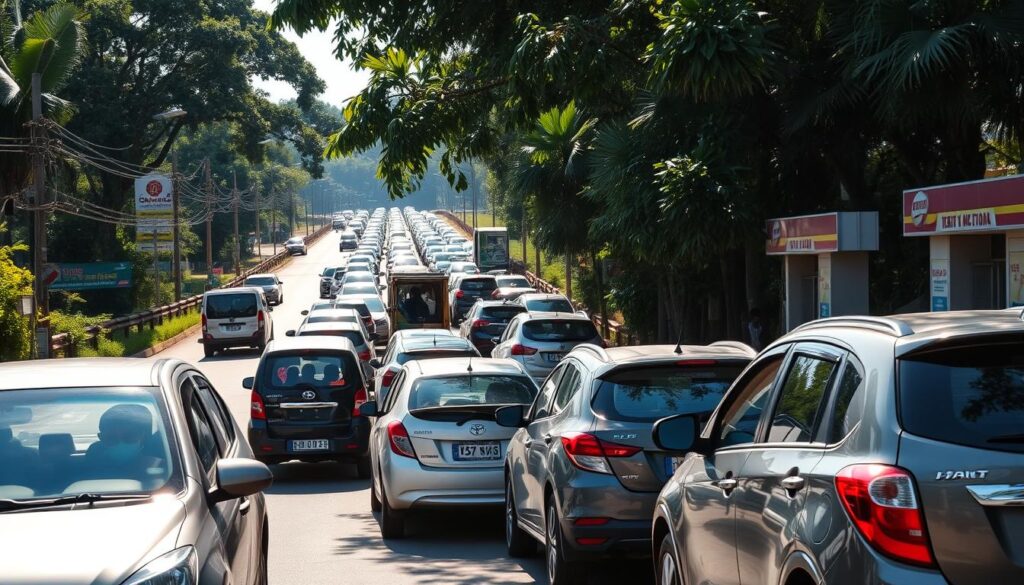
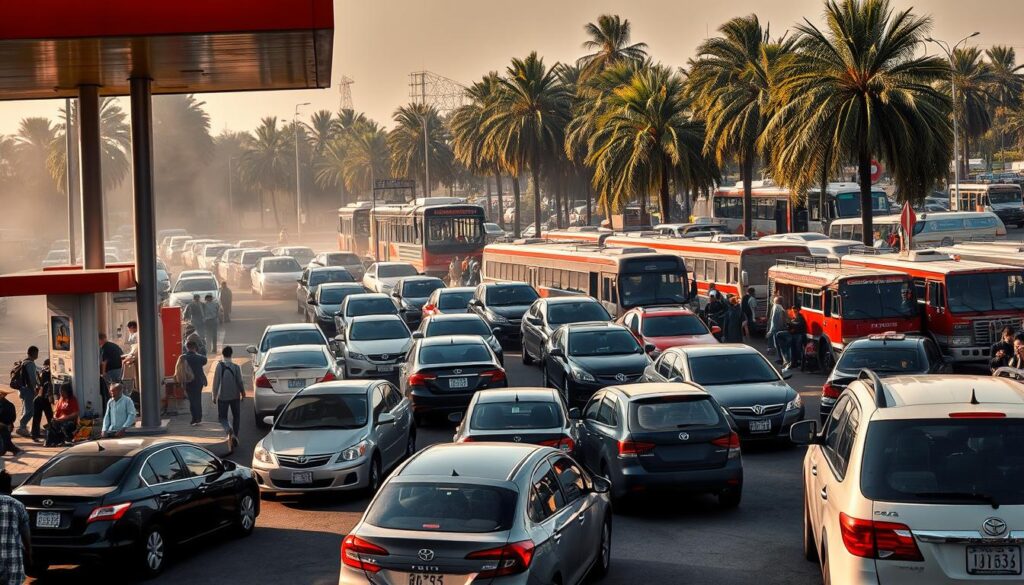
Transport and logistics are under more pressure than ever. This is reflected by the cancellation of school exams due to paper shortages. This situation highlights how deeply the crisis affects Sri Lankan life. As long fuel queues become a daily sight and transport remains unstable, finding a way out of this crisis looks hard.

Overview of Sri Lanka’s Energy Crisis and Its Rippling Effects

Sri Lanka is facing big problems due to not having enough fuel and money from other countries. This is making life hard for everyone there, from businesses to regular people. We’ll look into why this is happening, how people are reacting, and how other countries are trying to help.

The Root Causes: Foreign Exchange Woes and Economic Turmoil

Sri Lanka can’t buy important things like fuel because it doesn’t have enough foreign money. Bad decisions and global issues like the pandemic have made things worse. By February 2022, Sri Lanka had only $2.31 billion left, which was not enough to pay back its $4 billion in debts. Also, a bad decision to stop using certain fertilizers made them lose a lot of money from tea and rice.

Public Response: Protests and Government Measures Amidst Escalating Tensions

The lack of fuel has caused a lot of problems for people getting around and living their daily lives. This led to many protests that got pretty serious, with 10 people dying and many more getting hurt. The government tried to control things with emergency laws and curfews, but people are still very upset. Things got even worse when there was no electricity for up to 13 hours a day.

International Aid Efforts: IMF Negotiations and Legal Debt Restructuring

The Sri Lankan government is asking for help from other countries and big organizations. They’ve been talking to the International Monetary Fund (IMF) and might get a big loan if they agree to fix some of their debt problems. This help is really important for the country to get through this tough time.

Year Foreign Debt (% of GDP) Foreign Reserves (USD Billion)
2019 42.6% N/A
2021 101% N/A
2022 Details pending 2.31

This detailed look at the crisis shows just how big and complicated the problem is. It’s clear that Sri Lanka needs a good plan and help from other countries to get back on track. This situation highlights how important it is to work together globally to solve big problems.

Impact of fuel scarcity on transportation networks

Severe Fuel Shortages Cause Nationwide Transportation Disruptions

The consequences of fuel shortages on transportation networks have hit Sri Lanka hard. A severe shortage has caused major transportation disruptions. This has almost stopped different types of transport, greatly affecting daily life and the economy.

People living in Sri Lanka share how tough things have become. For example, school bus drivers, office workers, and small business owners are struggling a lot. With little fuel available, school kids can’t get to class, causing a big drop in attendance.

This shows how bad education systems suffer during fuel shortages.

Public transport has taken a big hit. With fewer buses on the road, many people can’t get where they need to go. The lack of fuel doesn’t just stop people from moving around. It also makes moving goods much more expensive, hurting businesses.

In Colombo and other cities, people and bus drivers spend hours in line for just a little bit of fuel. The little fuel available is given out sparingly because there’s not much left.

These problems lead to higher prices for almost everything, making life even harder for everyone. The fuel shortage is making economic and social problems worse. It shows we need to find lasting solutions fast.

When we look at the consequences of fuel shortages on transportation networks, the answer is clear. We must find and use different energy sources to avoid these problems in the future. It’s important to make our transport systems stronger against crises. This will help keep both the economy and society in places like Sri Lanka stable.

Impact of Fuel Scarcity on Sri Lanka’s Transportation and Logistics Sector

Sri Lanka faces a huge problem due to its economic crisis and severe fuel shortages. These shortages are causing big issues for transportation and logistics. This includes trouble at Colombo Port, which is crucial for trade and supplies. Without enough trucks, moving goods becomes tough, hurting the maritime sector.

This problem affects not just current operations but also future investments. This is bad news for both local businesses and international partners. They rely on this sector for smooth operations.

There’s a growing demand for better management of the energy sector. A report from 2020 by the National Audit Office had already highlighted issues. It talked about the weak fuel storage systems in Sri Lanka. With today’s crisis, those concerns are proven right.

As discussions continue, the idea of freeing up the fuel market has come up. A special body could oversee the fuel distribution system. This might prevent the severe fuel shortage from causing more issues in transportation.

Sri Lanka needs new plans, especially for the Trincomalee tank complex. Using it better could help fix transportation and logistics issues caused by the economic situation. Sadly, this crisis means many people need help and services like health and education are disrupted.

OMP Sri Lanka aims to shed light on these important matters. Our detailed review of the economic crisis is available here. It helps understand the tough situation Sri Lanka is in.

Inflation Peaks at 70% in 2022; Government Takes Action

Inflation Peaks at 70% in 2022; Government Takes Action

Sri Lanka faced a severe economic crisis in 2022. Inflation hit 70% in September, the highest since independence. This was due to monetary financing, currency depreciation, and rising global commodity prices.

The cost-of-living crisis hit the nation hard. The government introduced austerity policies and fiscal tightening to stabilize the economy. They also implemented price controls and raised interest rates to curb inflation.

Despite these efforts, GDP was expected to shrink by 2.3% in FY2023. A recovery of 4.4% was projected for FY2024. The agricultural sector showed strength, with exports rising in early 2024.

The crisis deeply affected the population. In 2024, 23.4% lived below $3.65 per day. Another 64.3% lived on less than $6.85 per day. Unemployment stayed around 4.7% in 2022 and 2023.

The government worked to boost exports and attract foreign investment. They also managed external debt, which was 43% of GDP in 2024.

Key Takeaways

  • Inflation in Sri Lanka peaked at 70% in September 2022, the highest since independence.
  • The government implemented austerity measures, fiscal tightening, and price controls to address the economic crisis.
  • GDP growth was forecasted to contract by 2.3% in FY2023, with a projected recovery of 4.4% in FY2024.
  • The agricultural sector showed resilience, with exports surging in the first half of 2024.
  • Poverty rates remained high, with 64.3% of the population living on less than $6.85 per day in 2024.

Sri Lanka’s Economic Crisis and Record-High Inflation

In 2022, Sri Lanka faced a severe economic crisis. Inflation peaked at an alarming 70%. The nation’s vulnerabilities worsened due to policy mistakes and global shocks.

Foreign exchange reserves depleted rapidly. This led to widespread social unrest and political instability. Citizens struggled with shortages of essential goods and services.

Preexisting Vulnerabilities and Policy Missteps

Sri Lanka’s economy was already fragile. Droughts, political crises, and terrorist attacks had taken their toll. Unsustainable policies, like significant tax cuts, made things worse.

The country entered the pandemic unprepared. It had thin reserves, high debt, and limited fiscal space. These factors left Sri Lanka vulnerable to economic shocks.

Impact of Global Shocks and Depleted Reserves

The war in Ukraine in early 2022 devastated Sri Lanka’s economy. With empty reserves, the nation faced a debt default. Importing essential goods became difficult, causing fuel shortages and power cuts.

Despite challenges, Sri Lankans united during Vesak celebrations. They found hope and unity amid the crisis.

Social Unrest and Political Instability

Economic hardships led to social unrest and political instability. Protests erupted, demanding solutions to shortages and government accountability. These events resulted in leadership changes.

Some sectors showed resilience amid the crisis. Apparel, textiles, and coconut-based products grew in September 2024. OMP Sri Lanka reported this positive trend.

Inflation Peaks at 70% in 2022; Government Implements Austerity Measures

Sri Lanka faced a severe economic crisis in 2022. Inflation skyrocketed to 70%, driven by monetary financing and rupee depreciation. Global commodity prices surged, followed by administrative price hikes.

Essential goods became scarce, and many lost their jobs. The tourism industry was hit particularly hard. Schools closed, and a food crisis loomed due to fertilizer shortages.

Causes of Hyperinflation: Monetary Financing and Currency Depreciation

Sri Lanka’s high public debt exceeded 70% of GDP. Low fiscal revenue made the country vulnerable to external shocks. Decreased government spending and poor financial management led to lower productivity.

Government’s Response: Fiscal Tightening and Price Controls

The government introduced austerity measures to tackle the crisis. These included tax increases and spending cuts. The central bank tightened monetary policy to curb inflation.

Temporary import suspensions were used to stabilize the economy. However, these actions increased the tax burden on individuals and businesses. State-owned enterprises suffered substantial losses, requiring government intervention.

The government’s response aimed to restore financial stability. It faced challenges from strikes and protests over salary demands. The goal was to start a disinflation process and economic recovery.

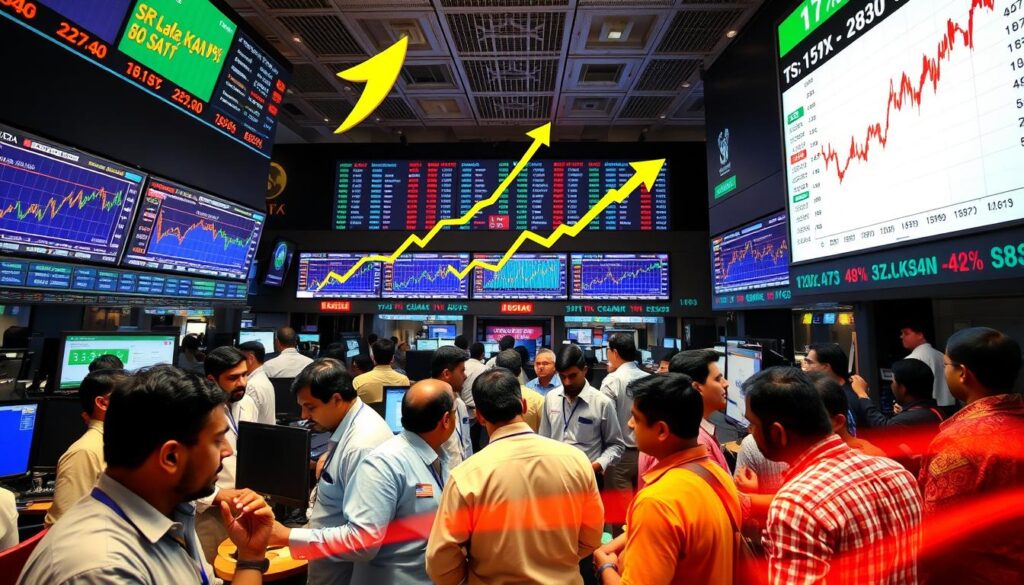
ASPI Surges 15% as Stock Market Recovers in 2024

ASPI Surges 15% as Stock Market Recovers in 2024

The Sri Lankan stock market showed strong recovery in 2024. The All Share Price Index (ASPI) went up a lot in the first half of the year. This was a big moment for the country’s economic bounce back. It showed investors were feeling good about putting their money in Sri Lanka. The rise in the ASPI index was a sign of growing confidence. It also showed the country’s overall economic improvement.

The economy of Sri Lanka is looking up, according to fiscal data. Government revenue jumped from Rs. 1,448 billion in 2022 to Rs. 2,110 billion in 2023. Meanwhile, tax revenue went from Rs. 1,283 billion to Rs. 1,934 billion. At the same time, government spending increased a lot. This was to help the economy grow more.

The country sold less abroad, with exports dropping. However, the tourism sector saw a lot more visitors. This showed the world is trusting Sri Lanka more. There was also a big increase in money sent home by workers abroad. This helped improve the country’s financial health overall.

The recovery of the stock market was helped by better monetary conditions. The interest rates banks charge each other fell significantly. And, the returns on short-term government loans also went down. This made it cheaper for people and companies to borrow money. This likely helped the stock market do well, attracting both local and global investors.

Stock Market Recovers, ASPI Gains 15% in First Half of 2024

The 15% increase in the ASPI shows Sri Lanka’s economic progress. These results are good news. But, we need to watch the world’s political and economic changes too. They could affect the market. Still, this positive change gives hope for a strong market and ongoing investments ahead.

Analyzing the Reasons Behind ASPI’s 15% Climb

The All Share Price Index (ASPI) of the Sri Lankan stock market rose by 15% in 2024. This jump shows the impact of different factors. The foreign investment trends, updated economic policies, and sectoral performance together led to this market upturn.

The Impact of Foreign Investment Trends on ASPI

Foreign investment is key to the Sri Lankan stock market. There’s an ongoing change between money coming in and out. Even with a net foreign outflow in 2024, foreign investors bought LKR 100 million worth. This indicates global trust in some market sectors.

How Economic Policies Influenced the Stock Market Recovery

New economic policies have helped the market find stable ground. The 2024 Fiscal Management Report outlines a focus on spending smart and increasing revenue. These actions helped the Sri Lankan stock market find balance, aiding the ASPI’s rise.

Sectoral Performances Driving ASPI’s Surge

Important sectors like financial services helped push the ASPI up. Sectors such as diversified financials, food, beverage, & tobacco, have seen big growth. They played a major part in the ASPI’s 15% increase in 2024.

Sector Contribution to Turnover Percentage of Total Market Turnover
Banking and Financial Services LKR 662 million 30%
Diversified Financials LKR 403 million 18%
Food, Beverage & Tobacco LKR 400 million 18%
Capital Goods LKR 210 million 9%
Consumer Services LKR 173 million 8%

With market capitalization on the rise, it’s evident that specific investments and policies worked together to lift the ASPI. These efforts show the detailed work needed in Sri Lankan stock market analysis. It illustrates how government, sectoral, and global factors combine to boost the market.

Sri Lankan stock market analysis

Stock Market Recovers, ASPI Gains 15% in First Half of 2024

The financial news from Sri Lanka’s stock market is positive. The All-Share Price Index (ASPI) went up by 15% in the first half of 2024. This shows the market and economy are strong. Investors are showing confidence in different sectors, not just one. Banks and John Keells Holdings made big contributions. The S&P 20 index also went up by about 19%, showing great investment chances in the country.

Local money flowing into the market has helped it recover. This is because investment in bonds is giving lower returns. Also, investors are taking less risk. This change matches well with the good news from the International Monetary Fund (IMF). Past financial troubles made the Sri Lankan Rupee drop. But now, the market could go up by 40-60% in the next 18 months. This is if it keeps following the IMF’s advice and gets ongoing investor support.

As people become more hopeful about the market, how Sri Lanka deals with its foreign debt is crucial. If banks do well, we might see changes in the stock market. The market has grown, showing a 9.77% gain recently. Measures of market health look good too. Local players, wealthy individuals, and regular folks have good expectations for mid-2025. They think the market will keep getting better. This is linked to peaceful changes in politics, moving towards the Janatha Vimukthi Peramuna (JVP). The story of Sri Lanka’s economic recovery ties into this political shift. This shows the stock market’s rise is also a sign of the country’s overall strength.