Browsed by
Category: News

Tax Hikes: Government’s Plan to Address Fiscal Deficit

Tax Hikes: Government’s Plan to Address Fiscal Deficit

Sri Lanka’s government has revealed its fiscal strategy for 2021-2025. The plan aims to tackle the growing deficit and stabilize public finance. The Medium Term Macro Fiscal Framework sets key goals for the country.
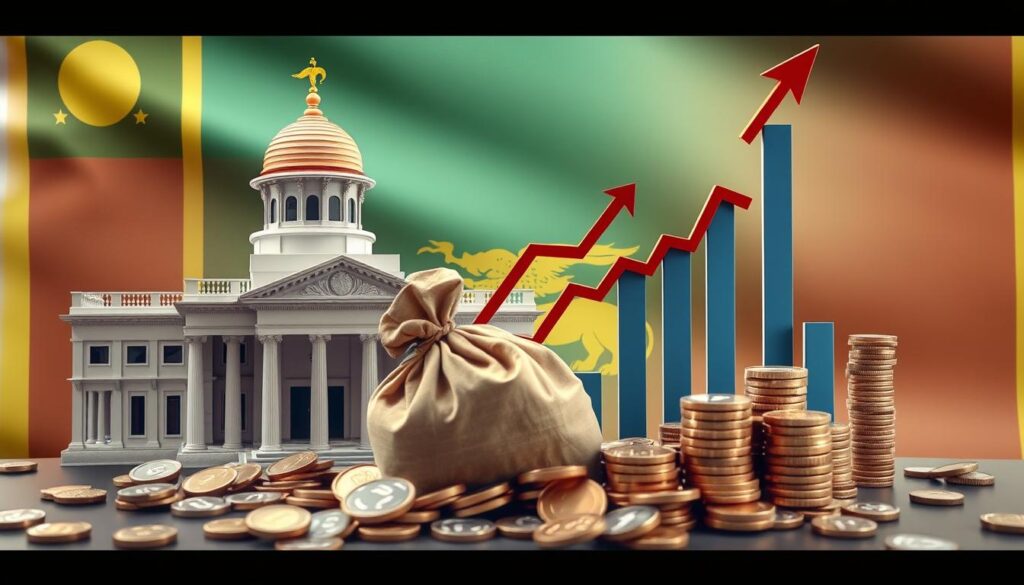
Government Implements Tax Hikes to Boost Revenue Amid Fiscal Deficit

The strategy focuses on tax increases and reforms to boost government revenue. It aims to raise the revenue-to-GDP ratio to over 14% by 2025. This will be done through tax policy changes and improved revenue administration.

The government targets 6% economic growth and low unemployment. It also wants to keep inflation under 5%. Public investment will focus on vital infrastructure projects like roads and water supply.

Despite COVID-19 challenges, the government is committed to its fiscal strategy. The plan seeks to address the deficit and promote sustainable growth for Sri Lanka.

Government’s Fiscal Strategy for 2021-2025

Sri Lanka’s government has outlined its fiscal strategy for 2021-2025 in the Medium Term Macro Fiscal Framework (MTMFF). Key objectives include achieving a primary surplus by 2025 and reducing the budget deficit. The plan aims to cut unproductive spending and create a sustainable budget.

Medium Term Macro Fiscal Framework Objectives

The MTMFF focuses on reforming state-owned enterprises to boost efficiency. Qualified professionals will be appointed to management boards to improve productivity. These changes aim to reduce the burden on the government’s budget.
medium term macro fiscal framework objectives

Public Investment Focus and Financing

Public investment will prioritize road projects and increase access to pipe-borne water. These investments will boost productivity in agriculture and industries. They’ll also improve citizens’ quality of life.

Domestic financing will cover 75% of public investment. This approach complements private sector investments and stimulates economic activity.

Rationalizing Recurrent Expenditure

The government plans to reduce recurrent expenditure from 14.2% of GDP in 2021 to 12.3% by 2025. This strategy includes freezing spending on vehicles, buildings, and other assets.

Digitalizing key systems like e-procurement and e-National Identity Card will boost efficiency. These measures will help streamline government operations and cut costs.

Government Implements Tax Hikes to Boost Revenue Amid Fiscal Deficit

Sri Lanka’s government has launched a plan to tackle the fiscal deficit. They’re using tax policy reforms and revenue administration to increase income. These changes aim to improve tax collection and support fiscal consolidation efforts.

Comprehensive Strategy Linking Tax Policy and Revenue Administration Reforms

The government has made several tax policy changes. These include raising the PAL rate and removing the NBT rate. They’ve also simplified the tax system to make it more efficient.

These reforms are paired with improvements in revenue administration. The goal is to make tax collection more effective. These measures are expected to boost revenue and support fiscal consolidation.

Simplification of the Taxation System

The government has made the tax system simpler and more user-friendly. They’ve cut down the number of taxes people need to pay. This includes removing taxes like NBT, PAYE, and WHT.

These changes should make it easier for people to pay their taxes. The government hopes this will lead to better compliance and more revenue.

Capacity Enhancing Measures in Revenue Administration

New measures have been put in place to improve tax collection. The Inland Revenue Department now has a Large Taxpayers Unit. They’ve also introduced risk-based audits and improved their information system.

Sri Lanka Customs has launched a Single Window System. They’re also working on a National Single Window platform. These changes aim to make trade easier and improve revenue collection.

Despite the economic crisis, the government is investing in education. They’ve set aside Rs. 465 billion for education in 2024. This shows their commitment to creating a better education system for all students.

These reforms and investments are part of a larger plan. The government hopes to improve the economy and promote long-term growth.

Conclusion

Sri Lanka’s government aims to tackle its fiscal deficit and boost economic stability. They’re focusing on tax reforms and better revenue collection to increase income. Simplifying taxes and improving administration should help achieve this goal. The strong performance of the Colombo Stock shows investor faith in the economy.

Expenditure management is crucial for fiscal consolidation. The government plans to cut recurring costs while investing in key sectors. This approach should optimize resources and support growth.

COVID-19 has created significant challenges for Sri Lanka’s fiscal targets. The pandemic caused job losses and economic shrinkage. Sri Lanka’s economy shrank by 7.8 percent in 2022 and 7.9 percent in early 2023.

Despite setbacks, the government remains committed to reforms. The IMF’s approval of a US$3 billion Extended Fund Facility demonstrates this commitment. Success depends on implementing reforms and managing debt restructuring effectively.

The government must stay alert and flexible to achieve its fiscal goals. By doing so, they can work towards sustainable economic growth in the coming years.
Musk’s Starlink Wins Sri Lanka Licence | Satellite Internet

Musk’s Starlink Wins Sri Lanka Licence | Satellite Internet

In a big step for telecommunications in Sri Lanka, the country now welcomes SpaceX’s Starlink. This marks a change in laws not seen in nearly 30 years. Sri Lanka is now a leader in South Asian broadband, thanks to Elon Musk’s vision.

Musk's Starlink Wins Sri Lanka Licence

SpaceX controls 60% of the world’s active satellites. This expansion is a big deal for the area. With Starlink in Sri Lanka, the night sky is now filled with over 6,000 satellites. This step not only improves broadband but also makes SpaceX a legend.

Starlink’s license in Sri Lanka is a big win. It promises better broadband and opens doors in nearby countries, like India. This move follows global space trends, showing how satellites connect us more than ever.

Starlink’s Expansion into South Asia with Sri Lankan Presence

Elon Musk’s Starlink initiative is a big leap in tech innovation, with new operations in Sri Lanka. This move shows a strong global interest in space and helps get rural areas in South Asia online. With over 6,000 satellites, Starlink plans to change how South Asia uses satellite internet, especially in hard-to-reach places.

Sri Lanka’s new telecom laws are key to this big step. They help foreign tech companies like Starlink start up easier. One big change is the 21st Amendment, which improves governance. It helps democracy too; more info here. This makes it easier for Starlink to launch, and may lead to more tech-friendly laws in nearby countries.

Elon Musk’s Strategic Move into Emerging Markets

By focusing on fast-growing places like Sri Lanka, Starlink aims for big growth. Bringing new tech here can close the digital gap and boost the economy. It fits Musk’s goal to make the internet available worldwide, especially where it’s most needed.

Impact of Sri Lanka’s New Telecommunications Legislation on Starlink’s Entry

New laws in Sri Lanka welcome tech companies. They support an open market and lower entry barriers for firms like Starlink. Thanks to these changes, Sri Lanka could lead tech innovation in South Asia.

The Promise of Improved Broadband Connectivity in Remote Regions

Starlink aims to improve internet access in Sri Lanka’s remote areas. This will help schools, hospitals, and businesses. Connecting these areas promises a new future of opportunity beyond physical limits, helping rural development.

This tech boost is set to transform education and healthcare in Sri Lanka. Plans are in place to mix tech with learning, explained here.

Musk’s Starlink Wins Sri Lanka Licence: A Milestone for SpaceX

Getting a licence for Starlink satellite internet in Sri Lanka is a big win for Elon Musk’s SpaceX. It marks a global impact with over 7,000 satellites orbiting the Earth since September 2024. Entering Sri Lanka’s market is key, especially with the country’s $37.5 billion debt and $503 million in debt payments by mid-2024.

SpaceX’s journey has been rapid, reaching 4 million users by September 2024 compared to 1 million in December 2022. Revenue jumped from $1.4 billion in 2022 to an estimated $6.6 billion in 2024. Still, Starlink’s creation cost at least $10 billion, facing challenges such as orbital congestion affecting astronomy.

The entry into Sri Lanka boosts SpaceX in the satellite net world and supports Sri Lanka’s tech and economic strategies. It’s a big step for Sri Lanka and SpaceX, bringing new opportunities for connectivity and growth.

Rajapaksa Returns to Sri Lanka After Self-Imposed Exile

Rajapaksa Returns to Sri Lanka After Self-Imposed Exile

On September 2, 2022, Sri Lanka welcomed back former President Rajapaksa after his self-imposed exile. He had left due to a painful economic crisis and civil unrest. During his exile, Rajapaksa visited countries like the Maldives, Singapore, and Thailand. He returned with tight security but without public media at the airport. A defense ministry spokesperson confirmed his return and assured he would receive proper security. Rajapaksa Sri Lanka return happens as the nation faces tough economic problems.

Key Takeaways

  • Sri Lanka’s economic crisis has led to an inflation rate of around 65%.
  • The country is facing a staggering $51 billion debt, with the IMF proposing a $2.9 billion loan subject to stringent fiscal reforms and debt restructuring.
  • Privatization of certain public sector units is under consideration, which might ignite resistance from trade unions worried about job security.
  • An innovative system requiring vehicles to have a QR code for fuel purchases has been implemented, though resulting in long queues.
  • Mahinda and Gotabaya Rajapaksa have been pivotal in the nation’s politics, the former president and the latter as both President and Defence Secretary.
  • With just over a month spent abroad, former President Rajapaksa returns to Sri Lanka after self-imposed exile, stepping into a climate of continued public frustration.
  • Rajapaksa latest updates are significant in the context of Sri Lanka’s ongoing struggle with economic hardship and political stability.

The Circumstances Around Former President Rajapaksa’s Departure and Exile

Gotabaya Rajapaksa’s time as president happened during Sri Lanka’s worst economic crisis. His leaving the country shows a crucial time in its history. Bad management led to this crisis and increased public anger.

Escalation of Protests and Economic Crisis Preceding the Exodus

Sri Lanka faced a severe downturn, with not enough basic goods and high inflation. Rajapaksa’s policies made the economy worse, leading to bankruptcy. This was a first for the country since becoming independent in 1948. As life got harder, more people protested against Rajapaksa, asking for accountability and change.

Fateful July: Presidential Evacuation and Public Uprising

July 2022 was a crucial time for Sri Lanka because of constant protests. Gotabaya Rajapaksa had to leave the presidential home when protesters got in. This showed how serious the unrest was. It led to Rajapaksa’s resignation, which he gave from abroad.

Rajapaksa’s International Haven: From Maldives to Singapore and Thailand

After leaving Sri Lanka suddenly, Rajapaksa first went to the Maldives, then to Singapore where he resigned. Then he moved to Thailand, always looking for safety. Each stop was part of his journey after losing power. It shows his fall while his country was in economic and governance crises.

The economic meltdown in Sri Lanka shows deeper issues. For instance, reversing an organic farming policy is crucial to see the impact of such decisions during crises. Abrupt changes without solid planning or support can cause problems, as seen in Sri Lanka’s shift from organic farming.

Former President Rajapaksa Returns to Sri Lanka After Self-Imposed Exile

Ex-President Rajapaksa is back in Sri Lanka after 52 days away. His return brings tight security and lots of questions about its impact. This part talks about his arrival, people’s reactions, and Sri Lanka’s economic issues.

Enigmatic Arrival Under Tight Security

Rajapaksa’s arrival was closely watched due to safety and unrest fears. He returned with high security. This included a new army and police squad, ensuring his safe trip to Colombo.

Public Response and Political Implications

People’s reactions to Rajapaksa’s return are mixed. Some don’t mind his return, seeing it as his right. But, others want him to face charges for corruption and mismanagement. Politicians too are split, affecting Sri Lanka’s stability and public trust.

Sri Lanka’s Ongoing Struggle with Economic Hardships

Rajapaksa comes back to a country facing an economic crisis. Despite an IMF bailout promise, Sri Lanka struggles with GDP shrinkage and item shortages. Inflation over 65% worsens these issues, impacting people’s lives and causing dissatisfaction.

This situation raises questions about Sri Lanka’s recovery and stability with Rajapaksa back. Looking ahead, his role in the country’s future is crucial to watch.

Examining the Impact of Rajapaksa’s Return on Sri Lankan Politics

Gotabaya Rajapaksa’s comeback has stirred the political scene in Sri Lanka, highlighting ongoing issues since he left office. His time as president saw economic challenges grow, with foreign reserves dropping dramatically. In less than two years, reserves went from USD 8 billion to USD 2 billion. This situation has led to severe power outages and a worrying increase in child malnutrition.

India has been a key helper since January 2022, providing over USD 3.5 billion in aid. Yet, moving towards organic farming has hurt the economy, especially in tea and rice production. This shift has made economic stability harder to achieve. The effects of Rajapaksa’s return could either quicken recovery or deepen the chaos. His resignation, driven by public outcry, has left a lasting mark on political accountability in Sri Lanka.

Citizens are concerned that Rajapaksa’s return might reignite past problems. Discussions are ongoing about the potential for legal actions to address previous issues. The government’s handling of fuel and food shortages is critical to either stabilizing the country or sparking more protests. With OMP Sri Lanka providing vital updates, the public stays informed about their nation’s developments.

Anura Kumara Dissanayake Wins Sri Lankan Presidency 2024

Anura Kumara Dissanayake Wins Sri Lankan Presidency 2024

In a decisive moment, Anura Kumara Dissanayake was elected President of Sri Lanka after the 2024 elections. This win signifies a big change in politics and starts a new era in the country’s rule. Being the leader of the National People’s Power and Janatha Vimukthi Peramuna (JVP), Dissanayake’s win highlights the power of people’s voices in shaping leadership.

When votes were first counted, Dissanayake gained 42.31% of them. Adding second preference votes confirmed his win. This move was new for Sri Lanka and cemented the Anura Kumara Dissanayake Victory. It shows a big Political Shift 2024 and draws global attention for its impact on democracy and regional politics.

Dissanayake plans to fight corruption and push for growth. He faces the big tasks of reducing poverty and boosting the economy. His coalition’s big election promises reflect their commitment to trust and integrity. This focus is key in today’s Political News in Sri Lanka.

Key Takeaways

  • Anura Kumara Dissanayake emerges victorious in the monumental 2024 Government Elections of Sri Lanka.
  • The requirement to count second preference votes underscored the legitimacy and broad-based support for Dissanayake’s administration.
  • The victory of Anura Kumara Dissanayake represents a major deviation from traditional political structures.
  • An emphasis on anti-corruption measures and economic reforms was pivotal to garnering public consensus.
  • Sri Lanka anticipates a period of political stability and policy consistency as Dissanayake sets forth his administrative agenda.
  • The forthcoming general elections will be crucial in solidifying the administrative bearing and fulfilling the electorate’s expectations.

Anura Kumara Dissanayake’s Historical Victory: Sri Lanka Embarks on a New Political Era

In 2024, Anura Kumara Dissanayake celebrated a major victory in Sri Lanka. He became the President with the support of the National People’s Power coalition. His rise to power shows a big shift in the country’s politics. It echoes the people’s desire for real change.

The Emergence of National People’s Power Coalition

The National People’s Power coalition has brought fresh energy to Sri Lanka’s political scene. It grows from the efforts of the Janatha Vimukthi Peramuna (JVP) and unites several left-leaning groups. They aim to tackle important socio-economic challenges. This coalition came together to bring about needed reforms and better governance, especially during tough economic times. You can learn more about Sri Lanka’s situation here.

From Minority Representation to Executive Presidency

Once, Dissanayake headed a small party with just three parliamentary seats. Now, he’s President, a drastic transition. He got 42% of the first-choice votes, showing broad public backing with over 5.7 million votes. This victory broke the hold of two major parties on Sri Lankan politics. It opens the door for meaningful reforms aimed at making the government more transparent and accountable.

Unprecedented Use of Second Preference Votes

The 2024 presidential race saw a key role for second choice votes in Dissanayake’s win. After securing 42.31% initially, these additional votes helped him win a slim majority. This strategy shows how his call for change won wide approval from voters.

Election Details Initial Votes (%) Result after Second Preference Votes
Anura Kumara Dissanayake 2024 42.31 Majority Win

Dissanayake’s win ushers in a new era in Sri Lankan politics with the National People’s Power coalition at the helm. It signifies a deep political awakening and the people’s strong wish for change.

Anura Kumara Dissanayake Elected President in 2024, Marking Political Shift

In 2024, Anura Kumara Dissanayake won the Sri Lankan Presidency. His win means a big change in politics. He wants to fix old political ways. His victory starts a new chapter for Sri Lanka. It promises better governance and a fight against corruption.

Breaking Free from Traditional Party Dominance

Anura Kumara Dissanayake’s win signals a new phase in Sri Lankan politics. He got 44% of the vote, beating Sajith Premadasa who got 34%. This shows people want change. They are tired of the usual two-party system.

Promise of Good Governance and Anti-Corruption Initiatives

Dissanayake’s government aims to boost Good Governance. People are worried about corruption. His plans to fight corruption won many votes. This aims for a transparent and responsible presidency.

International Reactions and Future Collaborations

The world is optimistic about Dissanayake’s presidency. Neighboring leaders, including India’s Prime Minister, are ready to work with Sri Lanka. This could mean better regional teamwork. They are also open to looking at important deals again. This includes a US$2.9-billion deal with the IMF. This shows Sri Lanka is eager to improve its global standing.

Year Voter Turnout Percentage Vote for Dissanayake Runner-up Vote Percentage
2024 76% 44% 34%
2019 83% N/A N/A

This election is a key moment for Sri Lanka. It’s not just a political change. It also aims to improve governance and global relations. All under Anura Kumara Dissanayake’s leadership.

Implications for Sri Lanka: Challenges and Expectations for President Dissanayake

Anura Kumara Dissanayake’s presidency in 2024 signals a new chapter for Sri Lanka. His election puts the spotlight on how he plans to tackle major issues. Economic Recovery, Poverty Relief, and dealings with the International Monetary Fund are top priorities. People expect him to improve the economy and make life better for everyone.

As leader of the National People’s Power coalition, President Dissanayake faces several tasks. He needs to develop policies that help the economy right away. Boosting business, attracting foreign investment, and restoring public trust are essential. His work with the International Monetary Fund is a chance to make financial terms fairer for the needy.

President Dissanayake also has to ensure political stability. With elections coming on November 14, it’s vital to have strong legislative support. Achieving economic goals and keeping good governance are crucial. Everyone wants a government that can bring progress and fairness.

Sri Lankans Are Positive About Religious Diversity

Sri Lankans Are Positive About Religious Diversity

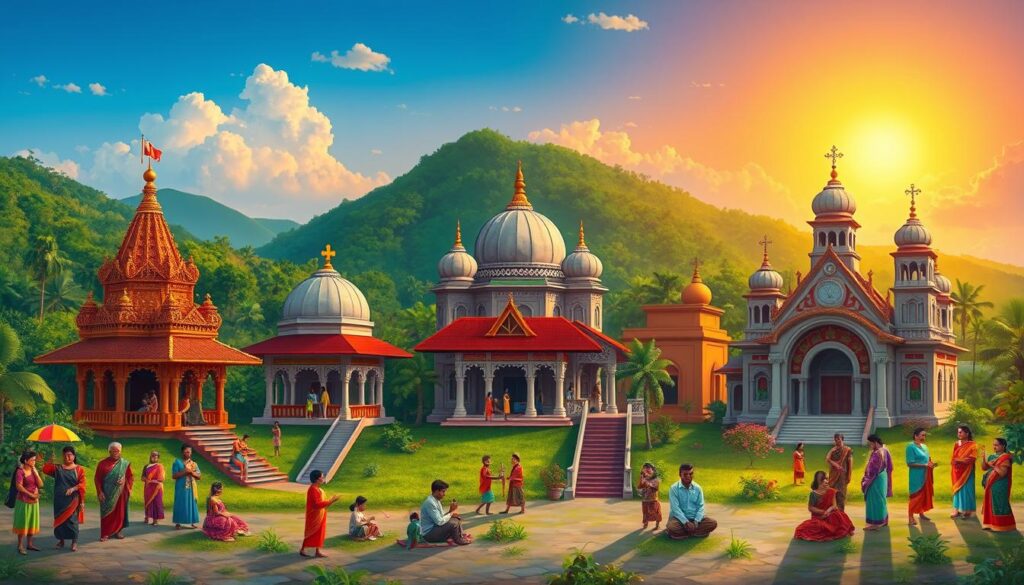
A significant move towards embracing religious tolerance is seen in Sri Lanka. Recent data shows that 62 percent of Sri Lankans view the country’s variety of religions, ethnicities, and cultures favorably. This acceptance of diversity thrives even though Buddhism remains a core part of Sri Lankan identity, with 95 percent of Buddhists seeing it as key.

In embracing different faiths, a large number of Sri Lankan Buddhists are up for living in harmony with other religions—81 percent with Hindus, 82 percent with Christians, and 75 percent with Muslims. Many Buddhists and Hindus also worship gods from religions other than their own. This underlines Sri Lanka’s special place in the world for religious integration.

Sri Lankans Are Positive About Religious Diversity, Says Pew Survey

Even with these forward steps, Sri Lanka is still figuring out its mixed-religion identity. The special status of Buddhism in its constitution stirs debate about secularism and its role in laws. While various religious customs are recognized, fewer people, 50 percent, think Islam fits well with Sri Lankan traditions as opposed to Hinduism and Christianity.

Key Takeaways

  • 62 percent of Sri Lankans express positivity towards religious and ethnic diversity.
  • Diverse religious practices are embraced, with remarkable instances of interfaith devotions among Buddhists and Hindus.
  • There exists a notable wedge in perceptions of various religions, with Islam perceived less congruous with Sri Lankan culture.
  • Religious tolerance coexists with active discussions on the extent of Buddhism’s influence in national governance.
  • Amidst strides in religious coexistence, the underlying tensions reflecting past conflicts remain a consideration in societal progression.

As it moves forward, Sri Lanka continues to balance unity and differences in religion. These aspects are part of its wider journey, including a boom in tourism. They play a big role in the nation’s push for inclusive and lasting growth.

Understanding Sri Lanka’s Commitment to Religious Harmony

Sri Lanka is a place where many cultures and religions blend together. It values religious diversity and social bonding deeply. This island nation works hard to maintain peace among different faiths.

This is seen in its laws and how people from various religions work together for harmony.

The Cultural Significance of Buddhism in Sri Lankan Identity

Buddhism, especially Theravada Buddhism, is very important in Sri Lanka. It touches many parts of life like education and politics. About 70.2% of people follow it, making it a key part of the country’s identity.

People show respect for Buddhist teachings through their support for related laws. This shows a special mix of faith and government in action.

Interfaith Relations: Acceptance Across Religious Boundaries

Sri Lanka shows its open-mindedness towards all religions. The majority Buddhists join in and respect other religious practices. This mutual respect helps everyone live together peacefully in this diverse nation.

Such actions highlight Sri Lanka’s dedication to welcoming different cultures and beliefs.

Political Influence and the Role of Religious Leaders

Religion and politics are closely linked in Sri Lanka. Buddhist leaders often have a say in political matters. This shows how religion and government are intertwined.

Even so, people debate how much religion should influence politics. This shows a society trying to find the right balance between faith and a secular state.

In conclusion, Sri Lanka’s journey towards religious harmony is a model to follow. It shows the importance of embracing diversity and inclusivity. This commitment is key to keeping peace in a country with so many different beliefs.

Religious Group Percentage of Population Influence on Public Policy
Buddhists 70.2% High
Hindus 12.6% Moderate
Muslims 9.7% Moderate
Christians 7.4% Low

Sri Lankans Are Positive About Religious Diversity, Says Pew Survey

The Pew Research Center findings show Sri Lankans are embracing ethnic and religious diversity. Many Buddhists in Sri Lanka, who are 70.2% of the population, welcome neighbors of various religions. This shows Sri Lanka’s cultural strength and open-mindedness towards religious differences.

In Sri Lanka, people often join in interfaith prayers, which is special compared to other places. This practice shows deep respect and unity among different ethnic and religious groups. But, feelings about blending different cultures are mixed among the nation’s people. There’s a lively debate on how different religious communities should come together.

Even with some political tensions, Sri Lanka is making progress towards full religious acceptance. Education and city life don’t weaken religious beliefs in Sri Lanka, unlike in other countries. This unique cultural unity goes beyond economic differences.

The Pew report also mentions that most Sri Lankans see diversity as good for their country. About 56% believe that having people from various backgrounds makes Sri Lanka better. This attitude is key to building a united Sri Lankan identity that values all its cultures and religions.

Accepting diversity helps in strengthening community ties and improving Sri Lanka’s image worldwide. As the country works on its economy, being open and tolerant shows it’s adapting to global views on diversity and inclusion.

Exploring the Fabric of Sri Lankan Society

Sri Lanka is a beautiful mix of cultures and beliefs. It’s known for its religious diversity. These cultural traditions show up in everything from art to what people eat. Buddhism is big here, but so are Hinduism, Islam, and Christianity.

The country works hard to keep peace between all religions. Sacred places and festivals play a big role in this. They help shape how people live together.

Many studies look at religion and politics in Asia, including Sri Lanka. These studies show how religion and government are connected. Books and articles offer more insight into these connections.

This knowledge helps us understand how Sri Lankans keep their society together. They balance religious rights and social harmony.

Technology is bringing new challenges and opportunities to Sri Lanka. It’s breaking down old barriers. The internet can spread hate, but it also brings people closer.

Sri Lanka works to keep the internet safe. They’re trying to keep up with digital changes. They aim to keep everyone together, respecting all beliefs.

They’re figuring out how to mix traditional beliefs with new tech. It’s all about keeping the peace and moving forward together.