Browsed by
Category: News

Sri Lanka: Govt Peace Talks with Tamil Political Groups

Sri Lanka: Govt Peace Talks with Tamil Political Groups

The government of Sri Lanka has taken a significant step by discussing peace with the Tamil minority. This comes after years of fighting. These talks are important for healing wounds and building a stable future. They include discussions with various Tamil groups, such as the LTTE.

The focus is now on talking rather than fighting, thanks to a ceasefire in 2002. This shift is crucial despite many challenges. Events like the attack on Bandaranaike International Airport and financial challenges due to global anti-terrorism efforts show why peace is needed. Both sides see the value in finding a peaceful solution.

Key Takeaways

  • Peace negotiations between the Government of Sri Lanka and Tamil political groups pursue sustainable conflict resolution strategies.
  • Government reconciliation efforts are crucial for addressing the long-standing issues of the Tamil ethnic minority.
  • The peace process is shaped by both internal factors and international responses, with the attacks on economic targets and tighter financial scrutiny prompting both sides to the negotiating table.
  • The 2002 ceasefire and subsequent peacebuilding initiatives represent critical milestones in Sri Lankan political dialogue.
  • Global anti-terrorism sentiment and Norwegian mediation have influenced the peace talks, yielding discussions on federal solutions within a united Sri Lanka.
  • Commitments to rehabilitative and humanitarian needs underline the process, with focus points like the North-East Reconstruction Fund and gender representation in the peace process.

Historical Context of Sri Lankan Peace Efforts

The peace process in Sri Lanka has faced many challenges. It sought to mend the rift between the government and the Tamil minority. The history of these efforts shows a hard journey towards solving the conflict. It also shows the importance of working together internationally, having political unity, and the impact on communities.

The Role of Norway in Sri Lanka’s Peace Negotiations

Norway played a big role in Sri Lanka’s peace efforts starting in 2000. This began with Erik Solheim being named a special advisor. Norway helped with many peace talks. These efforts greatly helped in building lasting peace initiatives.

Tensions and Demands between Sri Lankan Government and LTTE

In the early 2000s, there was tension over disarming the LTTE and lifting economic blockades. These issues were key in the peace talks. They highlighted the need for fair economic opportunities for the Tamil minority in Sri Lanka.

Impact of Political Dynamics on the Peace Process

The rivalry between Sri Lanka’s main political parties caused instability. It affected the efforts to reconcile. The election of the United National Front in 2001 brought new hope for the peace process.

The Significance of the Ceasefire Agreement of 2002

The Ceasefire Agreement in February 2002 was a turning point. It was watched over by the Sri Lanka Monitoring Mission. This agreement led to key negotiations, saved lives, and helped provide important services. It did this by opening the A-9 Vavuniya-Jaffna road again.

Year Event Impact
2002 Ceasefire Agreement Signed Initiated a monitored peace process, saving lives and reducing violence
2003 LTTE Suspends Talks Exposed vulnerabilities in the peace process due to international diplomatic dynamics
2003 Political Rivalry in Government Impacted stability, highlighting the need for stronger internal consensus for peace

The journey to peace in Sri Lanka shows the challenge of including different ethnic groups and political views in one national plan. It underlines the need for a dedicated and inclusive effort in peace talks. Plus, it highlights the importance of a lasting peace process.

Government Engages in Peace Talks with Tamil Political Groups

The Sri Lankan government is taking big steps toward peace. They are starting serious talks with the Tamil ethnic groups. This move is to solve a long conflict that led to violence and stopped the country from coming together.

Establishment and Mandate of the SCOPP

In the mid-1990s, amidst civil unrest, the People’s Alliance (PA) government started peace talks. They had the support of many in parliament. Then, they set up the Secretariat for Co-ordinating the Peace Process (SCOPP) in the Prime Minister’s office. The SCOPP helps organize and put into action the government’s peace plans.

Opening of the A-9 Vavuniya-Jaffna Road and Its Implications

The opening of the A-9 Vavuniya-Jaffna road was a big deal. It’s vital for economy and travel in the Tamil-majority north. It showed the government’s commitment to reducing tensions and boosting the area’s economy. This move was a sign of hope for a more inclusive and peaceful future for Tamil regions.

Measures Aiming at Conflict De-escalation and Normalization

The government also lifted bans on the LTTE and swapped prisoners of war. They set up groups to focus on important issues like political power-sharing and quick help for those affected by the war. These actions are not just quick fixes but are aimed at creating lasting peace. They show the government’s effort to make real progress in ending the conflict.
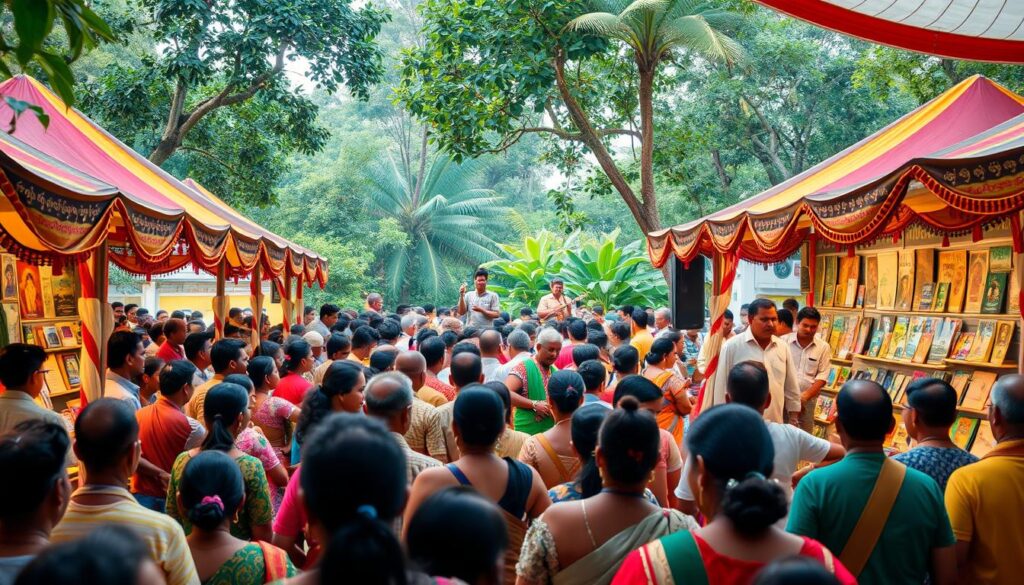
Annual Literary Festivals Celebrate Sri Lankan Writing and Poetry

Annual Literary Festivals Celebrate Sri Lankan Writing and Poetry

Sri Lanka’s literary scene thrives through yearly festivals celebrating the nation’s rich writing traditions. These Annual Literary Festivals Celebrate Sri Lankan Writing and Poetry showcase local talent in Sinhala, Tamil, and English literature. The festivals provide a platform for established and emerging writers to share their works.

The Fairway Galle Literary Festival stands out, held annually in the historic Dutch Galle Fort. Its 2018 edition featured over 110 events, including film appreciation, poetry readings, and gourmet dinners. The festival also recognized outstanding local talent through the Fairway National Literary Awards.

Attendees can engage with renowned international authors at these events. Lord David Puttnam, a British film producer with numerous accolades, has participated. Alexander McCall Smith, author of over 100 books, and Richard Flanagan, a Man Booker Prize winner, have also attended.

These festivals promote and preserve Sri Lanka’s literary heritage. They encourage the growth of Sinhala, Tamil, and English literature. The events nurture emerging writers and poets, celebrating the power of storytelling.

events foster appreciation for the art of language. They provide diverse programs catering to various interests. Multiple concurrent sessions and book launches take place throughout these literary gatherings.

Galle Literary Festival: A Premiere International Event

Since 2007, the Galle Literary Festival has become South Asia’s most anticipated literary event. It unites acclaimed authors in an intimate setting. The festival fosters engaging discussions, writing workshops, and cultural experiences.

The festival offers diverse activities for book lovers. These include panel discussions, poetry readings, and literary lunches. It takes place in Galle Fort, a UNESCO World Heritage Site.

Showcasing Sri Lankan and International Authors

The festival has featured over 70 events and hosted numerous writers. More than 40 international and 50 Sri Lankan authors have participated. This lineup showcases both local and global literary talent.

Diverse Program of Literary Events and Cultural Experiences

Attendees can enjoy a wide array of literary and cultural activities. These include thought-provoking panel discussions and intimate writing workshops. Enchanting poetry readings and delightful literary lunches are also part of the program.

Set in the Historic Galle Fort, a UNESCO World Heritage Site

The festival’s location in Galle Fort adds to its charm. The fort’s colonial architecture provides a magical backdrop. This setting creates an inspiring and unforgettable atmosphere.

Harper’s Bazaar Magazine UK named it the “No.1 Literary Festival in the world” in 2011. After a three-year break, it returned spectacularly in 2016. This comeback reaffirmed its status as a premier literary event.

Other Notable Literary Festivals in Sri Lanka

Sri Lanka boasts a vibrant literary scene beyond the Galle Literary Festival. Several events showcase the island’s rich literary heritage. These festivals celebrate Sinhala, Tamil, and English literature, giving writers platforms to share their works.

The Jaffna Poetry Festival highlights Tamil poets’ resilience and creativity. It unites poets from Sri Lanka and the diaspora, promoting cultural exchange. Attendees enjoy poetry readings, workshops, and discussions on Tamil literature.

Colombo International Book Fair

The Colombo International Book Fair is a key event in Sri Lanka’s literary calendar. It draws publishers, authors, and book lovers from across the country. Visitors can explore books, attend launches, and join literary discussions.

The fair promotes reading culture and supports the local publishing industry. It serves as a platform for literary enthusiasts to connect and share ideas.

Smaller literary events occur throughout the year. The Kandy Writers’ Collective unites writers from central Sri Lanka. The Kilinochchi Book Fair and Batticaloa Writers’ Forum celebrate literature in northern and eastern provinces.

These events offer writers chances to network, collaborate, and share their works. They provide platforms for both established and emerging authors to connect with readers.

Sri Lanka’s literary festivals showcase talent and boost the economy. The Galle Literary Festival drew thousands to the south coast in 2024. It provided a significant economic boost for Galle and Sri Lanka.

The Colombo Stock Exchange (CSE) reported positive economic indicators. Sri Lanka’s stock market became Asia’s second-best performing equity market as of October 25, 2024. It showed a 29.65% year-to-date return in USD terms.

Annasi and Kadalagotu Literary Festival

The Annasi and Kadalagotu Literary Festival celebrates both Sinhala and Tamil literature. It aims to foster cultural exchange between the two communities. The event highlights Sri Lanka’s shared literary heritage.

Attendees can enjoy poetry readings, book launches, and panel discussions. Authors from both languages participate, promoting understanding and appreciation of diverse literary traditions.

Literary Festivals Celebrate Sri Lankan Writing and Poetry

Sri Lanka’s literary festivals showcase the nation’s rich heritage. They celebrate established and emerging writers in Sinhala, Tamil, and English. These events promote new voices and preserve Sri Lanka’s cultural legacy.

The Galle Literary Festival, started in 2005, is a top international event. It attracts renowned authors and intellectuals worldwide. The festival offers author talks, panel discussions, book launches, and workshops.

In 2024, the 11th edition will feature international authors. It will explore themes in fiction, non-fiction, and poetry. The event engages readers of all ages and interests.

Other notable festivals include the Jaffna Literary Festival and Colombo International Book Fair. These events showcase emerging writers through poetry slams and competitions. They help grow and preserve Sri Lankan literature.

Preserving Sri Lanka’s Cultural Legacy

These festivals celebrate writing and preserve Sri Lanka’s cultural heritage. They promote works in Sinhala, Tamil, and English. This highlights the diversity of Sri Lankan literature.

The events foster cultural exchange and community engagement. They nurture a love for the arts. This ensures Sri Lanka’s literary traditions thrive for future generations.

Conclusion

Sri Lanka’s annual literary festivals are vital to its literary community. They celebrate writing and poetry in Sinhala, Tamil, and English. These events showcase authors’ works and foster intellectual exchange.

The Galle Literary Festival and others draw global participants. Writers, poets, and literary fans come together at these events. They offer diverse programs like book readings, panel discussions, and workshops.

These festivals preserve and promote Sri Lanka’s literary heritage. They encourage new talent and inspire love for literature in younger generations. The events bring authors and readers together, celebrating the power of words.

Literary festivals strengthen Sri Lanka’s position in South Asian literature. They showcase the country’s rich cultural traditions and artistic expression. These events continue to grow in popularity and scope.

Security Heightened in Arugam Bay Amid Terror Threats

Security Heightened in Arugam Bay Amid Terror Threats

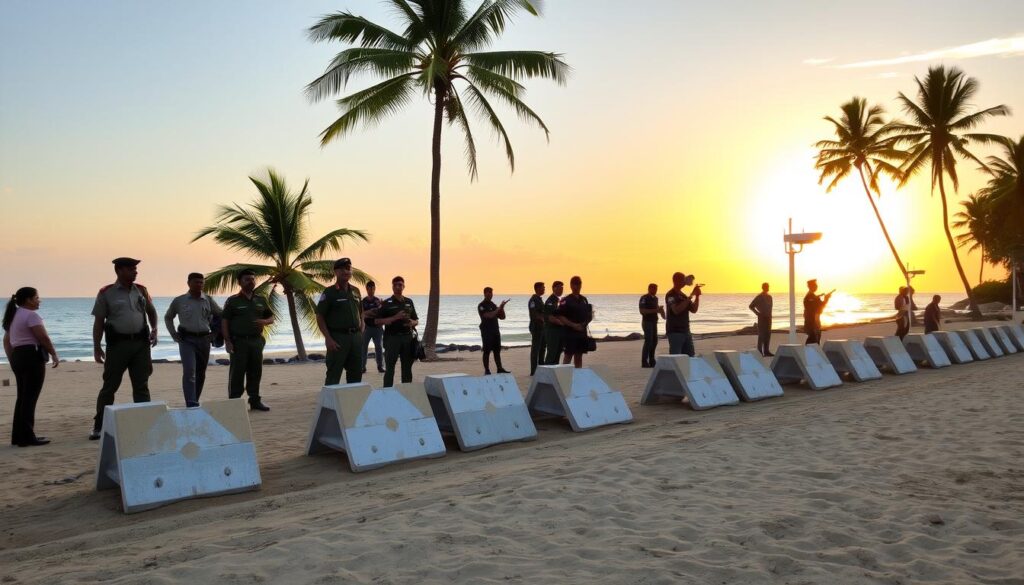
After receiving warnings from the US Embassy, Arugam Bay Security Measures have been significantly increased. This is to address a terror threat detected in the area. Authorities are now strictly enhancing Arugam Bay Safety Alerts. They are focusing on tourist spots, including Chabad houses, where security precautions have notably risen.

Security Heightened in Arugam Bay Amid Potential Terror Threats

Travel advisories from the US and Israel led to quick action. Security has been tightened around key areas, like places of worship and markets. These areas often see international visitors, especially from Israel. The Sri Lankan Police have stepped up their surveillance and coordination. This provides additional protection, reflecting the large number of Israeli tourists.

A good portion of tourists come from Israel. This makes the recent threats even more concerning for Sri Lanka’s tourism. But, it’s crucial to keep all visitors and residents safe. This proactive approach mirrors the increased security across Sri Lankan tourist destinations. It aims to protect the well-being of the approximately 1.5 million tourists who visit the island each year.

Understanding the Terrorist Threats in Arugam Bay

Arugam Bay has been on high alert due to possible terror threats. These threats target popular tourist spots. Local and international security forces are working together to keep everyone safe. They aim to protect tourism and the area’s stability.

Background of the Recent Security Alerts

The U.S. and Israel have reported serious terror threats in Arugam Bay. This comes after the U.S. Embassy and Israel’s National Security Council issued warnings. Israelis were told to leave Arugam Bay quickly because of a Sri Lanka terrorism alert. These alerts came after the Easter 2019 attacks, which changed national security.

Profile of the Arugam Bay Region and Potential Targets

Arugam Bay is known worldwide for its surfing. Now, ensuring Arugam Bay tourism safety is critical. Places like the Chabad House are being closely watched. This shows the challenge of welcoming tourists while keeping them safe. It highlights Arugam Bay terrorism concerns.

About 500 police officers are now in Arugam Bay and nearby Pottuvil. They are there because of potential terror threats. Their job is to prevent anything bad from happening. This is vital to keep Arugam Bay a safe place for visitors.

Assessment of the Terror Threat Level in Sri Lanka

Terror Threat Level Assessment Arugam Bay

The situation is not just in Arugam Bay but all over Sri Lanka. There’s now a hotline (number 1997) for tourists to report any weird activities. This response is part of the wider effort to keep the country stable. It connects to larger issues like education challenges.

Looking closely at threats helps protect areas where many Israelis and Western tourists go. Authorities are watching everything closely. They are worried about the political situation escalating. This has led to increased security to make sure tourists and locals are safe.

Despite the concerns, Arugam Bay is still a beautiful place for surfers and travelers. However, the threat of Arugam Bay Terrorism Concerns affects how security is managed. The goal is to keep being strong, even when facing big challenges.

Heightened Security Measures in Arugam Bay Amid Potential Terror Threats

Due to growing security worries, Arugam Bay emergency response measures and Sri Lanka police vigilance have been stepped up. These actions are crucial for protecting tourists and locals from threats.

Local Law Enforcement and Emergency Response Initiatives

In Arugam Bay, the local security plan is strong, with more police and Special Task Force members around. They’ve set up roadblocks and do random checks. This is all part of a bigger Arugam Bay counterterrorism effort. There’s also a special hotline, 1997, for tourists to report anything suspicious.

International Intelligence Cooperation and Threat Prevention

Sri Lanka’sforces are working with international teams, including those from Israel and India. This is key in the international cooperation on Arugam Bay threats. By working together, they aim to stop terrorist attacks and make the area safe for the long term. This effort helps keep Arugam Bay stable and secure.

Safety and Security Measures for Tourists and Local Residents

To protect Arugam Baylocals and tourists, people are urged to be cautious. They should hide nationality signs, avoid big crowds, and follow security advice. Tourism businesses have also been taught about emergency steps to improve safety.

Thanks to these in-depth security plans, includinginternational insights and local police work, everyone’s safety in Arugam Bay is a top concern. This strategy deals with current dangers and builds a safe, stable future for the area.

Conclusion

Sri Lanka’s officials quickly reacted to the growing security challenges. They sent about 500 cops and Special Task Force units to Arugam Bay and Pottuvil. After Israel’s National Security Council raised the threat level to four, it advised its people to be very careful or move to safer places, like Colombo. These actions show how fast the local and international teams worked to make Arugam Bay safe.

International tourists, including those from Israel, Russia, the US, and Britain, now have to think about the Arugam Bay Travel Advisory Impact. The tourist hotline shows the government’s effort to keep everyone safe. But, travel warnings might slow down the much-needed economic boost. This is seen in the analysis of Sri Lanka’s tourism comeback at this link, pointing out the important next few months for Arugam Bay’s financial health.

Arugam Bay’s future as a top spot for tourists, especially surfers, is uncertain. Yet, the Commonwealth Union Ltd. and Appé Lanka Foundation are deeply investing in the community’s well-being, including in the Poonakary region, at this link. We’ll have to wait to see how this crisis affects Sri Lanka’s charm and its competition with places like the Maldives for European tourists.

Sri Lanka Parliament Dissolved, November Elections Set

Sri Lanka Parliament Dissolved, November Elections Set

A significant development has taken place in Sri Lanka, as announced by OMP Sri Lanka. The Dissolution of Parliament was officially declared. This event occurred just after midnight on September 24th, when the legislative body was dissolved by President Anura Kumara Dissanayake. This is a monumental decision in the country’s history. It paves the way for a crucial election on November 14.

After winning the presidency in an election with high voter turnout, President Dissanayake is moving forward with his agenda. He aims to tackle corruption and economic challenges. The announcement of the Election, after dissolving the parliament, is a key moment. It signals major policy changes and efforts to meet the International Monetary Fund (IMF) bailout terms.

Key Takeaways:

  • President Anura Kumara Dissanayake used his power to disband the Parliament. This marks a vital step for Sri Lanka’s governance.
  • The upcoming general election on November 14 is a pivotal time for the country’s future.
  • President Dissanayake’s election victory showed huge public support, marking a significant change from the 2019 results.
  • The previous administration’s economic problems and high inflation highlighted the public’s desire for change.
  • Ensuring stability and prosperity are priorities, with plans for tough anti-corruption actions and expanding social welfare.
  • Investors are cautious about the financial sustainability regarding the new economic policies announced.
  • The position of the Janatha Vimukti Peramuna in the assembly poses a hurdle to achieving majority representation.

President Dissanayake Dissolves Parliament, Calls for November Elections

In a bold move, President Anura Kumara Dissanayake of Sri Lanka has dissolved Parliament. This action marks a significant change in the country’s political scene. Based on Article 70 of the Sri Lankan Constitution and the Parliamentary Elections Act, the President made this decision. Now, Sri Lanka is set for early Elections, sooner than originally planned.

The Exercise of Constitutional Powers by President Anura Kumara Dissanayake

President Dissanayake used his Constitutional powers wisely and legally. By invoking Article 70, he ended the current Parliament’s session. His party had only three seats out of 225. This important step is expected to lead to major changes in Sri Lanka’s government.

Setting the Stage: Article 70, the Constitution and the Parliamentary Elections Act

Sri Lanka’s laws clearly lay out how to dissolve Parliament and organize new elections. The President has this power thanks to Article 70. The Parliamentary Elections Act gives details on election procedures. These rules ensure a fair and democratic election process in Sri Lanka.

Expected Political Realignments and Candidature Announcements

After President Dissanayake’s announcement, many political leaders are getting ready for the elections on November 14. For example, Mahinda Rajapaksa is adjusting his strategy anticipating how voters will react. Harini Amarasuriya, the new Prime Minister, is focusing on issues like youth development, child protection, and gender equality. Her approach could majorly affect the upcoming elections.

President Dissanayake’s decision to dissolve Parliament is stirring up Sri Lanka’s politics. As the country moves towards these important Elections, all eyes are on how these changes will influence Sri Lanka’s future.

Impact of Parliamentary Dissolution on Political Landscape

Sri Lanka’s political scene is changing with the Parliament’s dissolution. President Anura Kumara Dissanayake made this bold move. It shows his dedication to solving longstanding governance problems.

These challenges grew due to economic crises and ongoing instability. This step into a new phase shows hope for better governance.

Timeline of Events Leading to the Dissolution of Parliament

The journey to change began with the National People’s Power alliance’s (NPP) election success. Their rise was helped by the Janatha Aragalaya protests. People were upset with the old system. This led to calling for general elections.

These elections hinted at a major shift in electoral politics. A new chapter for the nation seemed ready to start.

Reactions from Political Parties and Government Officials

The reactions to the Parliament’s dissolution were mixed. Some were worried, while others supported it. Political parties and officials have been vocal about it.

This shows a change in the direction of Sri Lanka’s politics. Everyone is getting ready for the upcoming elections with great interest.

Projections: Shifts in the Balance of Power and Governance

Experts are watching how this will change governance. President Dissanayake is seen as a unique leader. His approach might shift power balances.

This change could bring needed reforms. Especially if it addresses economic and social issues. High voter support for Dissanayake suggests people want this change.

There’s hope for a governance that tackles problems head-on. With Dissanayake’s leadership, Sri Lanka could move towards stability and sustainable growth. This is an exciting time for the country.

Sri Lankan archbishop asks Muslims to reject extremism

Sri Lankan archbishop asks Muslims to reject extremism

Sri Lankan archbishop asks Muslims to reject extremism

On a significant anniversary, the Archbishop of Colombo, Cardinal Malcolm Ranjith, led a ceremony. He asked Sri Lanka’s Muslims to fight against extremism. This event, at St. Anthony’s Shrine, remembered the Easter Sunday bombings of 2019. Those bombings killed 269 innocent people.

Cardinal Ranjith spoke to a crowd of different faiths. He spoke as a big supporter of religious tolerance. The ceremony brought together Catholic, Buddhist, Hindu, and Muslim leaders. They gathered to honor the victims and show unity.

The Cardinal made a strong plea to Muslims. He asked them to clearly reject and fight extremism. This call to action was made at an event showing unity among different religions. The event was in response to attacks by local Muslim groups linked to the Islamic State. Cardinal Ranjith stressed the need to reject harmful ideologies. He also talked about the need for transparency and understanding the true reasons behind these attacks. These acts of violence are still a dark memory for the nation.

Key Takeaways

  • Cardinal Malcolm Ranjith advocates for unity and religious tolerance in the face of extremism.
  • Interfaith commemoration underscores a unified stance against extremist violence.
  • Archbishop’s plea directed at Muslim community to reject extremism and seek truth behind the 2019 Easter Sunday bombings.
  • Cardinal underscores importance of transparency and justice for the 269 victims of the terror attacks.
  • Religious figures from diverse faiths join in remembrance and solidarity at the site of the first bombing.
  • Global geopolitics scrutinized as a potential influence on the misuse of religious teachings.

Sri Lankan Archbishop’s Call for Solidarity on Easter Attack Anniversary

On the solemn anniversary of the Easter attacks, Sri Lanka’s leaders came together. They aimed to strengthen their commitment to peaceful coexistence and interfaith dialogue. Their actions highlighted ongoing efforts for harmony and building bridges among diverse groups.

The Commemoration at St. Anthony’s Shrine

St. Anthony’s Shrine, hit during the attacks, held a touching ceremony. It was attended by leaders of different religions. This event showed a united stance against violence and pushed for peace in Sri Lanka.

The ceremony honored the victims while showing the unity and strength of Sri Lanka’s religious groups.

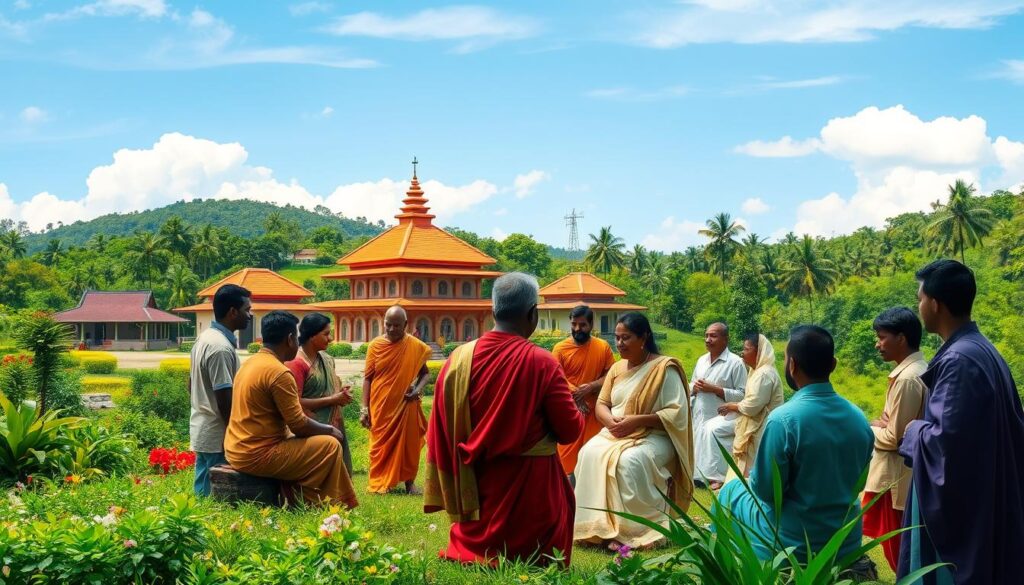
Interfaith Leaders Unite in Memory of the Victims

Leaders from various faiths united to condemn the violence and remember the lessons learned. Their unity is crucial for building bridges in the community. It promotes a culture of respect and understanding.

Global Geopolitics and Extremism: Archbishop Ranjith’s Insight

Archbishop Ranjith shared insights on global issues and extremist ideologies. He explained how these factors have impacted local situations, leading to tragic events. He stressed the need for vigilance and global cooperation to fight against extremism.

Date of Attack Deaths Injuries Extent of Extremism Global Response
21 April 2019 270 victims Over 500 High Vigilant monitoring and international support required
Note: Data reflects the necessity for continued interfaith dialogue and preventive measures against extremism.

Navigating the Aftermath: The Ongoing Pursuit for Answers in Sri Lanka

After the tragic Easter Sunday bombings, Sri Lanka is seeking the truth. This quest is especially important to religious figures like Cardinal Malcolm Ranjith. He believes the challenge is bigger than just stopping extremists. The Archbishop isn’t happy with the presidential commission’s findings. He says they didn’t fully uncover who was behind the violence. He is asking for the UN to step in. This shows he doesn’t fully trust local investigations to find justice for the victims.

The High Court of Sri Lanka made some decisions that cleared top officials from blame. This has upset many people who want answers and peace. Cardinal Ranjith wants the world to help gather more evidence. He wants a deep dive into the reasons behind the Easter tragedy. His call for action to the international community is loud and clear. He hopes they can reveal the real story, responding to his call to the United Nations Human Rights Council.

The sad event touched many, including the Sri Lankan archbishop. He is asking Muslims to stand against extremism. His leadership sheds light on the importance of staying united, regardless of religion or belief. At OMP Sri Lanka, our goal is to share accurate, timely information with educated adults. We bring government news and essential updates. We hope to foster informed discussions. This is crucial for healing and stopping the spread of harmful ideas.